What Happened
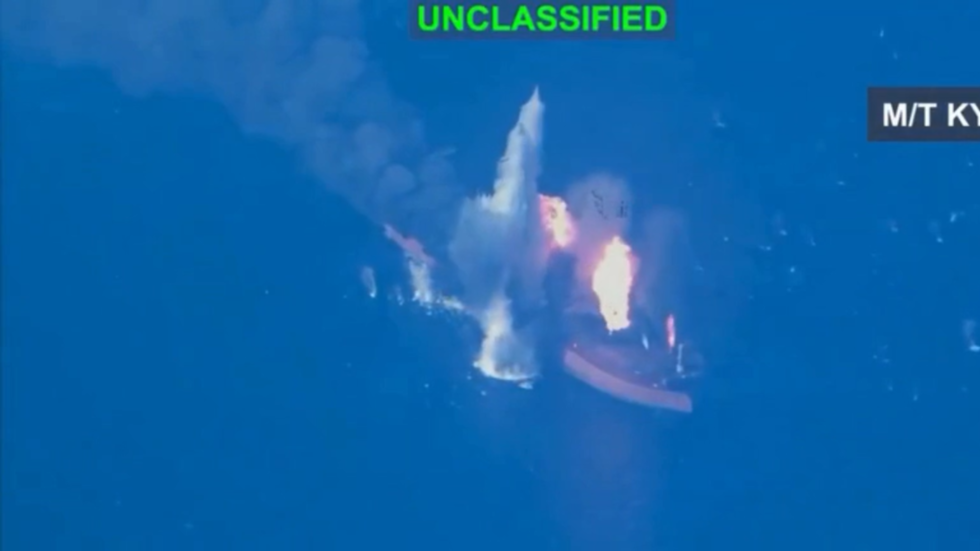
On Saturday, September 5, 2026, U.S. Central Command (CENTCOM) announced that American forces conducted airstrikes against three Iranian crude oil tankers. These strikes were a direct response to ballistic missile attacks launched by Iran's Islamic Revolutionary Guard Corps (IRGC) against U.S. Navy warships patrolling in regional waters. CENTCOM specified that two tankers, identified as MT Downy and MT Stark 1, were disabled, while a third, the MT Kylo (also known as MT Noxen), was completely destroyed. The MT Downy was struck near Iran’s primary oil loading facility at Kharg Island, an area where Iranian state media, specifically Tasnim news agency, had reported explosions earlier on Saturday. The MT Stark 1 was hit near the Iranian coastal city of Jask, and the unladen MT Kylo was targeted in the Gulf of Oman. CENTCOM stated that the crew of the MT Kylo was directed to abandon ship before it was struck in multiple critical locations to render it inoperable. No American personnel were harmed during the Iranian missile attacks, as a U.S. aircraft carrier and a guided-missile destroyer successfully evaded the projectiles.
What the Evidence Establishes
The evidence establishes that U.S. forces executed targeted strikes on Iranian oil infrastructure in retaliation for specific military actions by the IRGC. CENTCOM's official statement confirms the disabling of the MT Downy off Kharg Island and the MT Stark 1 near Jask, alongside the complete destruction of the MT Kylo in the Gulf of Oman. These actions were explicitly framed as a response to the IRGC launching ballistic missiles at U.S. Navy warships. Admiral Brad Cooper, the CENTCOM commander, stated, "If you shoot at two of our ships, we will impose an even higher economic cost — taking out three of yours." This directly links the U.S. strikes to the Iranian missile launches. Iranian state-run Tasnim news agency corroborated reports of explosions near Kharg Island and an oil tanker being hit by four U.S. missiles, aligning with the strike on the MT Downy. CENTCOM also asserted that the targeted tankers are part of a "multibillion-dollar shadow network that funds the IRGC and its regional proxies," indicating a broader strategic objective beyond immediate retaliation.
Where the Accounts Conflict
While both sources confirm U.S. strikes on Iranian oil tankers, there are notable differences in framing and additional claims. The Operative Telegram Feed, citing Eric Daugherty, uses highly charged language such as "WOW!" and claims "Donald Trump's blockade is utterly decimating the regime." It also asserts that "Iran reportedly has only 60 DAYS of gasoline left" and that Scott Bessent is "severing any and all banks that funnel millions of dollars to the IRGC, and is actively targeting their assets worldwide." These specific claims regarding Iran's gasoline supply and Scott Bessent's actions are not corroborated by the Breitbart report or CENTCOM's official statement. Breitbart's headline states, "U.S. Strikes Three Iranian Tankers After Iran Attacks Aircraft Carrier," while CENTCOM's statement clarifies that a U.S. aircraft carrier and guided-missile destroyer "successfully evaded multiple unprovoked Iranian attacks," implying the attack was on the ships, not necessarily a direct hit on a carrier. The Telegram feed also broadly states "obliterated 3 Iranian crude tankers," whereas CENTCOM specified two were "disabled" and one "completely destroyed," a distinction in the extent of damage.
Context and Stakes
These U.S. strikes occur within a broader context of escalating tensions between the United States and Iran, particularly concerning Iran's nuclear program, regional proxy activities, and maritime security in the Persian Gulf and Gulf of Oman. The IRGC, designated a terrorist organization by the U.S., frequently engages in actions perceived as provocative by Washington. The U.S. maintains a significant naval presence in the region, including aircraft carriers like the USS George H.W. Bush and USS George Washington, which are critical for projecting power and ensuring maritime freedom of navigation. The targeting of oil tankers directly impacts Iran's economic lifelines, especially given existing sanctions. CENTCOM's explicit linkage of the strikes to IRGC missile attacks underscores a policy of direct economic retaliation for military provocations. The stakes involve not only the immediate economic impact on Iran but also the potential for further escalation, affecting global oil markets and regional stability. The U.S. aims to deter future Iranian aggression and disrupt the IRGC's funding mechanisms, while Iran seeks to assert its regional influence and challenge U.S. presence.
What to Watch Next
Observers should closely monitor Iran's official response to these strikes. While Tasnim news agency reported explosions, a more comprehensive and official statement from Tehran regarding the attacks on its tankers and the alleged missile launches is anticipated. Any retaliatory actions by Iran, either directly against U.S. assets or through its regional proxies, would signal a significant escalation. The international community's reaction, particularly from major powers and oil-importing nations, will also be crucial. Attention will be on global oil prices, which could see volatility depending on the perceived threat to oil supply routes in the Strait of Hormuz. Furthermore, the U.S. administration's next steps regarding sanctions enforcement and naval deployments in the region will indicate the sustained pressure campaign against Iran. Specific statements from the U.S. Treasury or other financial bodies regarding the alleged targeting of banks funneling funds to the IRGC, as mentioned in one source, would also be a key development to watch for corroboration and impact.
Bottom Line
The United States has conducted punitive airstrikes against three Iranian oil tankers, disabling two and destroying one, in direct response to ballistic missile attacks by Iran's Islamic Revolutionary Guard Corps on U.S. Navy warships. This action represents a significant escalation in the ongoing tensions between Washington and Tehran, explicitly linking Iranian military provocations to direct economic consequences. CENTCOM commander Adm. Brad Cooper articulated a clear deterrence message, stating the U.S. would impose higher economic costs for attacks on its ships. The strikes targeted vessels identified as part of a network funding the IRGC, aiming to disrupt its financial operations. While Iranian state media confirmed explosions near Kharg Island, the full extent of Iran's official reaction and potential counter-measures remains to be seen. The incident underscores the volatile security situation in the Persian Gulf and the potential for further military and economic confrontation, with implications for regional stability and global energy markets.
DECLASSIFIED SOURCE: RT - News (via Real-time Signal Upgrade)
Key detail everyone will skim past: centcom confirmed us forces disabled two iranian oil tankers and destroyed a third in response to irgc ball.... That's the part that matters.
This is worth tracking. The next update should tell us whether centcom confirmed us forces disabled two iranian oil tankers and destroyed a third in response to irgc ball... is real or just noise.
Big headline, but the real test is whether centcom confirmed us forces disabled two iranian oil tankers and destroyed a third in response to irgc ball... actually changes anything.
...