The Catalyst: Escalation and Diplomatic Overtures
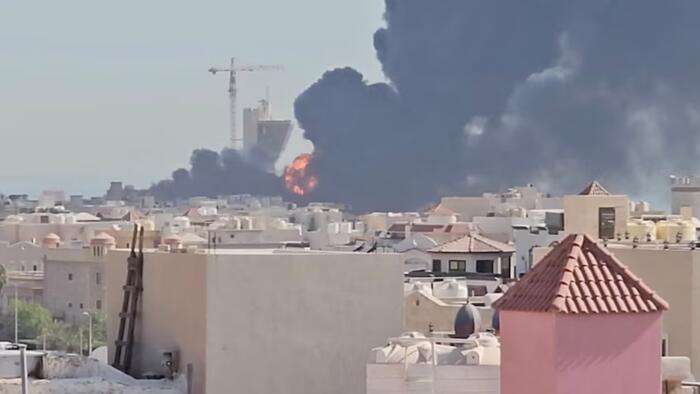
The geopolitical landscape of the Middle East has been significantly destabilized by the ongoing, now ninth consecutive day, of renewed fighting between the United States and Iran. This latest phase of conflict has seen the US military conducting extensive bombing campaigns targeting both civic and military infrastructure within Iran. Concurrently, Iranian forces have maintained retaliatory pressure, launching attacks against Gulf states, including Kuwait and Bahrain, and extending their reach into Jordan, where American military bases have sustained deadly impacts. The human cost of this escalation is becoming increasingly apparent, with Iranian authorities reporting at least 50 fatalities and over 500 injuries in the last three weeks alone. State media specifically highlighted a single bridge strike on Friday that resulted in eight deaths. On the American side, casualties have also been confirmed, with a Saturday CENTCOM announcement detailing US soldiers killed. The Pentagon further reported on Sunday that a third US servicemember died in northern Iraq, described as an accidental death during a 'controlled detonation' of a downed Iranian attack drone. Specifically, Lieutenant Tyler James Feehan, 25, of Ewa Beach, Hawaii, and Private Isabella Gonzales, 19, of Carrollton, Texas, were identified as having been killed in the Jordan attacks on Friday, where they were deployed as part of the ongoing 'counter-ISIS' mission.
Despite this pronounced escalation, a glimmer of diplomatic hope emerged on Monday as Iranian Foreign Ministry spokesperson Esmaeil Baghaei announced that Iran had received mediation proposals to restart negotiations with the United States. Baghaei conveyed to state media that while Iran would continue its resolute self-defense, its diplomatic apparatus remained active and aligned with the armed forces. He stated, "I emphasize once again that the diplomatic apparatus continues to pursue its tasks jointly and in line with the defenders of the homeland in the armed forces. The proposals submitted through mediators have been communicated to us and have been received." This statement coincided with reports of a new ceasefire proposal being actively developed. Reuters specifically reported that mediators were proposing a 10-day ceasefire between Iran and the US, a development that immediately triggered a drop in global oil prices, reflecting market optimism for de-escalation. The Wall Street Journal provided further details, indicating that mediators, notably Qatar, were working to push both nations towards a new ceasefire, driven by fears that the conflict could settle into a pattern of sustained regional disruption and the ever-present risk of a miscalculation leading to all-out war. Qatar's proposal reportedly includes a 10-day ceasefire and an end to restrictions on shipping in the strategic Strait of Hormuz, a critical global chokepoint for oil transit. However, it remains unclear whether either side is prepared to accept a new halt to fighting, especially after a preliminary peace deal signed in mid-June collapsed earlier this month.
Historical Context: A Decades-Long Shadow of Conflict
The current hostilities between the United States and Iran are not isolated incidents but rather the latest chapter in a protracted and complex relationship marked by decades of mistrust, proxy conflicts, and strategic competition. The roots of this animosity can be traced back to the 1979 Islamic Revolution in Iran, which fundamentally altered the geopolitical alignment of the region and led to the severing of diplomatic ties with the US. Since then, the two nations have engaged in a 'shadow war' characterized by economic sanctions, cyber warfare, and support for opposing factions in regional conflicts across Iraq, Syria, Yemen, and Lebanon. The US military presence in the Middle East, often framed under missions like 'counter-ISIS,' has frequently been perceived by Iran as a direct threat to its sovereignty and regional influence, leading to a cycle of provocation and retaliation.
The Strait of Hormuz, a narrow waterway connecting the Persian Gulf to the open ocean, has consistently been a flashpoint in this enduring rivalry. Approximately one-fifth of the world's total oil consumption, and a significant portion of global liquefied natural gas, passes through this strait. Iran has repeatedly threatened to close the strait in response to perceived aggressions or sanctions, underscoring its strategic importance and the potential for any disruption to trigger global economic shockwaves. Incidents involving commercial shipping, such as the recent projectile strike on a vessel that led its crew to abandon ship, serve as stark reminders of the fragility of maritime security in the region and the immediate economic consequences, as reflected in volatile oil prices. The collapse of the preliminary peace deal signed in mid-June, just weeks before the current escalation, highlights the deep-seated obstacles to a lasting resolution and the difficulty in maintaining any diplomatic breakthroughs.
Furthermore, the broader geopolitical context involves the alleged involvement of other major powers. Senator Marsha Blackburn (R-TN) recently voiced concerns, citing "open-source intelligence" and "U.S. officials suspect[ing] China or Russia may be feeding Iran targeted data after Tehran struck sensitive sites within unusual precision." Blackburn explicitly labeled Russia, China, Iran, and North Korea as an "axis of evil," asserting that they are "partners in this" and are "sharing data." She pointed to Iran's drone manufacturing, which Russia is reportedly utilizing in Ukraine, as evidence of this deepening alliance. This perspective suggests that the US-Iran conflict is not merely a bilateral issue but is intertwined with a larger global power struggle, potentially complicating any de-escalation efforts and raising the stakes for all involved parties. The historical pattern of US military responses to attacks on its personnel or allies, coupled with Iran's consistent rhetoric of resistance, sets a dangerous precedent for continued escalation unless a robust diplomatic framework can be established and adhered to by both sides.
Stakeholder Positions: Divergent Agendas Amidst Conflict
The primary stakeholders in the escalating US-Iran conflict hold deeply divergent positions, making a swift resolution challenging. On the Iranian side, President Masoud Pezeshkian's declaration on Monday that his country is engaged in a "full-scale war" with the US and that Iranians "must be realistic and accept the natural consequences of this resistance" signals a hardened stance. This rhetoric, while potentially aimed at galvanizing domestic support, contrasts sharply with the Foreign Ministry's acknowledgment of mediation proposals. Foreign Minister Abbas Araghchi's statement that "A war must be ended precisely at the point when you hold the upper hand on the battlefield" further illustrates a strategic calculus that prioritizes perceived strength and leverage in any negotiation. This dual messaging—openness to talks while simultaneously asserting a state of war—reflects Iran's complex internal dynamics and its desire to project both resilience and diplomatic pragmatism.
The United States, through its military actions and official statements, maintains a position of deterrence and response to what it characterizes as Iranian aggression. The ninth consecutive night of strikes, targeting military bases, air defense systems, and even a city hosting a nuclear power plant like Bushehr, demonstrates a clear intent to degrade Iran's capabilities and deter further attacks. However, the Pentagon's reported downplaying or concealment of the true extent of US casualties and damage to regional bases, as highlighted by The New York Times, suggests a desire to manage public perception and potentially limit pressure for a more expansive military response. The official narrative of US servicemembers being part of a 'counter-ISIS' mission in Jordan, even when killed by Iranian strikes, indicates an attempt to frame the conflict within existing operational mandates rather than acknowledging a direct, declared war with Iran.
Mediators, primarily Qatar, are positioned as crucial third parties attempting to de-escalate the conflict. Their proposal for a 10-day ceasefire and an end to shipping restrictions in the Strait of Hormuz reflects a regional and international concern over the economic and humanitarian consequences of prolonged hostilities. These mediators are driven by the fear that the two foes could settle into a pattern of conflict that disrupts regional economies indefinitely and carries the constant risk of miscalculation leading to an all-out war. The financial markets, as evidenced by the immediate drop in oil prices following news of mediation proposals, are also significant stakeholders, reacting sensitively to any perceived shift towards de-escalation or further conflict. Investors, as noted by Joachim Klement, head of strategy at Panmure Liberum, "still think the US and Iran will go back to the negotiation table," indicating a prevailing market hope for a diplomatic resolution despite the ongoing military actions.
Mechanics & Evidence: Verifiable Facts and Conflicting Reports
The verifiable facts surrounding the current US-Iran conflict paint a clear picture of escalating military engagement. The United States has conducted its ninth consecutive night of strikes against Iran, targeting a range of infrastructure including military bases, air defense systems, and civilian-military dual-use sites. Specific locations hit include Bushehr, where Governor Mohammad Mozaffari confirmed "several locations in Bushehr city were hit by American enemy’s projectiles," and East Azerbaijan province, where Majid Farshi reported "one person was martyred and several others injured." These strikes are confirmed by both US Central Command and Iranian state media reports. Iran's retaliatory actions have included strikes in Syria, Jordan, and Kuwait, with a notable impact on an American base in Jordan on Friday, resulting in the deaths of Lieutenant Tyler James Feehan, 25, and Private Isabella Gonzales, 19. A third US servicemember was killed in northern Iraq on Sunday, attributed to an accidental detonation.
Casualty figures, however, present a point of contention. Iranian authorities have reported at least 50 people killed and over 500 wounded in the last three weeks, with eight fatalities from a single bridge strike on Friday. For the US, while official Pentagon statements confirm specific deaths, The New York Times, citing anonymous US officials, reported that "Dozens of US military personnel were wounded and helicopters damaged during three Iranian strikes on American forces in Jordan last week." The report further claims the Pentagon did not disclose these casualties and damages, stating that "Central Command is not required to release information about injured service members." This discrepancy highlights a potential information gap or deliberate downplaying of the full extent of US losses, creating a conflict between official US statements and investigative reporting.
Diplomatic efforts are evidenced by Iranian Foreign Ministry spokesperson Esmaeil Baghaei's confirmation on Monday that "The proposals submitted through mediators have been communicated to us and have been received." Reuters specifically reported a proposal for a "10-day ceasefire between Iran, US," with Qatar identified by The Wall Street Journal as a key mediator floating the idea, which also includes an end to shipping restrictions in the Strait of Hormuz. This diplomatic activity is corroborated by market reactions, where news of mediation proposals led to an immediate drop in oil prices, with Brent crude falling to an $87/bbl handle before later rebounding with renewed escalation. The sentiment among investors, as articulated by Joachim Klement of Panmure Liberum, is that "the US and Iran will go back to the negotiation table," indicating a market belief in the potential for diplomatic resolution despite the ongoing conflict. However, Iranian President Masoud Pezeshkian's simultaneous declaration of a "full-scale war" introduces a significant rhetorical conflict, suggesting internal divisions or a strategic posture that complicates the path to a ceasefire.
What Happens Next: Pathways to De-escalation or Further Conflict
The immediate future of the US-Iran conflict hinges critically on the reception and potential acceptance of the proposed 10-day ceasefire. While Iran's Foreign Ministry has confirmed receiving mediation proposals, President Pezeshkian's declaration of a "full-scale war" introduces significant uncertainty regarding Tehran's willingness to commit to a halt in hostilities without perceived strategic advantage. If both sides agree to the ceasefire, the focus will shift to the terms of a more comprehensive peace deal, particularly concerning the Strait of Hormuz, where Qatar has proposed a new, designated shipping corridor. The success or failure of this initial ceasefire will be a crucial indicator of whether diplomatic channels can effectively de-escalate the situation or if the conflict is destined for further military confrontation.
Should the ceasefire fail to materialize or quickly collapse, a renewed and potentially intensified cycle of tit-for-tat attacks is highly probable. The US has demonstrated its capacity for sustained strikes against Iranian infrastructure, and Iran has shown its willingness to retaliate against US bases and regional allies. The risk of miscalculation, as highlighted by mediators, remains exceptionally high. Further Iranian actions in the Strait of Hormuz, such as additional attacks on commercial shipping or attempts to assert greater control over the waterway, could provoke a more robust international response and potentially draw in other naval powers. The alleged intelligence sharing between Iran, Russia, and China, as suggested by Senator Blackburn, could also embolden Iran and complicate US strategic planning, potentially leading to more precise and damaging Iranian strikes.
Economically, the trajectory of oil prices will serve as a real-time barometer of the conflict's intensity. News of de-escalation tends to depress prices, while renewed fighting or threats to shipping in the Strait of Hormuz cause them to surge. Investors are closely watching for any signs that the US is no longer willing to negotiate, which Joachim Klement suggests would lead markets to "price higher oil prices for longer." Beyond oil, the broader market sentiment, particularly in tech and AI stocks, is also being influenced. While some analysts see the US-Iran escalation being "faded" by markets, the underlying volatility and demand for hedging are increasing, as indicated by rising stock index volatility and a jump in Skew to its highest level since April. Upcoming hyperscaler earnings reports, particularly from Alphabet, Tesla, Intel, and SK Hynix, will be scrutinized for their impact on the AI sector, which is already experiencing a "bear market" amid concerns about sustained capital expenditure and competition from cheaper Chinese AI models. The interplay between geopolitical instability and tech sector performance will be a key dynamic to monitor in the coming weeks.
The Bottom Line: A Precarious Balance of Conflict and Diplomacy
The current state of affairs between the United States and Iran is characterized by a precarious balance between escalating military conflict and persistent, albeit fragile, diplomatic efforts. For nine consecutive days, US forces have conducted extensive strikes within Iran, targeting critical infrastructure, while Iran has responded with retaliatory attacks across the region, including deadly strikes on US personnel in Jordan. The human toll is significant, with dozens of Iranian and American casualties reported, though the full extent of US injuries and damage to its regional bases remains a point of contention between official Pentagon statements and independent media reports like those from The New York Times.
Amidst this military escalation, a critical diplomatic window has opened with the confirmation from Iran's Foreign Ministry that mediation proposals, including a 10-day ceasefire floated by Qatar, are under consideration. This development has injected a degree of optimism into global financial markets, temporarily easing oil prices. However, this optimism is tempered by the stark rhetoric from Iranian President Masoud Pezeshkian, who declared his country to be in a "full-scale war" with the US, signaling a potentially hardened negotiating stance or a strategic effort to rally domestic support. The collapse of a previous peace deal in mid-June underscores the deep-seated challenges in achieving a lasting resolution.
The strategic implications extend beyond the immediate belligerents, with concerns raised by US officials like Senator Marsha Blackburn about potential intelligence sharing between Iran, Russia, and China, suggesting a broader "axis of evil" at play. The Strait of Hormuz remains a critical flashpoint, with any disruption to shipping having immediate and severe global economic consequences. As the situation evolves, the world watches to see whether the current diplomatic overtures can halt the dangerous cycle of escalation or if the region is poised for further, more intense conflict, with significant ramifications for global stability, energy markets, and international relations. The coming days will be crucial in determining whether the proposed ceasefire gains traction or if the "full-scale war" rhetoric translates into sustained, overt military confrontation.
DECLASSIFIED SOURCE: Zero Hedge
No comments yet. Start the conversation.