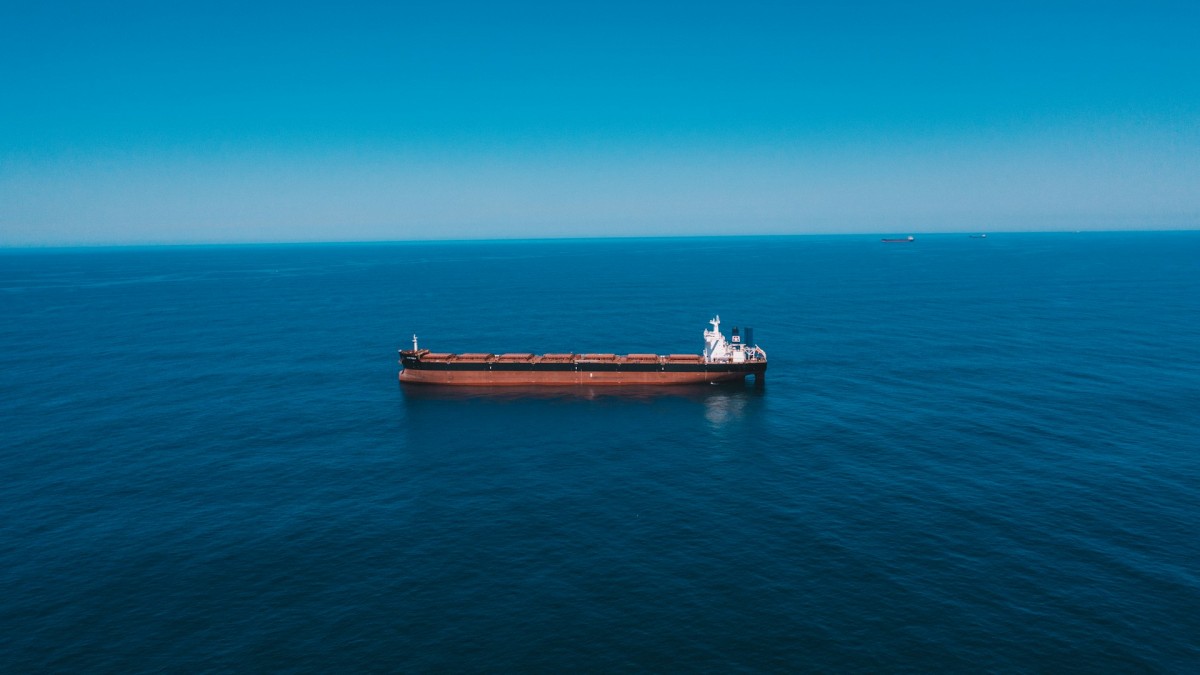
What Happened
On Tuesday, September 2, 2026, the United States launched a series of deadly attacks on Iran, primarily targeting areas in the south and the Strait of Hormuz. President Trump confirmed these strikes, stating, "We hit them last night because they took a shot at our base in Jordan." He further claimed that "some defensive, some offensive" Iranian radars and capabilities along the Strait of Hormuz were neutralized. In response, Tehran retaliated with drone and missile strikes against Gulf nations and Jordan. Simultaneously, the US naval blockade on Iranian ports has reportedly succeeded in cutting off meaningful crude exports through the Strait of Hormuz for approximately seven weeks, a measure that has significantly impacted Iran's foreign-currency earnings. This blockade has forced Chinese refiners to seek alternative crude sources, leading to record premiums for Russian ESPO crude.
The Iranian Revolutionary Guard Corps (IRGC) announced on Wednesday that two foreign oil tankers struck sea mines and caught fire in the Strait of Hormuz after attempting to transit an "illegal route." Saudi shipping company Bahri later reported that two Filipino crew members were killed on board the SIDR vessel during an "incident" in Hormuz. Iran also reported a mass casualty strike at a wedding celebration in Hormozgan province on Tuesday night, claiming five deaths, including a child, and at least 50 wounded. Iranian officials and the Red Crescent Society have formally requested legal action from global bodies, including the International Criminal Court, citing alleged war crimes.
What the Evidence Establishes
Evidence establishes that Chinese refiners are currently paying record premiums for Russian ESPO crude. Offers for November delivery ESPO crude are trading at over $7 per barrel, with some reaching as high as $10 per barrel over Brent crude, as reported by Bloomberg on September 3, 2026, citing traders. This surge in demand is attributed to Chinese independent refiners replacing Iranian crude, which has been cut off by the US naval blockade. China remains the largest buyer of ESPO crude, holding an 83% market share for the first seven months of 2026, though this is a slight decrease from 88% a year prior. Indian refiners have increased their ESPO imports, with their market share rising from 12% to 16% during the same period, driven by a slump in Chinese oil imports between May and June and Middle East supply disruptions.
Total oil exports from Russia's Far Eastern port of Kozmino increased by 6% over the first seven months of the year. The US has conducted military strikes against Iran, and Iran has responded with its own attacks. The US naval blockade has effectively halted Iranian crude exports through the Strait of Hormuz, a critical chokepoint for global oil trade. Iranian Parliament Speaker Ghalibaf stated on Wednesday that Iran does not reject negotiations but views them as a tool in its broader confrontation with the US and Israel, suggesting a conditional willingness to engage if the US fulfills its commitments regarding Hormuz.
Where the Accounts Conflict
Significant discrepancies exist between US and Iranian accounts regarding the recent military engagements and their consequences. President Trump described Iran's retaliation as a "little love-tap" while asserting the US "hit them hard last night" and "blew up much more than their radar." Conversely, Iranian reports detail a "deadly attack" by the US, with the total death toll from the American assault rising to 18, including a mass casualty strike at a wedding celebration in Hormozgan province. Iranian authorities reported five killed, including a child, and at least 50 wounded in this incident, with other reports citing as many as 68 wounded. The Pentagon, cited by BBC, stated it was aware of these reports but denied US forces ever targeted civilians.
Furthermore, Trump claimed that Iran had 52,000 protesters killed three months ago, and now estimates the number to be close to 65,000, describing brutal suppression tactics. However, ZeroHedge commentary notes that these numbers "keep getting inflated, despite there not being any evidence of large-scale protests and violent suppression on the ground in recent months." White House aides are reportedly urging 'quiet' related to the Iran conflict until after November midterm elections, suggesting a potential ramp-up of operations post-election, which contrasts with Trump's public statements that the war won't last "too long." US Treasury Secretary Scott Bessent's rhetoric of "cutting off the head of the snake" also conflicts with observations that there are "no signs of a rapidly collapsing state system" or "masses rising up in the streets" in Iran.
Context and Stakes
The Strait of Hormuz is a critical maritime chokepoint, with approximately one-fifth of the world's total oil consumption passing through it daily. The US naval blockade on Iranian ports, coupled with Iran's retaliatory actions involving sea mines, directly threatens global energy security and shipping lanes. This escalation follows a prolonged period of heightened tensions and sanctions, with the current blockade achieving what years of previous sanctions failed to do: completely halt meaningful Iranian crude exports. The economic pressure on Iran is immense, impacting government finances and foreign-currency reserves, which could destabilize the regime internally or provoke further aggressive responses.
The shift in global oil trade, particularly the record premiums paid by Chinese refiners for Russian ESPO crude, highlights the immediate market impact. This dynamic benefits Russia, providing a robust market for its Far Eastern oil, while increasing costs for Chinese buyers. India's increased reliance on ESPO crude, despite its longer transit time and higher cost compared to Urals blend, underscores the broader supply chain vulnerabilities and the search for reliable alternatives amidst Middle East disruptions. The conflict also carries significant geopolitical stakes, with Israeli Prime Minister Netanyahu openly stating Mossad's continued activity in Iran and the goal of regime collapse, further entrenching the regional proxy conflict.
What to Watch Next
Observers should closely monitor the International Criminal Court's response to Iran's formal requests for legal action regarding alleged civilian deaths and war crimes, particularly concerning the reported wedding strike. Any acknowledgment or initiation of an investigation by global bodies could significantly alter the diplomatic landscape and international pressure on the US. Furthermore, the rhetoric and actions of Iranian Parliament Speaker Ghalibaf, who stated Iran does not reject negotiations but views them as a tool, will be crucial. His emphasis on US fulfillment of commitments before Iran "takes steps" to reopen Hormuz suggests a potential, albeit conditional, path back to the negotiating table, which could de-escalate the naval confrontation.
On the economic front, the sustainability of record ESPO crude premiums and the long-term shifts in Chinese and Indian import patterns warrant attention. Continued high premiums could incentivize Russia to further increase Far Eastern oil exports, while Chinese refiners may seek other alternatives if costs become prohibitive. Any further disruptions in the Strait of Hormuz, such as additional attacks on shipping, would likely trigger a sharp increase in global oil prices and could prompt a more direct military intervention to secure the waterway. The upcoming November midterm elections in the US may also influence the administration's approach to the conflict, with potential for increased operations post-election as suggested by White House aides.
Bottom Line
The US-Iran conflict has intensified with direct military strikes and a highly effective naval blockade, leading to significant economic pressure on Iran and immediate shifts in global oil trade. Chinese refiners are paying unprecedented premiums for Russian ESPO crude to compensate for lost Iranian supply, while India also increases its ESPO imports. Conflicting accounts of casualties and the overall success of military operations highlight a propaganda battle alongside the kinetic conflict. Iran has formally accused the US of war crimes and maintains a conditional openness to negotiations, while US officials express confidence in their strategy to destabilize the Iranian regime. The Strait of Hormuz remains a flashpoint, with attacks on shipping underscoring the risk to global energy supplies. The situation is characterized by a stalemate in military objectives, but a clear economic impact on Iran and a volatile global oil market.
The immediate future will likely see continued military posturing, potential diplomatic maneuvers, and sustained pressure on Iran's economy. The effectiveness of the US blockade and Iran's capacity to endure or circumvent it will dictate the conflict's trajectory. The broader regional implications, including Israel's stated goal of regime collapse in Iran, suggest that a rapid de-escalation is unlikely without significant concessions or a decisive shift in power dynamics. The global energy market will remain sensitive to any developments in the Strait of Hormuz, with prices reflecting the ongoing geopolitical instability.
DECLASSIFIED SOURCE: OilPrice
Read this twice. us strikes hit iran, prompting retaliation and civilian casualty claims. a us naval blockade halts iranian... — that's the bit to remember.
Read this twice. us strikes hit iran, prompting retaliation and civilian casualty claims. a us naval blockade halts iranian... — that's the bit to remember.
The article quotes President Trump authorizing strikes on September 2, 2026 — but Trump left office in January 2021. Which president actually ordered these strikes, or is the entire timeline fabricated?
With the Hormuz blockade pushing ESPO premiums to records, energy traders are pricing in tighter supply while defense names rally on the Trump strike confirmation.