What Happened
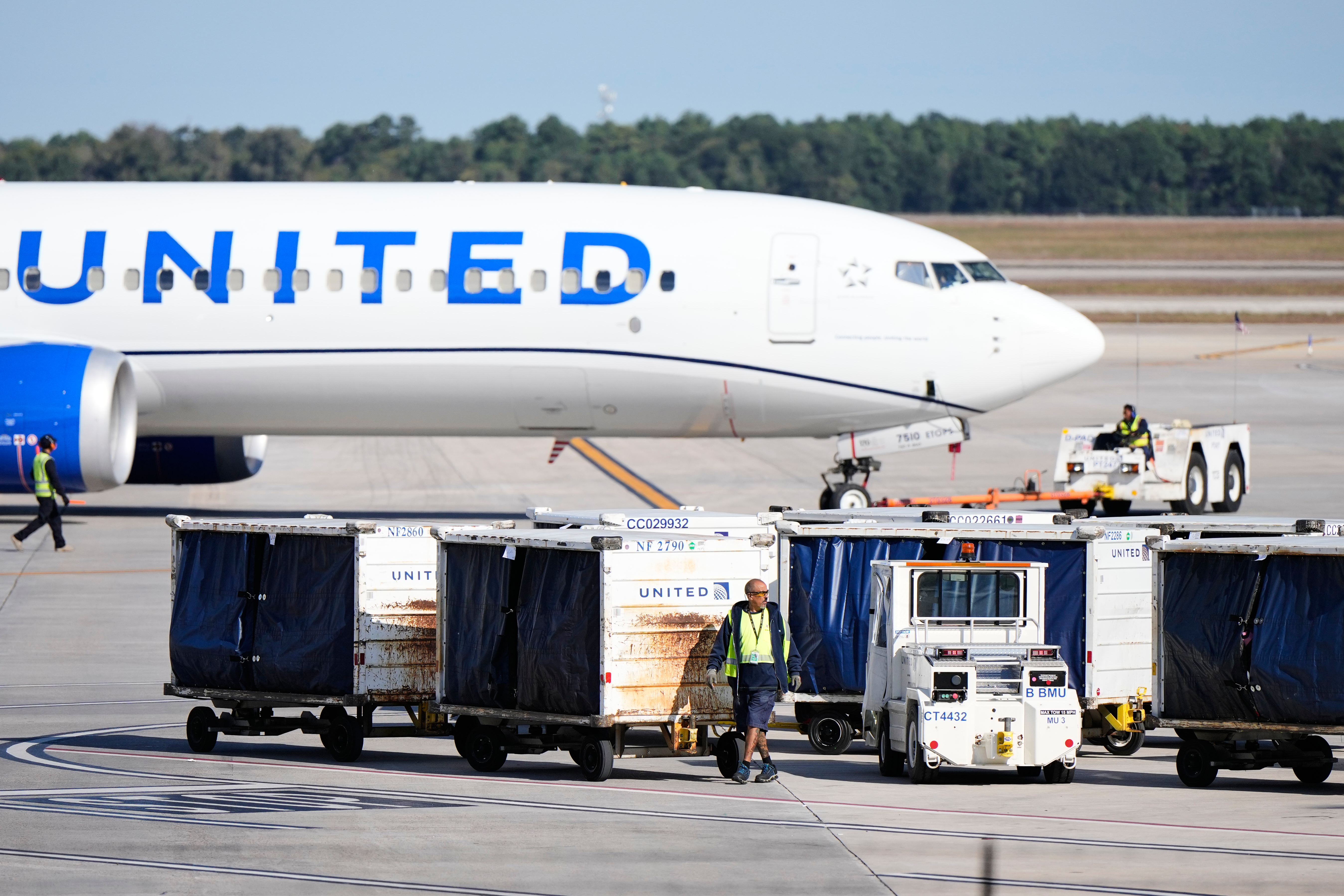
United Airlines confirmed a widespread system outage Monday afternoon that disrupted departing flights across its network, three days after a Federal Aviation Administration router failure triggered a nationwide ground stop. The Chicago-based carrier said the technology problem affected departing flights but did not impact flights already airborne or United Express operations. As of 5:30 p.m. ET, flight-tracking site FlightAware recorded 418 delayed flights — 13 percent of United's schedule — and 21 cancellations. A United spokesperson stated there was no indication the outage was cybersecurity-related. An internal memo from the Air Line Pilots Association, seen by Reuters and CNBC, said the company-wide web-based outage affected multiple pilot-facing applications including crew communications and prevented United from providing final aircraft weights for departing flights, which are essential for pre-departure calculations. Some passengers reported on social media that their aircraft returned to the gate after reaching the runway. United said it resolved the issue later Monday evening.
What the Evidence Establishes
The evidence establishes that United's Monday outage was a separate event from Friday's FAA ground stop, though both exposed systemic fragility in aviation technology infrastructure. Transportation Secretary Sean Duffy attributed Friday's ground stop — which lasted nearly five hours — to a newly installed router in Arkansas that malfunctioned and overwhelmed the aging air traffic control system during a routine copper-to-fiber-optic upgrade. FAA Administrator Bryan Bedford characterized the work as routine maintenance. Aviation analytics firm Cirium reported more than 18,100 flights scheduled to depart U.S. airports between Friday and Sunday were canceled or delayed beyond three hours of their scheduled departure times. United's Monday outage affected its weight-and-balance systems and pilot communications applications, forcing pilots to rely on airport station guidance for departure decisions. The carrier explicitly denied any cybersecurity connection. The same day, JPMorgan Chase experienced a technical problem preventing customers from accessing online accounts, and Microsoft had resolved a major Outlook and Teams disruption on Saturday, suggesting a cluster of high-profile technology failures across critical infrastructure sectors within a 72-hour window.
Where the Accounts Conflict
Accounts conflict on the precise scope and duration of United's Monday outage. United's initial statement described a "widespread system outage" affecting departing flights, while CNBC reported the airline said it had "resolved a technology issue that delayed flight departures" later in the day. The pilots union memo characterized the problem as a "company-wide web-based outage" affecting "multiple pilot facing applications," a more specific technical description than United's public statements. FlightAware data showed 418 delays and 21 cancellations as of 5:30 p.m. ET, but the figures did not isolate how many disruptions were directly caused by the technology issue versus normal operational variance. United said United Express flights were unaffected, but the union memo did not specify whether regional operations used the same affected applications. The FAA did not immediately respond to requests for comment on whether the Monday outage had any connection to the agency's systems, though United and multiple outlets reported no indication of a link. JPMorgan Chase and Microsoft outages occurred on the same day but no evidence connects them to United's systems beyond temporal proximity. The source material does not provide details on the root cause of United's specific software failure or whether it stemmed from the same vendor or infrastructure provider used by other affected entities.
Context and Stakes
The back-to-back failures — Friday's FAA ground stop and Monday's United outage — reveal a transportation sector increasingly dependent on aging, interconnected technology systems with single points of failure. The FAA's telecommunications network, which feeds radar and other data to air traffic controllers, was overwhelmed by a single router malfunction during a fiber upgrade, grounding the entire national airspace for nearly five hours. United's weight-and-balance and pilot communications systems, critical for flight safety calculations, proved vulnerable to a web-based application outage. The cluster of major technology disruptions across aviation, banking, and cloud services within 72 hours raises questions about shared infrastructure dependencies, supply chain vulnerabilities, or potential coordinated stress on critical systems. For United, the operational and reputational stakes are significant: the carrier is still recovering from weekend cascading delays caused by the FAA ground stop, and Monday's self-inflicted disruption compounds customer frustration and operational costs. The Air Line Pilots Association's visibility into the outage through internal memos suggests labor relations may become a factor if pilots perceive technology investments as inadequate. Financially, United shares trade under ticker UAL; peers DAL, AAL, and LUV may see sympathetic pressure. The federal government faces pressure to accelerate FAA modernization funding, which has languished for years despite repeated Government Accountability Office warnings about air traffic control infrastructure.
What to Watch Next
Key developments to monitor in the coming days include: whether United files a Department of Transportation incident report detailing the root cause and remediation steps, which would become public record; whether the FAA issues a Safety Alert for Operators (SAFO) or Information for Operators (InFO) bulletin addressing weight-and-balance system redundancy requirements; whether the ALPA pursues a formal grievance or safety complaint citing the inability to obtain final aircraft weights, which could trigger a National Transportation Safety Board inquiry; whether JPMorgan Chase and Microsoft disclose root causes that reveal any common infrastructure provider or vendor; whether Congress schedules hearings on aviation technology resilience, particularly given Secretary Duffy's public attribution of Friday's failure to a single router; and whether United's operations return to normal schedule integrity by Wednesday, November 18, or whether residual crew and aircraft positioning disruptions extend the recovery. FlightAware data for Tuesday and Wednesday will quantify the true operational tail. Investors should watch UAL pre-market trading Tuesday for reaction to any after-hours disclosures. The FAA's NextGen modernization timeline and funding requests in the upcoming appropriations cycle will indicate whether Friday's ground stop catalyzes accelerated investment or remains a recurring vulnerability.
Bottom Line
United Airlines suffered a significant but contained technology outage on Monday, November 16, 2026, delaying 418 flights and canceling 21, three days after an FAA router failure caused the first nationwide ground stop in years. The two events are technically unrelated but functionally linked: both expose the brittleness of aviation's digital backbone. United's outage struck weight-and-balance and pilot communications systems — safety-critical applications — forcing gate holds and runway returns. The carrier denied cyberattack involvement. The same day saw major outages at JPMorgan Chase and Microsoft, creating an unusual cluster of critical-infrastructure disruptions. No evidence connects them. The FAA's Arkansas router failure during a routine fiber upgrade grounded the national airspace for nearly five hours, stranding over 18,000 flights across the weekend. Transportation Secretary Sean Duffy and FAA Administrator Bryan Bedford have characterized the events as maintenance mishaps, not systemic neglect, but the Government Accountability Office has warned for years about air traffic control infrastructure fragility. United's recovery speed, regulatory response, and whether labor organizations leverage the outage for technology investment demands will determine if this is a one-week operational headache or a catalyst for structural change. The evidence does not support a coordinated cyber campaign, but it does confirm that single points of failure persist in systems where redundancy is supposed to be mandatory.
DECLASSIFIED SOURCE: Operative Telegram Feed (via Real-time Signal Upgrade)
No comments yet. Start the conversation.