What Happened
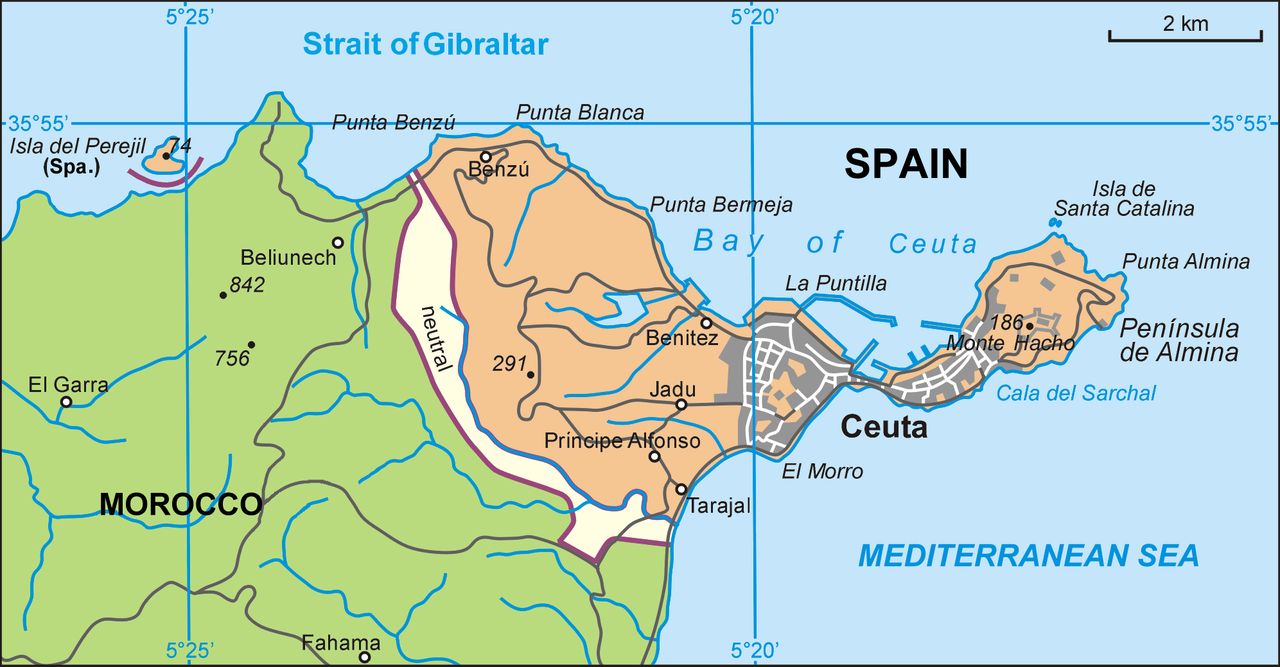
On August 1, 2026, Spain announced that approximately 50,000 migrants who had entered its North African enclave of Ceuta had been returned to Morocco. This development followed an unprecedented surge of migrants crossing into Ceuta from neighboring Morocco in less than 24 hours, which Spanish officials stated involved roughly 49,000 individuals. The influx prompted Spain to declare a state of emergency and deploy military forces, including naval and air assets, and diving teams to patrol the coastline. Videos circulated online depicting migrants swimming around border barriers, utilizing inner tubes, and forcing their way through land crossings. Juan Jesús Vivas, president of Ceuta’s regional government, characterized the situation as a “total humanitarian and social emergency,” urging Madrid to declare a national state of emergency. Prime Minister Pedro Sánchez condemned the events as “an attack on Spain’s territorial integrity” and pledged full state resources to restore order.
Concurrently, a diplomatic dispute escalated between Spain and Israel. On Friday, July 31, Spanish Transport Minister Óscar Puente reposted remarks by Israeli U.N. Ambassador Danny Danon on X, adding the comment, “Well, things are starting to become quite clear.” This post was widely interpreted by Spanish media as lending credibility to online claims blaming Israel for the migrant crisis. Danon had criticized Spain’s handling of the border emergency, stating, “Spain, which never misses an opportunity to lecture Israel, has declared a state of emergency in Ceuta following the crisis over its immigration policy.” He further questioned why Spain “still maintains colonial enclaves in Africa,” referring to Ceuta and Melilla. Israel’s Foreign Ministry subsequently distanced itself from Danon’s remarks, with Israeli Chargé d’Affaires Dana Erlich stating on X that Danon’s comment “does not represent the position of the State of Israel.”
What the Evidence Establishes
The evidence establishes that Spain experienced a significant and rapid influx of approximately 49,000 migrants into its Ceuta enclave from Morocco in under 24 hours, leading to an official declaration of a state of emergency and the deployment of military assets. Al Jazeera reported on August 1, 2026, that Spain confirmed the return of 50,000 migrants to Morocco. This figure suggests a near-complete repatriation of the recent arrivals. Prime Minister Pedro Sánchez publicly labeled the event an “attack on Spain’s territorial integrity,” indicating a strong governmental stance on the border breach. The crisis drew international attention, with Italian Prime Minister Giorgia Meloni warning of threats to Europe’s borders and former U.S. President Donald Trump describing the events as an “invasion of a country.”
Furthermore, a diplomatic incident occurred involving Spanish Transport Minister Óscar Puente and Israeli U.N. Ambassador Danny Danon. Danon’s public criticism of Spain’s migration policy and its colonial enclaves was followed by Puente’s cryptic social media post, which Spanish media widely interpreted as endorsing conspiracy theories linking Israel to the Ceuta crisis. While several Spanish politicians and commentators, including Carolina Alonso, Gabriel Rufián, José Vizner, and Rubén Gisbert, advanced claims alleging Israeli or U.S. involvement, no public evidence was presented to support these allegations. Israel’s Foreign Ministry, through Chargé d’Affaires Dana Erlich, explicitly disavowed Danon’s comments, underscoring the official Israeli position that his remarks did not reflect the state’s view.
Where the Accounts Conflict
The primary conflict in accounts centers on the underlying cause and alleged orchestrators of the migrant surge into Ceuta. While Spanish officials, including Prime Minister Pedro Sánchez, framed the influx as an “attack on Spain’s territorial integrity,” implying external agency, the Al Jazeera report notes “allegations they were actively encouraged to make the crossing, even as poverty and inequality drives people to seek opportunities in Europe.” This suggests a dual narrative: one of deliberate provocation and another of socio-economic factors driving migration, potentially exploited by actors.
A more significant conflict arises from the unsubstantiated claims blaming Israel and, in some cases, the United States for the crisis. Breitbart reported that Spanish Transport Minister Óscar Puente’s social media post, stating “Well, things are starting to become quite clear” after reposting Israeli U.N. Ambassador Danny Danon’s criticism, was widely interpreted as lending credibility to these conspiracy theories. Commentators like Carolina Alonso, Gabriel Rufián, José Vizner, and Rubén Gisbert explicitly advanced allegations of Israeli retaliation against Spain for its criticism of Jerusalem’s actions against Hamas, or suggested U.S. and Israeli interests were served by the instability. However, the Breitbart article explicitly states, “No public evidence was presented supporting those allegations.” Israel’s Foreign Ministry further contradicted any official Israeli involvement by publicly disavowing Ambassador Danon’s remarks, clarifying that his comments did not represent the State of Israel’s position. This creates a clear divergence between speculative political accusations and official diplomatic statements, with no verifiable evidence supporting the former.
Context and Stakes
The Ceuta migration crisis unfolds against a backdrop of severely strained relations between Spain and Israel. Since the October 7 terrorist massacre against Israel by Hamas, Prime Minister Pedro Sánchez has emerged as a prominent European critic of Israel’s military campaign, recognized a Palestinian state, and advocated for increased international pressure on Israel. This diplomatic tension provides the immediate context for the exchange between Israeli U.N. Ambassador Danny Danon and Spanish Transport Minister Óscar Puente, turning a migration emergency into a new flashpoint in the bilateral relationship. The allegations of Israeli or U.S. involvement, though unsubstantiated, reflect the heightened political polarization surrounding these issues.
The stakes extend beyond bilateral relations to broader European border security and internal political dynamics. The scale of the Ceuta influx, described by opposition Vox leader Santiago Abascal as an “invasion,” has reignited debates over immigration policy across Europe. Italian Prime Minister Giorgia Meloni’s warning that uncontrolled illegal immigration poses a direct threat to Europe’s borders, and senior Italian officials raising the possibility of suspending Spain from the Schengen open-border area, underscore the potential for the crisis to impact EU cohesion and policy. Domestically, the crisis has drawn sharp criticism of the Sánchez government from opposition leaders like Alberto Núñez Feijóo, who demanded stronger action. The events also resonated in the United States, with former President Donald Trump and the White House using the situation to criticize Democratic immigration policies, highlighting the global political implications of localized border crises.
What to Watch Next
Observers should monitor the diplomatic fallout between Spain and Israel. Despite Israel’s Foreign Ministry distancing itself from Ambassador Danon’s remarks, the Spanish Transport Minister’s public endorsement of unsubstantiated claims blaming Israel could lead to further official protests or a recall of ambassadors, depending on Spain’s subsequent actions or clarifications. Any formal statement from the Spanish government regarding Puente’s comments will be critical in determining the immediate trajectory of bilateral relations. The European Union’s response to the Ceuta crisis will also be a key area of focus. Following Italian Prime Minister Giorgia Meloni’s strong statements, the European Commission may initiate discussions on enhanced border security measures for its North African enclaves, potentially including increased funding or joint patrols with Spain and Morocco. The implementation of any new EU-level policies or financial aid packages will indicate the bloc's commitment to addressing such large-scale migration events.
Furthermore, the long-term stability of the Spain-Morocco border will require close attention. While Spain reported the return of 50,000 migrants, the underlying drivers of migration, such as poverty and inequality in North Africa, persist. Any future shifts in Morocco’s border control posture, potentially influenced by diplomatic or economic incentives from Spain or the EU, could significantly impact future migration flows. Domestically, the political pressure on Prime Minister Sánchez’s government will likely continue. Opposition parties will scrutinize the government’s handling of both the migration crisis and the diplomatic tensions, potentially influencing upcoming legislative debates or public opinion ahead of future elections. The rhetoric from figures like Santiago Abascal and Alberto Núñez Feijóo will indicate the sustained political impact of the Ceuta events.
Bottom Line
Spain has successfully repatriated approximately 50,000 migrants to Morocco following an unprecedented influx into Ceuta, demonstrating a rapid and decisive border response. This operational success, however, is overshadowed by a significant diplomatic escalation with Israel, triggered by a Spanish minister’s public actions that fueled unsubstantiated claims blaming Israel for the migration crisis. The incident highlights the fragility of international relations amidst ongoing geopolitical tensions, particularly concerning Spain’s critical stance on Israel’s actions in Gaza.
The Ceuta crisis has also underscored the persistent challenges of irregular migration into Europe and the potential for such events to be exploited for political purposes, both domestically and internationally. While Spain has asserted its territorial integrity, the broader implications for European border policy and the Schengen area remain a concern for EU partners. The lack of verifiable evidence for the conspiracy theories linking Israel or the U.S. to the migrant surge emphasizes the need for factual reporting in highly charged political environments. The immediate future will likely see continued diplomatic maneuvering and potential EU-level discussions on migration management, with the underlying socio-economic pressures driving migration remaining a long-term challenge.
DECLASSIFIED SOURCE: Al Jazeera - News (via Real-time Signal Upgrade)
The piece says 49,000 crossed in 24 hours and then 50,000 were returned. So Spain sent back more people than just arrived that day — where did the extra thousand come from? Were they already held in Ceuta, or is one o...
Moving 50,000 people across a border like that is going to put massive pressure on local services and housing prices in those areas.