What Happened
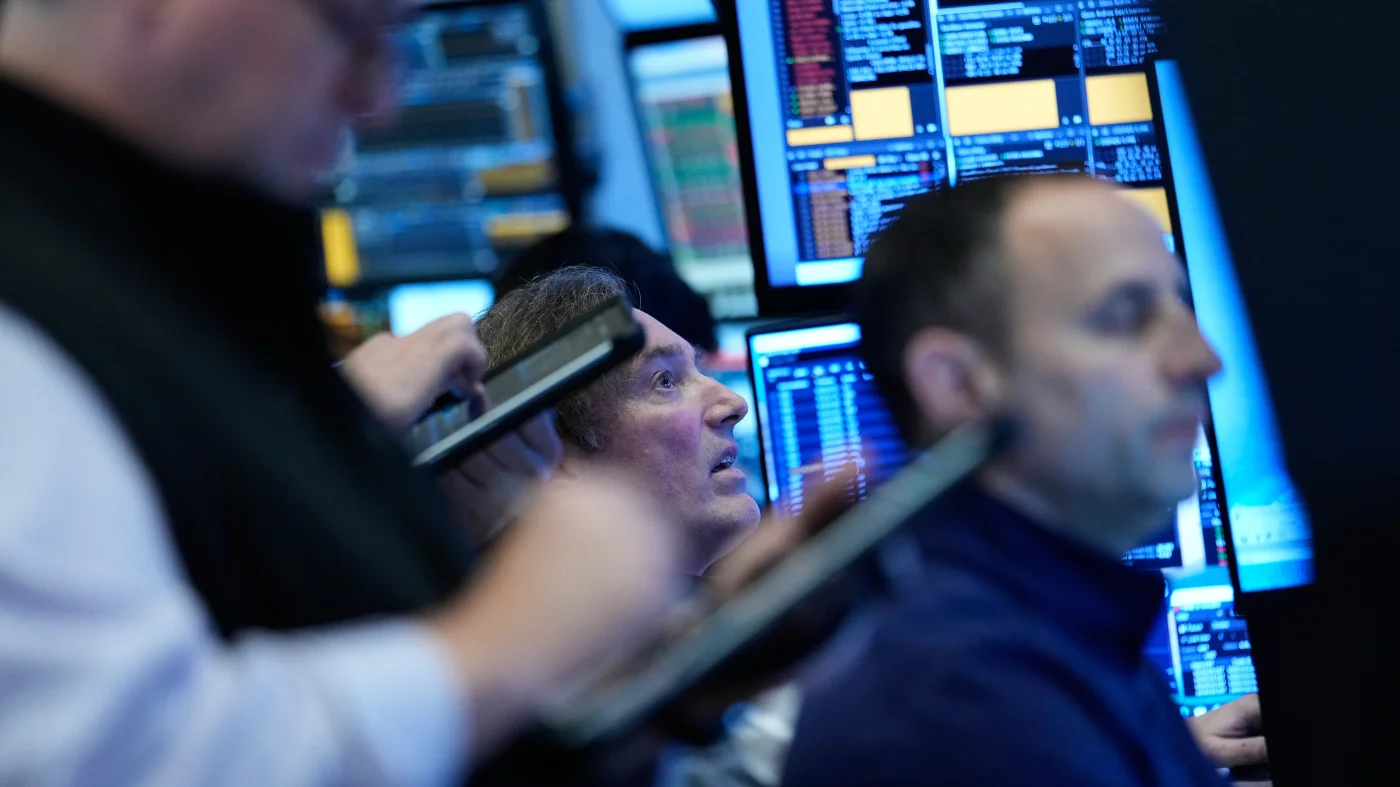
On Friday, November 20, 2026, the S&P 500 index experienced a notable decline, sinking by 3.7% by the close of trading. Concurrently, the Nasdaq Composite, a technology-heavy index, reversed its year-to-date gains and turned negative for 2026. This market contraction occurred despite a significant event in the technology sector: the record-setting initial public offering (IPO) of Anthropic, a prominent artificial intelligence company. The Nasdaq Composite had previously reached an all-time high in early October, but by mid-afternoon on Friday, it had plummeted by more than 4,700 points from its recent peak. This sharp reversal indicates a broader shift in investor sentiment, particularly concerning the high-valuation technology and AI sectors that had previously driven much of the market's growth throughout the year.
The market's performance on this day marked a critical juncture, as the substantial losses erased months of gains for many investors. The S&P 500's drop reflects a widespread sell-off across various sectors, though the underlying cause is heavily attributed to the performance of AI stocks. These companies, which command hefty market values, have been identified as both the primary drivers of Wall Street's significant gains earlier in 2026 and the catalysts behind the current substantial slide. The juxtaposition of a major AI company like Anthropic successfully going public with the broader AI sector experiencing a downturn highlights a complex and potentially contradictory market environment.
What the Evidence Establishes
Evidence from NPR News and The Hill establishes a direct correlation between the performance of AI stocks and the broader market's direction. According to NPR News on November 20, 2026, "AI stocks have hefty market values and have a much bigger impact on the market's direction." This statement directly links the substantial valuations of AI companies to their outsized influence on overall market movements. The same source further clarifies that these stocks "were responsible for Wall Street's big gains this year and are now behind the big slide for the market." This indicates a cyclical pattern where the same segment of the market that fueled growth is now precipitating a decline.
The Hill's reporting on the same day corroborates the market's heavy losses, noting that "Stocks have taken heavy losses this week." Crucially, The Hill highlights that this downturn occurred "despite Anthropic going public after a record-setting initial public offering (IPO)." This detail underscores that even a successful, high-profile event within the AI sector could not counteract the broader negative trend impacting AI valuations. The Nasdaq Composite's performance is a key indicator, with The Hill stating it "is now in the red since the start of the year," having dipped by over 4,700 points since its early October peak. This collective evidence points to a significant correction within the AI and tech sectors, driven by a re-evaluation of their high market capitalizations.
Where the Accounts Conflict
The provided accounts from NPR News and The Hill do not present direct conflicts regarding the factual market movements or the primary cause of the downturn. Both outlets agree that the S&P 500 and Nasdaq Composite experienced significant declines on November 20, 2026, with the Nasdaq turning negative for the year. Both also identify AI stocks as the central factor driving both the earlier gains and the current losses. The core narrative—a market correction led by AI valuations—is consistent across both reports.
However, there is a subtle difference in emphasis. NPR News focuses more broadly on the general impact of "AI stocks" on the market's direction, highlighting their "hefty market values" and their dual role in both gains and losses. The Hill, while agreeing with the overall trend, specifically introduces the context of the "massive Anthropic IPO." This detail from The Hill adds a layer of nuance, suggesting that even a positive, record-setting event within the AI space was insufficient to stem the tide of the broader sell-off. While not a conflict, this difference in specific contextual detail provides a slightly different lens through which to view the market's behavior, with The Hill emphasizing the paradox of a successful IPO amidst a sector-wide decline.
Context and Stakes
The current market downturn, heavily influenced by AI stocks, carries significant implications for both individual investors and the broader economy. The substantial market values accumulated by AI companies throughout 2026 meant that their correction would inevitably have a magnified effect on major indices like the S&P 500 and the Nasdaq Composite. When a sector responsible for "Wall Street's big gains this year" suddenly reverses course, it signals a potential shift in investor confidence and risk appetite. This situation is particularly critical for growth-oriented portfolios and technology funds that have heavily invested in AI innovations, as their valuations are directly tied to the performance of these high-flying stocks.
The stakes extend beyond immediate portfolio losses. A sustained downturn in the technology sector, particularly AI, could impact venture capital funding, slow innovation, and potentially lead to job losses in related industries. The fact that the Nasdaq Composite, a bellwether for technological advancement, has gone "in the red since the start of the year" suggests a re-evaluation of future growth prospects. For the national finance landscape, this correction could influence interest rate decisions by central banks, corporate investment strategies, and consumer spending, especially if the wealth effect from stock market gains diminishes. The market's reaction to the Anthropic IPO, where a record-setting event was overshadowed by broader declines, underscores the fragility of current valuations and the potential for further volatility as investors recalibrate their expectations for the AI boom.
What to Watch Next
Investors and analysts will closely monitor several key indicators in the coming days and weeks to assess the market's trajectory following this significant correction. The immediate focus will be on whether the sell-off extends into the next trading week or if a rebound attempt materializes. Specific attention will be paid to the performance of major AI-centric companies and technology giants that heavily influence the Nasdaq Composite. Any statements or guidance from these companies regarding their future earnings or growth projections could significantly impact market sentiment. Furthermore, broader economic data releases, such as inflation reports or employment figures, will be scrutinized for their potential to either exacerbate or alleviate current market anxieties.
Beyond individual stock performance, the behavior of institutional investors will be a critical watch point. Large-scale fund flows, particularly into or out of technology-focused exchange-traded funds (ETFs), will signal whether the current downturn is perceived as a temporary correction or the beginning of a more prolonged bear market in the AI sector. The market's reaction to any further news regarding AI development, regulatory discussions, or competitive landscape shifts will also be crucial. A sustained period of volatility could prompt a re-allocation of capital away from high-growth tech into more stable, value-oriented sectors, fundamentally altering market dynamics for the remainder of 2026 and into 2027. The ability of the Nasdaq to reclaim positive year-to-date performance will be a key psychological and technical benchmark.
Bottom Line
The stock market experienced a significant downturn on November 20, 2026, with the S&P 500 falling 3.7% and the Nasdaq Composite turning negative for the year. This decline is directly attributable to a correction in AI stocks, which had previously driven much of Wall Street's gains. Despite a record-setting IPO by AI firm Anthropic, the broader market sentiment shifted, indicating a re-evaluation of the high valuations within the technology sector. The substantial market capitalization of AI companies means their performance has a disproportionate impact on overall market direction, making them central to both recent surges and current slides.
The immediate outlook suggests continued volatility as investors digest these losses and reassess future growth prospects for AI and technology. The market's ability to stabilize will depend on a combination of factors, including the performance of key tech stocks, institutional investment flows, and broader economic indicators. This event underscores the inherent risks associated with concentrated market leadership and the potential for rapid reversals when highly valued sectors undergo a correction. The coming weeks will be crucial in determining if this is a temporary setback or a more fundamental shift in the market's perception of AI's immediate growth trajectory and valuation sustainability.
DECLASSIFIED SOURCE: NPR News (via Real-time Signal Upgrade)
The article mentions a 3.7% drop in the S&P 500 index, but it doesn't necessarily follow that this decline is directly driven by the correction in AI stocks, as the Nasdaq Composite's turn into negative territory for...
The Nasdaq flipped negative for 2026 while Anthropic just posted a record IPO — scoreboard says the rally’s over, but the headlines still pretend it’s a buying opportunity.
This is worth tracking. The next update should tell us whether ai stocks' significant market values led to a 3.7% s&p 500 drop and nasdaq composite turning negative for 2... is real or just noise.
The article claims that the S&P 500 index 'sinking by 3.7% by the close of trading' on November 20, 2026, was driven by the correction in AI stocks, but it doesn't provide any evidence that this decline was directly c...
The article mentions the S&P 500 dropped 3.7%, which is a significant decline, but what does this mean for people who are trying to save for retirement or pay their mortgages - will this correction lead to layoffs or...