What Happened
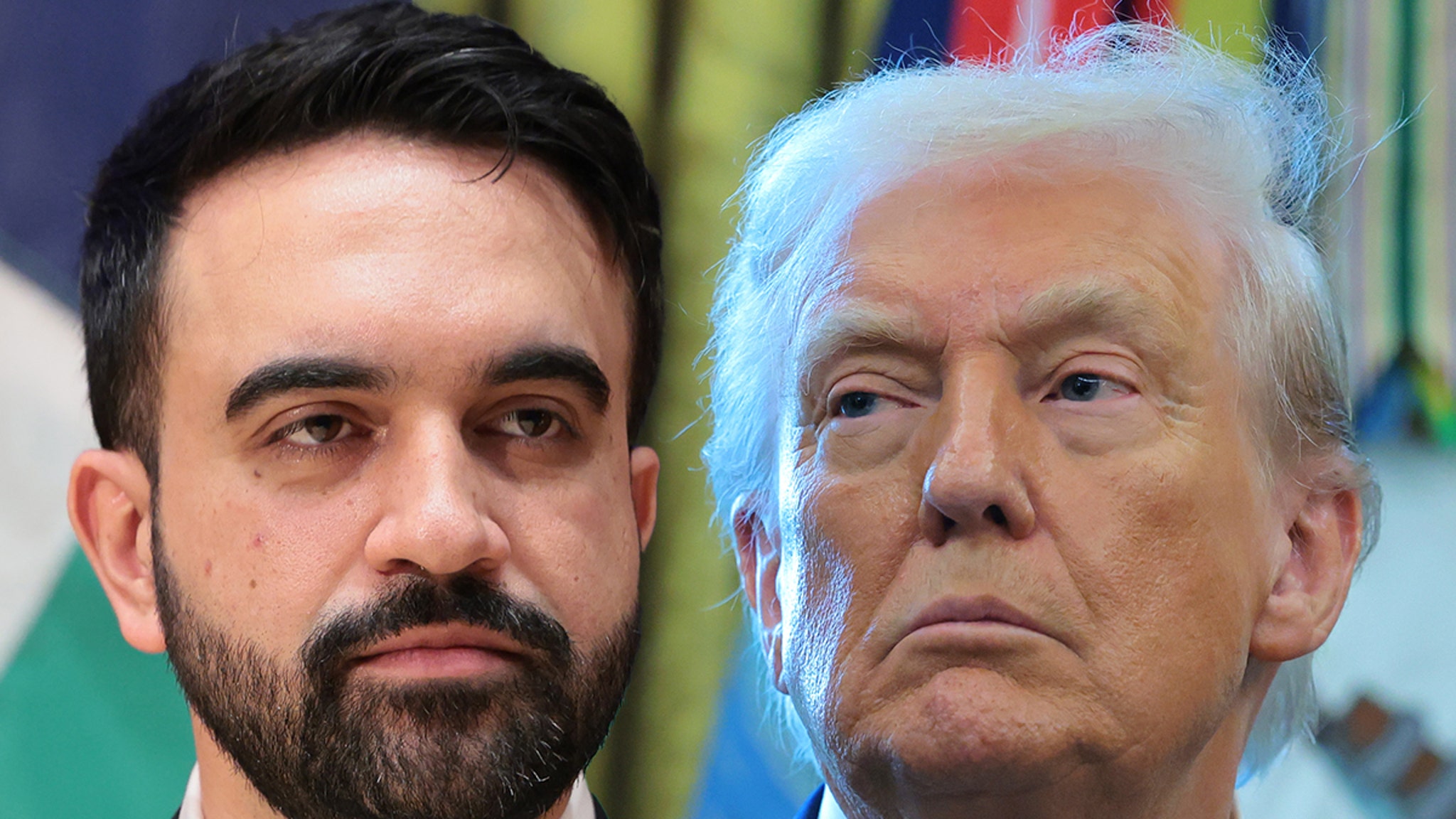
New York City Mayor Zohran Mamdani and President Donald Trump are scheduled to hold their third in-person meeting this week at Gracie Mansion, the mayor's official residence. This sit-down is slated to occur ahead of the United Nations General Assembly, which will bring numerous international leaders to New York. According to CNN, as cited by TMZ, the discussion will "focus on issues affecting New York City and New Yorkers." This engagement follows two previous private meetings between the two leaders: an initial Oval Office meeting in November of last year and a second encounter in February of this year. Separately, Treasury Secretary Scott Bessent announced on Sunday that recent discussions with Chinese officials regarding trade and artificial intelligence were "very successful," preceding an anticipated meeting between President Trump and Chinese President Xi Jinping later this week. These high-level diplomatic and political engagements underscore a period of intense activity in both domestic and international policy arenas.
The upcoming meeting between Mamdani and Trump is notable given their publicly contentious relationship. Despite their previous private interactions, President Trump has reportedly referred to Mamdani as a "lunatic." Their last public appearance at Game 3 of the NBA Finals in June saw Mamdani explicitly state they would not be chatting, emphasizing, "If the president went to a game, that's his decision to make. If I go to the game, I’ll be doing so separately." Furthermore, Mamdani recently threatened Israeli Prime Minister Benjamin Netanyahu in an interview with The New York Times, stating Netanyahu "belongs in The Hague," a remark that President Trump promptly countered by assuring Netanyahu he would not face arrest upon entering the U.S. for the U.N. General Assembly. These public exchanges highlight a significant divergence in political rhetoric despite the ongoing private dialogue.
What the Evidence Establishes
The evidence establishes that New York City Mayor Zohran Mamdani and President Donald Trump are scheduled for a third private meeting at Gracie Mansion. This meeting is confirmed to take place tomorrow, September 22, 2026, according to CNN reporting cited by TMZ. The stated purpose, conveyed by Mamdani's spokesperson, is to address "issues affecting New York City and New Yorkers." This upcoming interaction builds on two prior in-person meetings: one in the Oval Office in November of last year and another in February of this year. These private engagements persist despite a documented history of public antagonism between the two figures, including President Trump's use of the term "lunatic" to describe Mamdani and Mamdani's public refusal to interact with Trump at a June NBA Finals game.
Furthermore, the evidence confirms a broader pattern of high-level diplomatic activity. Treasury Secretary Scott Bessent's statement on Sunday, September 20, 2026, indicates that preparatory talks with Chinese officials on trade and AI have concluded successfully. This precedes a planned meeting between President Trump and Chinese President Xi Jinping later this week. The timing of both the Trump-Mamdani and Trump-Xi meetings, coinciding with the U.N. General Assembly, suggests a strategic effort to conduct significant bilateral and domestic discussions around a major international event. Mamdani's controversial statement regarding Israeli Prime Minister Benjamin Netanyahu, made in an interview with The New York Times, and Trump's subsequent public assurance to Netanyahu, further underscore the complex interplay of domestic and international political dynamics surrounding these scheduled meetings.
Where the Accounts Conflict
The primary conflict in accounts does not stem from factual discrepancies regarding the scheduled meetings, but rather from the stark contrast between the public rhetoric and the private actions of President Trump and Mayor Mamdani. Publicly, President Trump has characterized Mayor Mamdani as a "lunatic," a label that suggests deep political animosity. Similarly, Mayor Mamdani has openly expressed disdain for President Trump, notably stating his intention to avoid interaction at Game 3 of the NBA Finals in June, declaring, "If the president went to a game, that's his decision to make. If I go to the game, I’ll be doing so separately." This public stance was further amplified by Mamdani's controversial remark in The New York Times that Israeli Prime Minister Benjamin Netanyahu "belongs in The Hague," which President Trump publicly refuted by assuring Netanyahu's safety in the U.S.
Despite these pronounced public disagreements and mutual criticisms, the two leaders are consistently engaging in private, in-person meetings. The upcoming Gracie Mansion meeting marks their third such encounter, with previous sit-downs occurring in November and February. The stated purpose of these private discussions, according to Mamdani's spokesperson, is to address "issues affecting New York City and New Yorkers." This creates a significant divergence between the public narrative of political opposition and the private reality of transactional engagement. The conflict lies in reconciling the harsh public framing with the pragmatic necessity of direct communication, suggesting that political expediency and governance requirements supersede ideological or personal animosity in closed-door settings. No direct conflicting accounts from different sources regarding the scheduling or stated purpose of the meetings were identified in the provided material.
Context and Stakes
The upcoming meeting between President Trump and Mayor Mamdani is set against the backdrop of the United Nations General Assembly, an annual event that draws global leaders to New York City. This timing elevates the visibility and potential implications of their interaction, even if the stated focus is local New York City issues. For Mayor Mamdani, engaging directly with a sitting President, particularly one with whom he has public disagreements, can be seen as a pragmatic move to secure federal attention or resources for the city. It also positions him as a key figure capable of navigating complex political landscapes, despite his progressive stance and past criticisms of Trump and international figures like Benjamin Netanyahu.
For President Trump, these meetings, both with Mamdani and the anticipated one with Chinese President Xi Jinping, serve multiple strategic purposes. Domestically, engaging with a prominent Democratic mayor, even a critical one, can project an image of bipartisan willingness to address urban challenges, potentially appealing to a broader electorate. Internationally, the meeting with President Xi, following "very successful engagement" on trade and AI as reported by Treasury Secretary Scott Bessent, is critical for managing U.S.-China relations, which have significant global economic and geopolitical ramifications. The stakes are high for both leaders: Mamdani seeks to leverage federal power for local benefit while maintaining his political identity, and Trump aims to demonstrate leadership on both domestic governance and critical foreign policy fronts during a high-profile international gathering. The public sparring over Netanyahu also highlights the complex interplay of local, national, and international politics that Mamdani is navigating.
What to Watch Next
Following the scheduled meeting at Gracie Mansion, observers should closely monitor any official statements or leaks from either Mayor Mamdani's office or President Trump's team regarding the specific outcomes or topics discussed. Given their history of public disagreement, the tone and content of any post-meeting remarks will be crucial indicators of the meeting's success or failure. A joint statement, however unlikely given past animosity, would signal a significant shift, while separate, terse statements would suggest a continuation of their transactional, publicly adversarial relationship. The immediate aftermath, within 24-48 hours, will likely reveal the initial framing of the meeting by both sides, particularly concerning the "issues affecting New York City and New Yorkers" that were reportedly on the agenda.
Concurrently, attention will shift to the anticipated meeting between President Trump and Chinese President Xi Jinping later this week. The details emerging from this high-stakes summit, especially concerning trade and artificial intelligence, will have substantial global economic and technological implications. Treasury Secretary Scott Bessent's positive assessment of preliminary talks sets a certain expectation, and any deviation from this optimistic outlook could trigger market reactions. Specific policy announcements, joint declarations, or even subtle shifts in diplomatic language regarding U.S.-China relations will be key indicators. Furthermore, the broader context of the U.N. General Assembly will continue to unfold, with Mamdani's public stance on international figures like Netanyahu potentially influencing other diplomatic interactions or public discourse during the assembly.
Bottom Line
The scheduled third private meeting between President Trump and New York City Mayor Zohran Mamdani at Gracie Mansion, occurring just before the U.N. General Assembly, underscores a pattern of pragmatic, transactional engagement that transcends their well-documented public animosity. Despite Trump's past labeling of Mamdani as a "lunatic" and Mamdani's public refusal to interact with Trump at a June NBA game, the necessity of addressing "issues affecting New York City and New Yorkers" drives these closed-door discussions. This dynamic highlights how political leaders often compartmentalize ideological differences to pursue specific policy or governance objectives, particularly when federal and local interests intersect.
In parallel, the successful preliminary talks between U.S. and Chinese officials on trade and AI, preceding a Trump-Xi meeting, signal a concerted effort to manage critical international relationships amidst global events. Both sets of meetings, domestic and international, reflect a strategic use of the U.N. General Assembly period for high-level diplomacy and problem-solving. The core takeaway is that despite public posturing and ideological divides, direct communication channels remain open and are actively utilized when perceived mutual interests or pressing governance needs dictate, demonstrating a complex interplay between public narrative and private political action.
DECLASSIFIED SOURCE: TMZ (via Real-time Signal Upgrade)
No comments yet. Start the conversation.