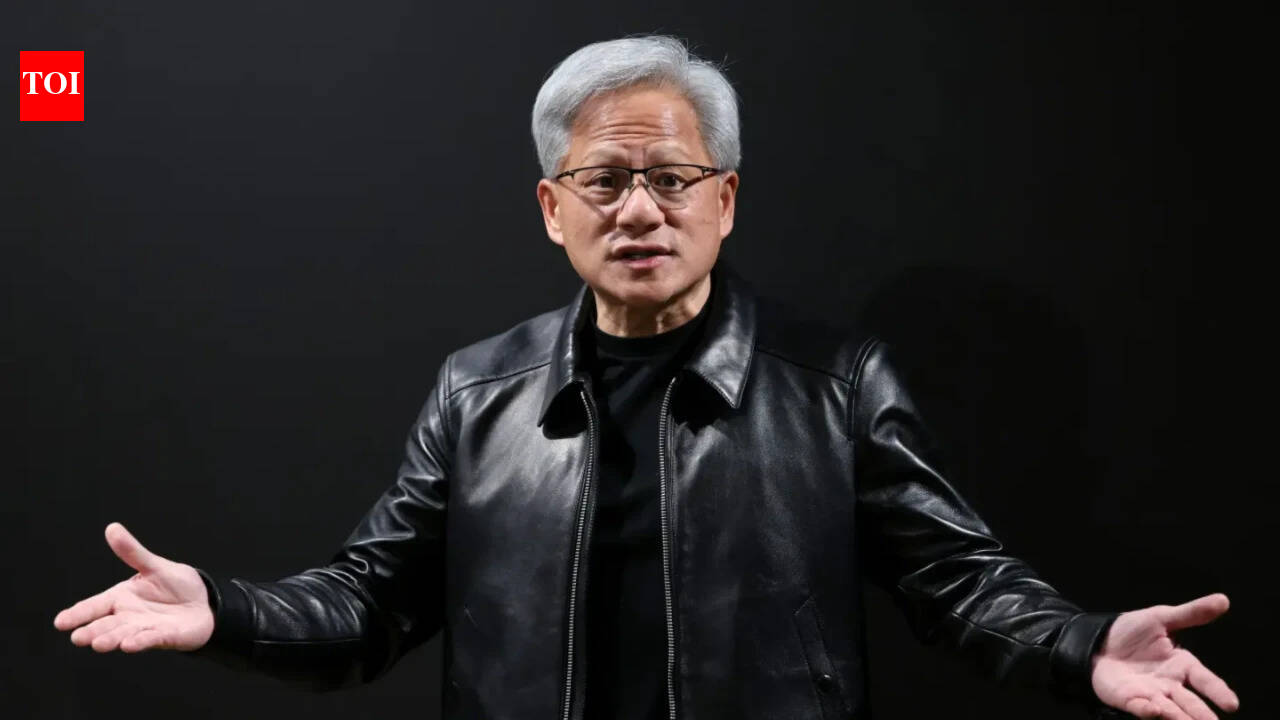
What Happened
Nvidia Corp. announced the resignation of founding CEO Jensen Huang on November 12, 2026, after he admitted to the board's general counsel that he had maintained an extramarital relationship with Alice Huang, a Singapore-based executive at Megaspeed, a data-center operator under U.S. federal investigation for allegedly funneling Nvidia chips to China in violation of export controls. Huang, 63, had denied the relationship on the record for more than a year before confessing last week. Chief Financial Officer Colette Kress was named interim CEO effective immediately. Huang retains a 3.5 percent stake in the company, valued at roughly $42 billion at current prices, making him the largest individual shareholder. The board disclosed no succession timeline.
Simultaneously, the New York Post published accounts from multiple insiders describing a years-long pattern of verbal abuse by Huang. In a closed-door meeting last February attended by more than 30 executives, Huang reportedly told Jay Puri, then executive vice president of worldwide field operations, "I hope you get the flu and I hope it gets worse," adding, "I hope you die and put us all out of our misery." A separate 2025 meeting with roughly 40 staffers saw Huang tell a senior sales leader, "You don't know dick about my business." Another incident at Nvidia's Santa Clara headquarters allegedly involved Huang throwing a water bottle at a top executive. Biographer Stephen Witt, writing in the New York Times, characterized Huang's public humility as a cloak for arrogance, noting that contradicting him "was like lighting a fuse."
What the Evidence Establishes
Three independent reporting threads converge on the timeline. The New York Times confirmed Huang confessed to Nvidia's general counsel last week after days of denials. The Times also cited five employees who said Huang was involved with Kimberly Powell, Nvidia's vice president of health care, a direct report — a relationship not expressly forbidden by Nvidia's code of conduct but widely viewed as a governance failure. Reuters later cited two sources describing a second employee relationship. Business Insider reported that the board's stated reason for accepting the resignation was not disclosed, but the espionage allegation was "likely the key reason" for the speed of the ouster. TechCrunch revealed that Nvidia's chief security officer David Reber departed in August 2026, citing a young-onset Parkinson's diagnosis, and was replaced by Saša Zdjelar, a former ExxonMobil and Salesforce executive. Reber's exit preceded Huang's resignation by two and a half months. Nvidia's top lawyer had been engaged with the government's Megaspeed inquiry for more than a year, per the Times. Megaspeed has denied wrongdoing. An open letter from the "Stand with Jensen" campaign, claiming 5,000-plus employee signatures, demands due process and reinstatement pending a completed investigation.
Where the Accounts Conflict
The central dispute is whether the board acted on verified espionage risk or on Huang's dishonesty and management culture. Business Insider's Alistair Barr argues the espionage case may be "flimsy" and politically inflated by China hawks seeking stricter export controls — a policy Huang opposed. Barr warns that if U.S. intelligence was overstated to remove a CEO favoring engagement with China, "officials may have damaged America's lead in AI in the name of protecting it." The New York Times frames the departure as a corporate-governance failure: "In the world of corporate governance, the worst thing a chief executive can do is lie, especially in a crisis. It is a reason they get fired." The Post's abuse allegations, if accurate, suggest a toxic culture tolerated for years. The "Stand with Jensen" petition argues no public evidence substantiates the spying claim and that Huang deserves due process after 33 years at the helm. Nvidia's board has not stated whether the espionage allegation was determinative, leaving open whether a future investigation could exonerate Huang on that count while upholding the firing for cause based on misleading the board and the direct-report relationships.
Context and Stakes
Nvidia controls an estimated 80-to-90 percent of the global market for AI training chips, making its leadership stability a national-security concern. The Megaspeed investigation touches on the Biden administration's October 2022 and October 2023 export-control rules restricting advanced semiconductor shipments to China. Huang had publicly advocated for a less-restrictive approach, arguing that cutting off China accelerates domestic Chinese chip development. His removal could signal a hardening of U.S. enforcement posture. Governance experts note the absence of a succession plan despite Huang's 33-year tenure and the unusual reporting structure — more than 60 top leaders reporting directly to him — created a single point of failure. Kress, CFO since 2013, provides continuity but lacks Huang's technical vision. The company's market capitalization exceeded $1.2 trillion as of November 14; any prolonged uncertainty could trigger shareholder litigation. Retired intelligence officer Nicholas Eftimiades told TechCrunch the episode should be a "wake-up call" for U.S. industry, estimating "trillions" in lost intellectual property to Chinese operations that cultivate multi-year executive relationships rather than short-term honeypots.
What to Watch Next
The board's independent investigation, reportedly underway, will determine whether the espionage allegation is substantiated. If U.S. intelligence agencies brief the board with classified evidence, the proceedings may remain opaque. A second track: the "Stand with Jensen" organizers plan to deliver their petition to the board this week; if they secure support from major institutional shareholders — Vanguard, BlackRock, and Fidelity collectively hold roughly 18 percent — pressure for a special meeting could build. Third, federal prosecutors may expand the Megaspeed probe to examine whether Nvidia's export-compliance controls were circumvented with Huang's knowledge. Fourth, Kress's first earnings call, likely in late November, will be scrutinized for signals on succession. The board has retained an executive-search firm, but insiders say no internal candidate commands the requisite authority. Finally, any civil litigation from shareholders alleging the board failed to oversee Huang's conduct or disclose material risks could surface in Delaware Chancery Court within 90 days.
Bottom Line
Nvidia's board removed its founding CEO over a confluence of compromised judgment — an undisclosed relationship with a target of a federal espionage probe — and a documented pattern of executive abuse that the board either ignored or tolerated for years. The espionage allegation remains unproven in public; if it collapses, the board's credibility will suffer, but the independent grounds for termination — misleading the board for over a year and engaging in relationships with direct reports — are sufficient under Delaware law to uphold a for-cause firing. Kress steadies the ship in the near term, but the lack of a succession plan after three decades of founder control exposes a governance vacuum. The episode also reveals a security apparatus that either missed or failed to act on red flags: a CSO departure months before the crisis, a CEO with dozens of direct reports and no oversight buffer, and a corporate culture that normalized intimidation. For the U.S. AI industrial base, the question is whether Huang's removal strengthens export enforcement or deprives the sector of its most effective strategist at a moment of intensifying technological competition with China.
DECLASSIFIED SOURCE: Operative Telegram Feed (via Real-time Signal Upgrade)
Separate what looks backed, what is changing, and what still needs proof.
Nvidia CEO Jensen Huang resigned this week after admitting to an affair with a suspected Chinese intelligence operative and misleading the board for over a year; CFO Colette Kress steps in as interim chief.
so did alice huang actually work for chinese intelligence or what, the article doesnt really say