What Happened
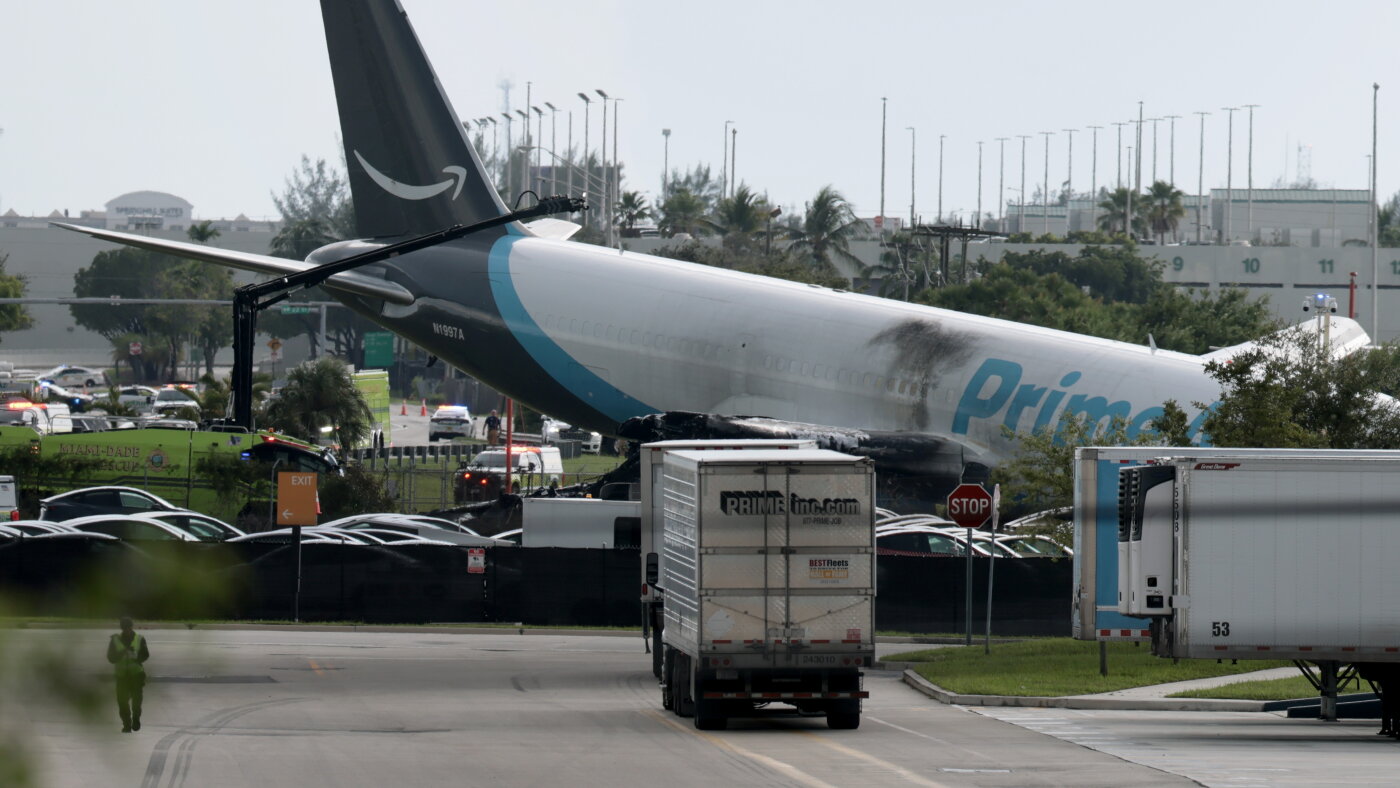
On September 6, 2026, at approximately 2:00 p.m. ET, an Amazon Prime Air cargo flight operated by 21 Air overran the runway at Miami International Airport after arriving from San Juan, Puerto Rico. The aircraft, a 32‑year‑old Boeing 767 originally built for passenger service and converted to freighter configuration in 2015, struck multiple vehicles near the runway exit before coming to rest beside a roadway close to two semi‑trucks. Impact caused a fuel‑fed fire that sent thick black smoke into the sky.
Miami‑Dade Fire Rescue deployed more than 60 units to the scene, arriving to find the aircraft engulfed in flames. Firefighters worked to extinguish the blaze while assessing potential injuries. At the time of the initial reports, officials had not released specific numbers on casualties or injuries. Transportation Secretary Sean Duffy confirmed that the FAA issued a full ground stop at the airport and dispatched investigators to the site.
The aircraft came to rest largely intact despite the fire, resting on its belly adjacent to the runway. Airport authorities closed all runways and taxiways, resulting in approximately 250 flight delays as tracked by FlightAware by late afternoon. The FAA warned that delays could persist even after reopening, with arrivals and departures expected to resume at a reduced rate. Amazon spokesperson Kelly Nantel stated via social media that the company's priority is the safety and well‑being of everyone involved.
What the Evidence Establishes
The Federal Aviation Administration confirmed that the aircraft overran the runway around 2:00 p.m. ET on September 6, 2026, after a flight from San Juan, Puerto Rico. Flight tracking data from Flightradar24 shows the Boeing 767 tail number (not disclosed in the sources) was 32 years old and had been converted to cargo configuration in 2015. The aircraft was operating under the 21 Air certificate for Amazon Prime Air.
Miami‑Dade Fire Rescue radio logs indicate that more than 60 units were dispatched, and on‑scene video referenced by the Operative Telegram Feed shows smoke emanating from the wreckage shortly after impact. The airport’s own statement, reported by CNBC, notes that all runways and taxiways were closed immediately following the incident.
Amazon’s official response, quoted by Kelly Nantel on social media, explicitly states that the company’s immediate focus is on caring for those affected and cooperating with investigators. The National Transportation Safety Board announced it is gathering information and will work with local authorities to determine the sequence of events that led to the runway overrun.
Where the Accounts Conflict
While both CNBC and the Operative Telegram Feed agree on the basic facts of the runway excursion, fire, and emergency response, they diverge in the emphasis placed on potential casualties. CNBC reports that officials had not yet released information on injuries or deaths, leaving the severity open, whereas the Telegram post’s caption urges viewers to pray that everyone survived, implying a higher perceived risk.
The sources also differ in the detail they provide about the aircraft’s post‑impact condition. CNBC describes the plane as “largely intact despite the fire” and resting on its belly, whereas the Telegram feed’s accompanying video, though not described in text, shows flames and smoke that some viewers have interpreted as indicating more extensive damage; the textual excerpt does not confirm this interpretation.
No official statement from the FAA, NTSB, or Amazon has yet attributed the overrun to a specific cause such as pilot error, weather, or mechanical failure. Consequently, analysts’ speculations about contributing factors remain unverified, and the two source accounts do not contradict each other on factual events but differ in tone and implicit assessment of risk.
Context and Stakes
Miami International Airport ranks among the top ten U.S. airports by passenger and cargo volume, handling hundreds of flights daily. The runway closure and ensuing ground stop disrupted roughly 250 flights, affecting both passenger carriers and freight operators that depend on the hub for connections to Latin America and the Caribbean.
The involved aircraft is a 32‑year‑old Boeing 767 that was converted to freighter service in 2015 and operated by 21 Air under the Amazon Prime Air brand. Its age places it near the upper end of the typical service life for converted passenger‑to‑cargo aircraft, a factor that regulators often review when assessing airworthiness after an incident.
Amazon’s reliance on its air network for rapid delivery means that any prolonged disruption to a Prime Air aircraft or the airport facilities that support it could affect delivery timelines for high‑volume shipments. The incident also triggers mandatory investigations by the FAA and NTSB, whose findings may lead to safety recommendations, additional inspections, or changes to operating procedures for similar freighter fleets.
What to Watch Next
The National Transportation Safety Board plans to release a preliminary factual report within the typical 5‑ to 10‑day window for runway overrun investigations, which would include details on aircraft performance, crew actions, and environmental conditions at the time of the overrun.
The Federal Aviation Administration is expected to issue an operational advisory or safety alert concerning Boeing 767 freighter operations if the preliminary data reveal any trends related to landing distance calculations, braking effectiveness, or runway contamination; such advisories often follow within two weeks of an incident.
Amazon and 21 Air have indicated they will cooperate fully with investigators, and the company may conduct its own internal safety review of the specific aircraft involved, potentially leading to accelerated maintenance checks or retirement decisions for similar‑aged freighters in its fleet.
Airport authorities will monitor the timeline for reopening the closed runways; FlightAware data suggests that normal departure and arrival rates could resume within 24 to 48 hours after the ground stop is lifted, assuming no further complications arise from the wreckage removal or runway repair.
Bottom Line
On September 6, 2026, an Amazon Prime Air Boeing 767 operated by 21 Air overran the runway at Miami International Airport, striking vehicles, igniting a fire, and prompting a full ground stop that delayed roughly 250 flights.
Emergency responders from Miami‑Dade Fire Rescue deployed more than 60 units, and while officials have not yet released casualty figures, the aircraft remained largely intact despite the fire.
The incident raises questions about the airworthiness of aging converted freighters and will trigger NTSB and FAA investigations whose findings could influence safety standards for similar cargo aircraft operating at busy hubs.
DECLASSIFIED SOURCE: NPR News (via Real-time Signal Upgrade)
Everyone's reacting to the headline. The detail — on september 6, 2026, an amazon prime air boeing 767 operated by 21 air overran the runway at miami interna... — says something quieter.
Read this twice. on september 6, 2026, an amazon prime air boeing 767 operated by 21 air overran the runway at miami interna... — that's the bit to remember.
Key detail everyone will skim past: on september 6, 2026, an amazon prime air boeing 767 operated by 21 air overran the runway at miami interna.... That's the part that matters.
Man. Did not have that on my list today.
...