What Happened
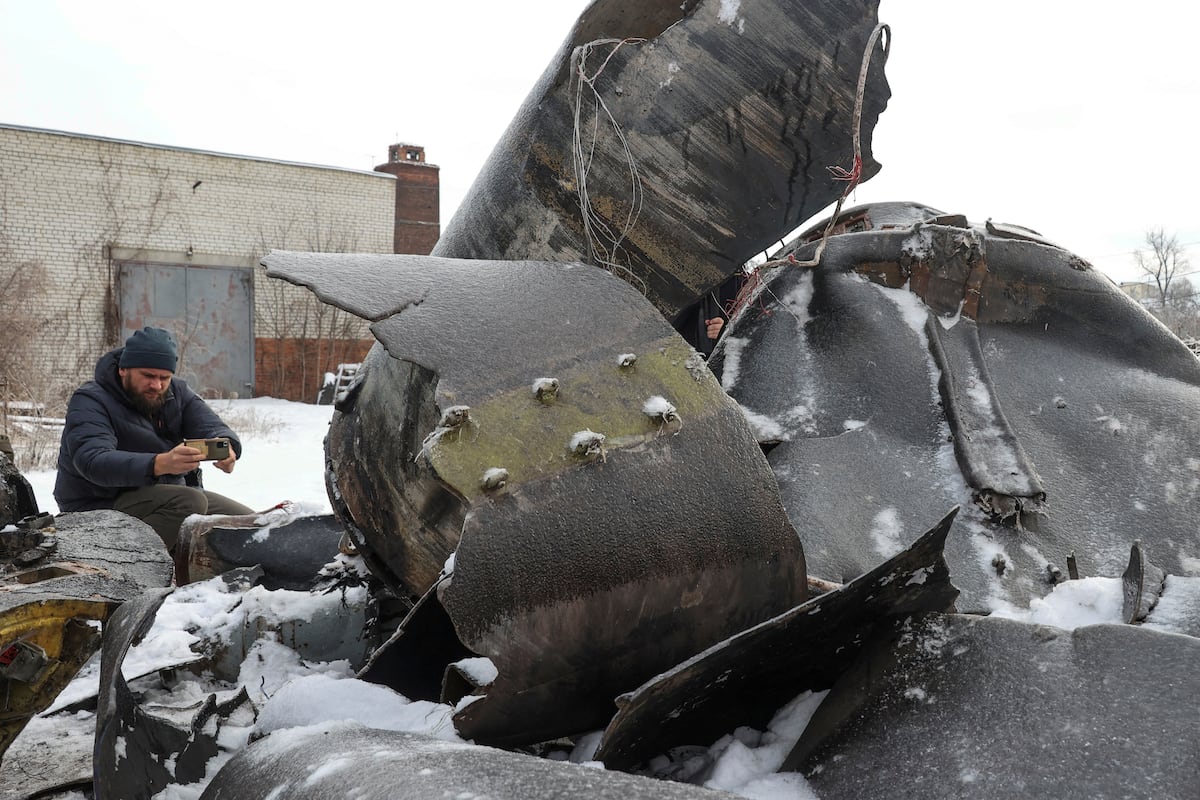
North Korea has significantly escalated its direct military support for Russia's war against Ukraine, deploying a missile unit to western Russia and continuing to supply substantial quantities of weaponry. According to an official at Ukraine’s GUR military intelligence agency, a North Korean missile unit, comprising approximately 90 personnel, has begun deploying to Russia’s Voronezh region. This unit is reportedly equipped with up to 120 ballistic missiles and six launchers, intended for attacks on Ukrainian territory. The United States is aware of this deployment, as confirmed by a source familiar with the issue to Reuters. This development follows earlier reports of North Korean troop deployments, with Ukrainian and South Korean estimates indicating that between 14,000 and 15,000 North Korean soldiers were sent to Russia’s Kursk region to assist in repelling a Ukrainian ground incursion. Russia and North Korea officially confirmed in April 2025 that these North Korean troops had engaged Ukrainian forces in Kursk, with Pyongyang stating the deployment was ordered by leader Kim Jong Un. Ukrainian officials also reported that 40 North Korean missiles have already been supplied to Russia, with at least two used in a deadly strike on Ukraine last week.
Beyond direct combat personnel and missile units, North Korea has been a crucial supplier of munitions to Russia. Ukrainian officials estimate that North Korea is providing about half of the munitions Russia requires on the front lines. Specifically, Ukraine’s military intelligence agency stated that North Korea has delivered 4 million artillery shells since mid-2023, in addition to mortar rounds. By the start of 2025, North Korea had also supplied 148 KN-23 and KN-24 ballistic missiles. This extensive military cooperation is underpinned by a comprehensive strategic partnership treaty signed by Russian President Vladimir Putin and North Korean leader Kim Jong Un during Putin’s June 2024 visit to Pyongyang. This pact includes a mutual assistance provision in the event either country faces external aggression, which North Korea has cited as justification for its involvement, with Kim Jong Un stating in May 2025 that participation was an exercise of sovereign rights in defense of a “brother nation.”
What the Evidence Establishes
Evidence from multiple intelligence sources and open-source analysis establishes a clear pattern of escalating military cooperation between North Korea and Russia. Ukrainian intelligence, specifically an official from the GUR, has provided detailed figures regarding the new missile unit, including its estimated 90 personnel, potential 120 ballistic missiles, and six launchers, with a planned base in Russia’s Voronezh region. This information is corroborated by a Reuters source familiar with the issue, confirming U.S. awareness of the deployment. The supply of 40 North Korean missiles, with two confirmed launches against Ukraine last week, further substantiates the direct military impact of this partnership. Earlier deployments of 14,000 to 15,000 North Korean soldiers to Russia’s Kursk region, confirmed by both Ukrainian and South Korean estimates, and later acknowledged by Russia and North Korea in April 2025, demonstrate a direct combat role for Pyongyang’s forces.
The scale of North Korea’s munitions supply is also well-documented. A Reuters analysis, conducted with the British-based Open Source Centre, identified 64 voyages by four Russian-flagged cargo ships to North Korea’s Rajin port between September 2023 and March 2025, transporting nearly 16,000 containers of ammunition to Russian ports. Ukrainian officials claim North Korea supplies approximately half of Russia’s frontline munitions, including 4 million artillery shells since mid-2023 and 148 KN-23 and KN-24 ballistic missiles by early 2025. These transfers and troop deployments are in direct violation of U.N. Security Council resolutions on North Korea, which have been in place since 2006 due to its nuclear weapons and ballistic missile programs. Washington imposed additional sanctions in December 2024 on entities involved, and South Korea has also blacklisted individuals and entities linked to this illicit military cooperation.
Where the Accounts Conflict
While the core facts of North Korean military support to Russia are largely corroborated across sources, some details regarding the exact numbers, roles, and current status of personnel remain less precise or subject to varying estimates. For instance, Ukrainian President Volodymyr Zelenskyy stated in July that Russia intended to bring in 30,000 North Korean troops and was preparing facilities in Voronezh to receive them. However, Ukrainian and South Korean estimates for the Kursk deployment were 14,000 to 15,000 soldiers, with a Ukrainian official stating this month that around 9,500 North Korean troops remained in Kursk but were not directly involved in operations against Ukraine. This discrepancy in total troop numbers and their active combat involvement highlights an area where precise, real-time figures are difficult to ascertain.
Furthermore, while Russian Security Council Secretary Sergei Shoigu announced in June 2025 that North Korea would send 1,000 sappers and 5,000 military construction workers to Kursk for mine clearance and infrastructure rebuilding, it remains unclear how many engineers, deminers, or additional troops have actually arrived in Russia, or whether they have been used in combat roles beyond their stated purposes. South Korean lawmakers, citing a National Intelligence Service briefing, indicated in June 2025 that North Korea appeared to be recruiting for an additional deployment, but specific numbers or confirmed arrivals are not provided. These variations suggest that while the intent and general scale of North Korean involvement are clear, the granular details of personnel deployment and their precise operational assignments are subject to ongoing intelligence gathering and assessment, leading to some numerical differences in public statements.
Context and Stakes
The deepening military alliance between North Korea and Russia carries significant geopolitical implications, extending beyond the immediate conflict in Ukraine. For North Korea, this partnership offers crucial economic and military benefits. Analysts suggest Pyongyang gains hard currency, oil, and other economic support, which are vital given its heavily sanctioned economy. Critically, it also provides access to advanced Russian military technology and invaluable battlefield experience for its forces and weapons systems. North Korean soldiers have gained combat exposure to modern battlefield tactics, including drones, electronic warfare, and artillery coordination, while its missile and ammunition manufacturers can assess their equipment's performance under wartime conditions. This practical experience and technological exchange could significantly enhance North Korea's military capabilities and its nuclear and ballistic missile programs, posing a long-term threat to regional stability in the Indo-Pacific.
For Russia, North Korea serves as a critical, albeit controversial, source of munitions and manpower, alleviating pressure on its own industrial capacity and troop reserves. This partnership directly undermines international efforts to isolate both nations and enforce UN Security Council resolutions against North Korea. The United States and its allies, including South Korea and Japan, view these troop deployments and arms transfers as flagrant violations of international law. NATO has explicitly stated that Russia’s growing military and economic ties with North Korea, alongside China and Iran, represent a threat that extends beyond Europe, impacting the Indo-Pacific and North America. The ongoing North Korean missile tests, such as the short-range ballistic missile launch on August 5, 2026, amid U.S. conflicts with Iran and upcoming joint U.S.-South Korea military exercises, underscore Pyongyang's continued assertiveness and its perceived leverage in a multipolar global environment, further complicating regional security dynamics.
What to Watch Next
Observers should closely monitor the operational deployment and impact of the newly reported North Korean missile unit in Russia’s Voronezh region. Specific attention will be paid to any confirmed launches of these missiles against Ukrainian targets and the types of targets struck, which could indicate the unit's strategic role. The upcoming joint military exercises between the U.S. and South Korea, the Ulchi Freedom series, scheduled for later this month, will likely be met with further provocative actions from North Korea, potentially including additional ballistic missile tests or heightened rhetoric, as historically observed. Retired Navy Rear Adm. Mark Montgomery noted that North Korea often uses such launches to signal to the U.S., South Korea, or Japan, or a combination thereof, asserting its relevance.
Further developments in the economic and military exchange between Russia and North Korea are also critical. This includes any new reports on the specific types of Russian military technology transferred to Pyongyang, which could range from advanced aircraft components to submarine technology. The international community will also be watching for any attempts by the UN Security Council to address these violations, though past efforts have been stymied by Russian and Chinese vetoes. The extent to which North Korean sappers and military construction workers are deployed and their actual roles in rebuilding infrastructure or clearing mines in Kursk will provide further insight into the depth of Pyongyang's commitment. Any official statements from Washington, Seoul, or Tokyo regarding new sanctions or diplomatic responses to these escalating ties will also be key indicators of the evolving geopolitical landscape.
Bottom Line
North Korea's deployment of a missile unit to Russia, alongside its ongoing supply of ballistic missiles and artillery ammunition, marks a significant and direct intervention in the Ukraine conflict. This military support, which includes thousands of North Korean troops having engaged Ukrainian forces in the Kursk region, solidifies a strategic partnership between Pyongyang and Moscow. The arrangement provides Russia with critical military resources while offering North Korea invaluable combat experience, access to advanced military technology, and economic relief from international sanctions. These actions are in clear violation of multiple UN Security Council resolutions, prompting additional sanctions from the United States and South Korea.
The alliance exacerbates geopolitical tensions, particularly in the Indo-Pacific, as North Korea continues its provocative missile tests and asserts its strategic importance. The international community, especially the U.S., South Korea, and Japan, faces the challenge of deterring further North Korean aggression and enforcing sanctions, despite the likelihood of continued obstruction from Russia and China within the UN Security Council. The immediate future will likely see continued North Korean military posturing, especially around joint U.S.-South Korean exercises, and a sustained flow of military aid to Russia, further entrenching the two nations in a mutually beneficial, yet internationally destabilizing, military-economic pact.
DECLASSIFIED SOURCE: Defense News (via Real-time Signal Upgrade)
Separate what looks backed, what is changing, and what still needs proof.
North Korea deployed a missile unit to Russia's Voronezh region, potentially with 120 ballistic missiles, and supplied 40 missiles to Ukraine. Troops also fought in Kursk.
first they send 40 missiles to ukraine and now 90 personnel are in voronezh. the timing with the kursk deployment suggests this isn't just about hardware but a full strategic realignment.
Defense contractors like LMT and RTX will likely see another uptick if this Voronezh deployment means North Korean missiles are actually being fired in Ukraine, not just stockpiled.
The claim that 90 personnel in the Voronezh region constitutes a significant escalation ignores how military logistics actually function. This looks less like a combat deployment and more like technical advisory suppo...
90 people sounds way too low to actually be a missile unit. if they are sending actual hardware like those 40 missiles it should be a lot more than that.
People are focusing on the 120 ballistic missiles, but the real issue is the deployment of that 90-person unit to Voronezh. Under the current bilateral defense treaty, this moves North Korea from a mere supplier to a...
If this leads to more sanctions or a bigger global conflict, it's just going to drive up the cost of everything for regular people. The article makes it sound like this is strictly a military issue, but these shifts i...
people are obsessed with the 90 personnel number like a few dozen soldiers change the math of this entire conflict. the hardware being shipped is the only part that actually matters here.
the claim about 120 ballistic missiles seems like a massive stretch for a single unit. it's hard to take these GUR reports seriously when they're always pushing the most extreme numbers possible.