The Catalyst: Raids, Rulings, and Rising Tensions
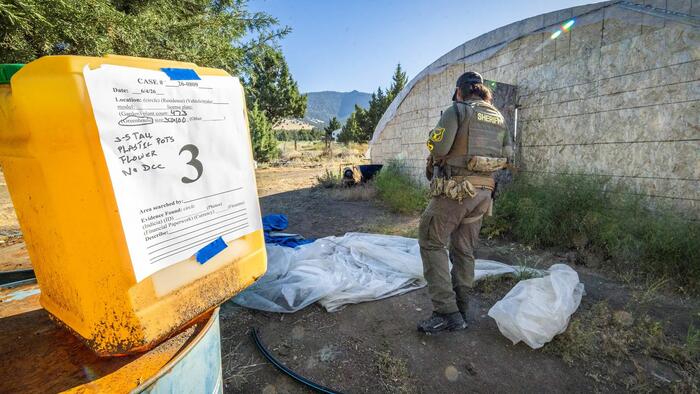
Recent developments across the United States highlight a complex interplay of domestic policy failures, international legal disputes, and economic pressures. In California's Siskiyou County, Sheriff Jeremiah LaRue's deputies conducted a morning raid on June 4, 2026, targeting a vast illegal marijuana grow operation in the foothills of Mount Shasta. This operation, part of an ongoing effort against thousands of illicit 'hoop houses,' uncovered approximately 900 pounds of freshly cut marijuana plants, which were subsequently destroyed. The site, located in the Mount Shasta Vista subdivision, was abandoned upon the deputies' arrival, a common occurrence as spotters, sometimes armed with AK-47s, alert laborers to law enforcement presence. This raid underscores the persistent challenge of California's black market cannabis, which the sheriff's office estimates produces 17.8 million pounds annually, with a local street value of $3.6 billion.
Concurrently, a significant federal legal battle unfolded in Virginia, where Biden-appointed District Judge Michael Nachmanoff ruled on Friday, July 17, 2026, that Mary Comans, a former FEMA chief financial officer, was illegally fired by the Trump administration in February 2025. Comans's termination stemmed from allegations, amplified by then-head of the Department of Government Efficiency (DOGE) Elon Musk and the Department of Homeland Security (DHS), that she authorized $59 million in payments for housing undocumented migrants in luxury hotels in New York City. Judge Nachmanoff's ruling entitles Comans to a name-clearing hearing, signaling a potential challenge to the Trump administration's broad interpretation of presidential firing powers under Article II of the Constitution.
Adding to the national landscape of instability, the US housing market is experiencing significant strain. As of July 16, 2026, the average weekly rate on a 30-year fixed-rate mortgage reached 6.55 percent, its highest level in nearly a year, according to Freddie Mac. This surge, coupled with a 2.2 percent decline in pending home sales for the four weeks ending July 12, has created a 'tepid housing market,' making it particularly difficult for first-time homebuyers. Despite the recent passage of the 21st Century ROAD to Housing Act, which became law on July 11 without President Trump's signature due to a pocket veto, experts warn that the reforms will take time to alleviate the affordability crisis.
Internationally, geopolitical tensions flared as New York City Mayor Zohran Mamdani threatened to arrest Israeli Prime Minister Benjamin Netanyahu for alleged war crimes should he visit the city for the United Nations General Assembly in September. President Donald Trump swiftly dismissed this threat on Monday, July 20, 2026, pledging that Netanyahu 'will not be arrested, in any way, shape, or form' while in the US. This exchange highlights the ongoing friction between international legal bodies, such as the International Criminal Court (ICC), and national sovereignty, particularly concerning the US and Israel, neither of which are members of the ICC. The same day, a man was arrested after setting off an incendiary device outside an immigration court building in New York City, which also houses federal offices including the FBI and Immigration and Customs Enforcement (ICE), further underscoring localized unrest and security concerns.
Historical Context: Roots of Current Crises
The current challenges facing California's cannabis market are deeply rooted in the state's pioneering, yet often contradictory, approach to marijuana legalization. California was the first state to legalize medical cannabis in 1996 with Proposition 215, followed by recreational legalization in 2016 with Proposition 64. Proponents argued that legalization would diminish the black market, but evidence suggests the opposite. The DEA's 2025 National Drug Threat Assessment explicitly states that in states that have legalized or decriminalized cannabis, organized crime has 'proliferated - not shrunk as cannabis proponents promised.' This proliferation is partly due to high taxes and stringent regulations in the legal market, which make illicit products significantly cheaper and more accessible. The influx of Hmong American growers into Siskiyou County, for instance, began between 2016 and 2019, coinciding with the relaxation of California's marijuana laws. These growers, many of whom trace their ancient roots to China and immigrated to the US after the Laotian Civil War (the 'Secret War') where the CIA recruited Hmong men to fight communist forces, found cheap residential land in areas like Mount Shasta Vista, often with volcanic soil unsuitable for other agriculture, to establish their illicit operations.
The legal battle surrounding Mary Comans's termination by the Trump administration is set against a backdrop of long-standing debates over presidential power and civil service protections. The Civil Service Reform Act of 1978 established protections for federal employees, aiming to prevent politically motivated firings and ensure a merit-based system. However, presidents have historically sought to exert control over the executive branch. The Trump administration, during both its first and second terms, has been particularly assertive in its interpretation of Article II of the Constitution, which endows the president with executive power, arguing it grants broad authority to remove federal workers. This stance has led to numerous firings and legal challenges, culminating in a recent Supreme Court ruling on June 29, 2026, which both expanded and limited the president's ability to fire heads of federal agencies, allowing the firing of an FTC member but blocking that of a Federal Reserve board member.
The current housing market woes are a continuation of trends exacerbated by the COVID-19 pandemic, which saw a surge in demand, low interest rates, and supply chain disruptions. While mortgage rates dipped to historic lows during the pandemic, they have steadily climbed since 2022, reaching levels not seen in over a decade. This has significantly impacted affordability, particularly for first-time homebuyers, who now face a dual challenge of high interest rates and elevated home prices. Legislative efforts, such as the 21st Century ROAD to Housing Act, reflect a bipartisan recognition of the crisis, aiming to address supply-side issues through deregulation and financial incentives. However, the political maneuvering surrounding its passage, with President Trump refusing to sign it until the SAVE America Act (an election integrity bill) was passed, highlights the partisan gridlock that often complicates national policy responses.
The International Criminal Court (ICC), established in 2002 by the Rome Statute, was created to prosecute individuals for genocide, crimes against humanity, war crimes, and the crime of aggression. Its jurisdiction is a contentious issue, particularly for non-member states like the United States and Israel. Both nations have historically rejected the ICC's authority over their citizens, viewing it as a potential infringement on national sovereignty. The Trump administration, in particular, has actively campaigned against the ICC, imposing sanctions on its judges and prosecutors in response to investigations involving US and Israeli personnel. Mayor Mamdani's threat to arrest Prime Minister Netanyahu stems from an ICC arrest warrant issued in 2024, charging Netanyahu with war crimes during Israel’s 'genocidal war on Gaza,' a characterization that Israel vehemently rejects as 'bogus' and the court as a 'kangaroo court.' This historical context underscores the deep ideological and legal divides that complicate international justice and diplomatic relations.
Stakeholder Positions: Conflicting Interests and Agendas
The various crises unfolding across the nation reveal a landscape of deeply entrenched stakeholder positions, each driven by distinct interests and often clashing agendas. In Siskiyou County, Sheriff Jeremiah LaRue stands as a vocal critic of what he perceives as state hypocrisy regarding illegal cannabis cultivation. He argues that while California boasts tough environmental regulations, it 'swept under the rug' and 'refused to address' the environmental harm and public health issues caused by illicit grow sites. LaRue emphasizes the extreme risks posed by highly toxic, banned foreign-labeled pesticides, mostly smuggled from China, found at approximately 80 percent of these sites. He also highlights the double standard where legitimate farmers face severe water restrictions, while illegal growers are not held accountable for siphoning water. His office, despite being spread thin across 6,300 square miles, is committed to enforcement, but LaRue contends that the volume of marijuana eradicated is 'a drop in the bucket' compared to what is grown.
The California Department of Cannabis Control (DCC), while certifying legally grown cannabis as safe, faces criticism from LaRue for not testing for all pesticides. This suggests a potential gap in regulatory oversight that allows contaminated products to 'slip through' to licensed dispensaries. The DEA, in its 2025 National Drug Threat Assessment, clearly identifies Chinese and other Asian crime syndicates, as well as Mexican cartels, as the primary beneficiaries of the black market, profiting from both illegal cultivation and sales, and exploiting the 'legal' market. These organized crime groups are described as dominating cultivation and distribution across the US, funding operations through family and community connections in China and the US.
The Hmong American growers, while participating in illegal cultivation, are also portrayed as victims of a complex system. Sheriff LaRue notes that many laborers, including undocumented Chinese and Mexican immigrants, are exploited in 'narco-slavery,' living in deplorable conditions, often threatened with violence if they attempt to leave. The ACLU, representing Asian Americans, including Hmong individuals, has taken an adversarial stance against Siskiyou County and Sheriff LaRue, filing a class-action lawsuit in August 2022. They allege a 'systematic campaign of racist hostility and persecution,' including restricting water rights and unlawful traffic stops, leading to a $650,000 settlement in June 2026, following a $350,000 partial settlement in December. This highlights the tension between law enforcement efforts and civil rights concerns within the affected communities.
In the FEMA CFO case, Mary Comans and her legal team from the progressive nonprofit Democracy Defenders Fund assert that her termination was unlawful, politically motivated, and violated her constitutional due process rights and the Civil Service Reform Act. Attorney Craig Becker hailed Judge Nachmanoff's ruling as a 'landmark' victory for the rule of law and civil service. Conversely, the Trump administration maintains its constitutional authority under Article II to fire federal workers, arguing that Comans and other FEMA officials circumvented leadership to authorize a $59 million payment for housing undocumented migrants in 'luxury hotels.' Elon Musk, then-head of the Department of Government Efficiency, publicly amplified these allegations, framing the expenditure as a misuse of funds intended for American disaster relief.
On the international stage, President Donald Trump's unequivocal rejection of Mayor Zohran Mamdani's threat to arrest Prime Minister Netanyahu underscores a firm US policy of protecting allied leaders and rejecting the ICC's jurisdiction. Trump's pledge, made on social media, also credited Israel with assisting the US in its 'war on Iran,' signaling a broader geopolitical alignment. Mayor Mamdani, however, views Netanyahu as a 'war criminal' charged by the ICC and is actively consulting with the New York City Law Department to determine his legal authority to enforce the warrant. Israel, for its part, dismissed Mamdani's remarks as an attempt to divert attention, labeling the ICC a 'kangaroo court' and its warrant 'bogus.' This reflects Israel's consistent rejection of the ICC's legitimacy and jurisdiction over its actions.
Finally, in the housing market, various stakeholders express concern over affordability. Freddie Mac, Redfin, and the National Association of Realtors (NAR) provide data and analysis highlighting the 'tough time' first-time homebuyers face due to high mortgage rates and home prices. NAR Chief Economist Dr. Lawrence Yun describes a 'tepid housing market' with many buyers 'sitting on the sidelines.' Homebuilders, represented by the National Association of Home Builders (NAHB), also report declining confidence, citing housing affordability as the 'primary challenge.' Rep. Sam Liccardo (D-Calif.) champions the 21st Century ROAD to Housing Act as a means to 'cut red tape, lower costs, and boost the supply of housing,' while NAHB Chairman Bill Owens acknowledges that these reforms 'will take time to implement,' reflecting a cautious optimism amidst ongoing market volatility.
Mechanics & Evidence: Unpacking the Verifiable Facts
The investigation into California's black market cannabis operations provides concrete evidence of its scale and impact. Siskiyou County Sheriff Jeremiah LaRue's office, utilizing satellite and aerial imagery, has identified 2,732 'hoop houses' in the Mount Shasta Vista subdivision alone. Each of these makeshift greenhouses can contain hundreds of illegally grown cannabis plants. During the June 4 raid, investigators found approximately 430 flowering marijuana plants in each of two 30-by-100 foot hoop houses. Agents from the North State Marijuana Investigation Team weighed about 900 pounds of freshly cut marijuana plants hanging to dry in another greenhouse, all of which were subsequently destroyed. While no arrests were made on June 4, the property owner, Haizhou Wang, 56, had been arrested on the same site the previous August after a search warrant was served. The sheriff's office estimates Siskiyou County produces 17.8 million pounds of illegal marijuana annually, with a 'low-end' local street value of $3.6 billion, based on sales at $200 per pound. This contrasts sharply with prices in Midwest and East Coast markets, where a pound can fetch $1,500 or more, indicating a lucrative interstate and international trade.
A critical piece of evidence is the widespread use of highly toxic, banned foreign-labeled pesticides, primarily smuggled from China, at approximately 80 percent of these illegal grow sites. LaRue personally inspected a bag of Chinese-labeled pesticide, later identified as an isoprocarb-based fumigant, an acetylcholinesterase inhibitor not approved for use in the United States. The sheriff's office has found 27 different pesticides at illegal grow sites, 17 of which are not subject to required testing by the California Department of Cannabis Control. Of these, 12 are acetylcholinesterase inhibitors, which can cause seizures, coma, and respiratory failure, according to the National Institute of Health. Furthermore, eight are listed as carcinogens under California's Proposition 65, seven are banned in the US, and six are groundwater pollutants. Evidence suggests contaminated cannabis is 'slipping through' to licensed dispensaries in California and Oregon. The money laundering network supporting these operations involves 'registered marijuana grows using straw owners, casinos, and mortgage fraud,' fueled by a Chinese underground banking system with a main hub in New York City, used to send illicit proceeds to mainland China, as detailed in the DEA's 2025 National Drug Threat Assessment.
The legal proceedings surrounding Mary Comans's firing are grounded in specific constitutional and statutory claims. Judge Michael Nachmanoff's ruling on Friday, July 17, 2026, determined that Comans was illegally terminated, entitling her to a name-clearing hearing. Comans's attorneys argued her firing violated the Constitution's due process clause, depriving her of property and liberty, and also contravened the Civil Service Reform Act, which protects federal employees. The Trump administration, conversely, asserted its authority under Article II of the Constitution, which grants the president executive power, to terminate her employment. The DHS and Elon Musk had accused Comans and three other FEMA officials of authorizing a $59 million payment for housing undocumented migrants in 'luxury hotels' in New York City, alleging they circumvented leadership. The Supreme Court's recent June 29, 2026, rulings on presidential firing power, which allowed the firing of an FTC member but blocked that of a Federal Reserve board member, will likely play a role in the upcoming hearing, providing a complex legal precedent.
The housing market's current state is quantified by specific economic indicators. Freddie Mac reported the average weekly rate on a 30-year fixed-rate mortgage at 6.55 percent for the week ending July 16, 2026, marking its highest level since August 27, 2025 (6.56 percent). Redfin data shows a 2.2 percent decline in pending home sales for the four weeks ending July 12 compared to the previous period, while the National Association of Realtors (NAR) reported a 5.4 percent month-over-month dip in pending sales in June. Builder confidence, as measured by the NAHB/Wells Fargo Housing Market Index, fell to 36 in July, marking the 15th consecutive month below 40, the longest such stretch since 2012. The 21st Century ROAD to Housing Act, passed by Congress last month, became law on July 11, 2026, without President Trump's signature, due to the constitutional provision (Article I) that a bill becomes law if not returned by the president within 10 days. Trump's veto deadline was July 10.
The solar storm threat is supported by NASA's scientific findings. Researchers at NASA's Goddard Space Flight Center, analyzing over a million data points from NASA craft in Earth orbit, concluded there is 'no statistical evidence to suggest an upper limit to the energy transferred from the solar wind to the polar ionosphere.' This directly challenges the prevailing theory that posits an upper limit to such energy transfer. Historical events, such as the 1859 Carrington Event, estimated to be as powerful as 10 billion atomic bombs, caused widespread telegraph failures. A more recent, modest event in 2003 disrupted the FAA's navigation computers for over 24 hours. A 2014 study by Lloyds of London and Atmospheric and Environmental Research deemed a Carrington-scale event 'almost inevitable,' predicting blackouts for 20 to 40 million people lasting from 16 days to two years, underscoring the severe potential impact on modern infrastructure.
What Happens Next: Scenarios and Implications
The ongoing battle against California's black market cannabis is poised for continued, albeit challenging, enforcement. Sheriff LaRue's office will likely persist with raids, but the fundamental issues of state regulatory gaps, the profitability of illicit operations, and the exploitation of undocumented labor will remain. The ACLU's successful class-action lawsuit against Siskiyou County and LaRue, resulting in a $650,000 settlement, may influence future law enforcement tactics, potentially leading to increased scrutiny on racial profiling allegations and a more cautious approach to water restrictions. However, without significant changes in state policy regarding pesticide testing and a more robust, coordinated effort to address the environmental and public health crises, the flow of contaminated cannabis to both black and legal markets is expected to continue. The 'mysterious network' of organized crime, with its ties to mainland China and sophisticated money laundering operations, will likely adapt to enforcement efforts, making a substantial reduction in illicit cultivation a long-term, uphill battle requiring federal and international cooperation.
The legal saga of Mary Comans and the Trump administration is set to enter a critical phase. Judge Nachmanoff's order for lawyers to submit a joint proposal for a name-clearing hearing within 14 days (by approximately July 31, 2026) will determine the immediate procedural path. Given the adversarial nature of the parties and the high stakes, it is plausible that an agreement on the hearing process may not be reached amicably, potentially requiring the judge to intervene and set the terms. The outcome of this hearing, which could involve extensive discovery and a full evidentiary review, will have significant implications for the scope of presidential firing power, civil service protections, and accountability for alleged misuse of federal funds. A ruling in Comans's favor could further constrain future administrations' ability to remove career public servants without clear due process, while a decision favoring the administration could embolden presidents to exert greater control over federal agencies.
The trajectory of the US housing market remains uncertain, heavily influenced by mortgage rates and broader economic conditions. While the 21st Century ROAD to Housing Act aims to alleviate affordability issues through deregulation and financial support, its impact will not be immediate. NAHB Chairman Bill Owens noted that these reforms 'will take time to implement,' suggesting that the housing market will likely remain 'tepid' for the foreseeable future. Buyers will continue to 'sit on the sidelines' awaiting lower mortgage rates and greater clarity on inflation and the overall economic outlook. Any significant shift in the Federal Reserve's monetary policy, particularly a reduction in interest rates, could provide a much-needed boost to buyer confidence and affordability. However, persistent inflation or an economic downturn could further dampen demand and prolong the current market stagnation.
The diplomatic standoff between New York City Mayor Zohran Mamdani and President Donald Trump regarding Prime Minister Netanyahu's potential arrest will likely reach a resolution before the September United Nations General Assembly. Mayor Mamdani's ongoing 'active conversation' with the city's Law Department is expected to conclude with a determination that a municipal authority lacks the legal jurisdiction to arrest a visiting head of state, especially given the US's non-membership in the ICC and the President's explicit protective stance. This outcome would effectively nullify Mamdani's threat, though it may not diminish the political rhetoric surrounding the ICC's warrant for Netanyahu. The incident underscores the limitations of local authority in international affairs and the primacy of federal foreign policy. The broader US campaign to 'disable' the ICC, including sanctions on its officials, is expected to continue, reflecting a consistent rejection of the court's jurisdiction over US and allied personnel.
Finally, the warnings from NASA scientists about underestimating worst-case solar storm scenarios highlight a long-term, high-impact risk to global infrastructure. While 'very extreme cases are rare,' the potential for a Carrington-scale event, which could cause blackouts for tens of millions lasting months or years, necessitates proactive measures. What happens next will depend on the willingness of governments and critical infrastructure operators to invest in hardening power grids and communication systems against such events. The Foundation for Resilient Societies has long urged these implementations, but progress has been slow. Further research by NASA will continue to refine understanding of solar weather, but the immediate next steps involve policy decisions and infrastructure investments to mitigate a threat that, while infrequent, carries catastrophic potential for modern, interconnected societies.
The Bottom Line: Intersecting Crises and Systemic Vulnerabilities
The confluence of events across California's illicit cannabis market, federal legal challenges to executive power, a strained national housing market, and escalating geopolitical tensions reveals a complex web of systemic vulnerabilities within the United States. The battle against black market marijuana in Siskiyou County is more than a local law enforcement issue; it is a microcosm of broader failures in regulatory oversight, public health protection, and the fight against organized crime. The estimated $3.6 billion annual illicit market in Siskiyou County alone, fueled by sophisticated Chinese and Mexican criminal syndicates, highlights the immense financial incentives that overwhelm current enforcement capabilities. The pervasive use of highly toxic, banned pesticides, directly linked to health risks for consumers and law enforcement, and the documented contamination of products reaching licensed dispensaries, expose a critical public health crisis that state agencies are demonstrably failing to address. This situation underscores a profound hypocrisy where environmental and health regulations are rigorously applied to legitimate industries but ignored when it comes to a politically sensitive, yet highly damaging, illicit trade.
The federal judiciary's intervention in the case of former FEMA CFO Mary Comans signals a crucial check on executive power, particularly concerning the Trump administration's expansive interpretation of Article II. Judge Nachmanoff's ruling for a name-clearing hearing reaffirms the importance of due process and civil service protections, which are foundational to maintaining an impartial and effective federal bureaucracy. The allegations of $59 million spent on housing undocumented migrants in 'luxury hotels' in New York City, amplified by figures like Elon Musk, touch upon sensitive issues of fiscal responsibility, immigration policy, and the perceived politicization of federal agencies. The outcome of Comans's hearing will not only affect her career but will also set important precedents for the balance of power between the presidency and the federal workforce, influencing how future administrations can manage or dismiss career officials.
Economically, the US housing market is navigating a period of significant volatility, driven by the highest 30-year fixed-rate mortgage rates in nearly a year and declining home sales. This environment disproportionately impacts first-time homebuyers and contributes to a broader affordability crisis. While legislative efforts like the 21st Century ROAD to Housing Act aim to provide relief, their long-term impact remains to be seen, and immediate market conditions are likely to remain challenging. The interplay of inflation, interest rate policies, and consumer confidence will continue to dictate the market's direction, with many potential buyers opting to 'sit on the sidelines' until greater stability emerges. This economic strain has ripple effects across various sectors, impacting construction, retail, and overall consumer spending.
Geopolitically, the clash between New York City Mayor Zohran Mamdani and President Donald Trump over the potential arrest of Israeli Prime Minister Benjamin Netanyahu underscores the persistent tension between international legal frameworks and national sovereignty. The ICC's warrant for Netanyahu, stemming from allegations of war crimes in Gaza, highlights the court's efforts to hold leaders accountable, even as major powers like the US and Israel reject its jurisdiction. Trump's swift and unequivocal rejection of Mamdani's threat reinforces the US's commitment to protecting its allies and its long-standing opposition to the ICC's authority over non-member states. This incident, alongside the arrest outside the New York immigration court, reflects a broader landscape of localized unrest and the challenges of maintaining security and order amidst diverse political and social pressures.
Finally, the NASA warning about underestimating worst-case solar storm scenarios serves as a stark reminder of external threats to critical infrastructure. The potential for a Carrington-scale event to cause widespread, long-duration power outages and disrupt essential services highlights a significant, yet often overlooked, national security vulnerability. The lack of an identified upper limit to the energy transfer from solar wind to Earth's ionosphere, as revealed by NASA's research, necessitates a re-evaluation of preparedness strategies and a greater emphasis on hardening infrastructure. The collective takeaway from these disparate but interconnected events is a clear call for robust governance, transparent accountability, and proactive measures to address both immediate and long-term challenges that threaten the stability and well-being of the nation.
DECLASSIFIED SOURCE: Zero Hedge
No comments yet. Start the conversation.