Warren Buffett Concludes 61-Year Berkshire Hathaway Tenure as Chairman, Son Howard Assumes Role
By NPR NewsWarren Buffett, 96, stepped down as Berkshire Hathaway chairman on Friday, September 18, 2026, after 61 years. His son, Howard G. Buffett, takes over.
What Happened
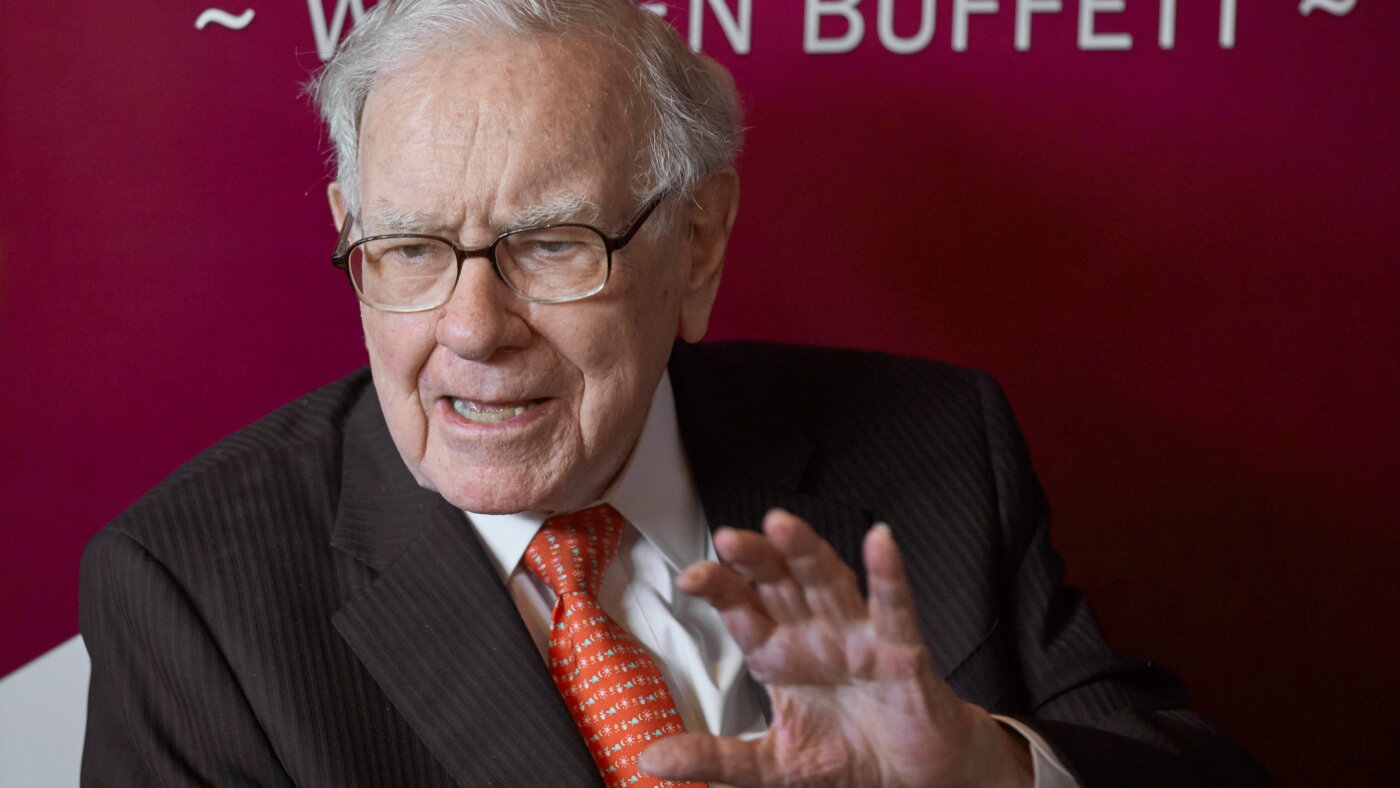
On Friday, September 18, 2026, Warren Buffett, aged 96, officially stepped down from his role as chairman of Berkshire Hathaway, concluding a tenure that spanned over six decades. The company announced that Buffett would immediately assume the title of Chairman Emeritus, retaining a seat on the Board of Directors to offer his continued judgment and perspective. His son, Howard G. Buffett, has been appointed as the new chairman, aligning with a long-established succession plan. This move follows Buffett's earlier decision eight months prior, in January 2026, to relinquish his position as CEO, which was then taken over by Greg Abel, his long-time lieutenant. At the time of the CEO transition, the company had indicated Buffett would retain the chairman title, making this latest announcement a significant, though anticipated, shift in leadership.
In a letter addressed to Berkshire’s shareholders on Friday, Buffett reflected on his extensive career, stating, “Father Time always wins.” He added, “He has, however, been generous with me. He has given me the opportunity to see Berkshire reach a point where I am more confident than ever about what lies ahead.” Buffett, who began serving Berkshire in 1965 and became chairman in 1970, has overseen the company's transformation into a trillion-dollar entity. Despite his advanced age and recent health notes, including a broken leg mentioned in July, Buffett remained active, appearing in CNBC interviews as recently as July and attending the company's annual meeting in May 2026.
What the Evidence Establishes
The evidence establishes that Warren Buffett's departure as chairman marks the culmination of a carefully orchestrated leadership transition at Berkshire Hathaway. Buffett, who is 96 years old, has been systematically ceding control, first as CEO in January 2026 to Greg Abel, and now as chairman to his son, Howard G. Buffett. This transition adheres to a long-standing succession plan, ensuring continuity in leadership and the preservation of Berkshire's corporate culture and values, which Greg Abel stated, “will remain at the heart of Berkshire.” Buffett himself emphasized Howard's role as a
What the Evidence Establishes
The evidence establishes that Warren Buffett's departure as chairman marks the culmination of a carefully orchestrated leadership transition at Berkshire Hathaway. Buffett, who is 96 years old, has been systematically ceding control, first as CEO in January 2026 to Greg Abel, and now as chairman to his son, Howard G. Buffett. This transition adheres to a long-standing succession plan, ensuring continuity in leadership and the preservation of Berkshire's corporate culture and values, which Greg Abel stated, “will remain at the heart of Berkshire.” Buffett himself emphasized Howard's role as a “policy the shareholders own and hope never to claim against,” underscoring his function as a guardian of the company's ethos rather than an operational leader.
Under Buffett’s leadership since the 1960s, Berkshire Hathaway's share price has seen an extraordinary rise of over 5,500,000% by the time he retired as CEO, vastly outperforming the S&P 500's 39,000% return over the same period. The Nebraska-based conglomerate, which Buffett transformed from a failing textile mill, now boasts $44.5 billion in operating earnings last year and nearly 400,000 employees. Its diverse portfolio includes major holdings like the BNSF railroad, Geico insurance, and consumer brands such as Fruit of the Loom, Benjamin Moore, Duracell, and Dairy Queen. Even in his final months as chairman, Buffett remained an active investor, initiating a significant investment in Alphabet in July 2026, now valued at over $27 billion, and continuing to hold Apple as Berkshire's largest single holding, worth almost $80 billion as of Thursday.
Where the Accounts Conflict
The two primary accounts, from Operative Telegram Feed and CNBC Top News, largely corroborate each other regarding the central facts of Warren Buffett's stepping down as Berkshire Hathaway chairman and his son Howard G. Buffett's succession. Both sources confirm the effective date, the new title of Chairman Emeritus for Warren Buffett, and his continued board membership. There are no direct contradictions in the core details of the announcement or the succession plan.
However, minor differences exist in the depth and specific details provided. The Operative Telegram Feed mentions Buffett's voice sounding
Where the Accounts Conflict
The two primary accounts, from Operative Telegram Feed and CNBC Top News, largely corroborate each other regarding the central facts of Warren Buffett's stepping down as Berkshire Hathaway chairman and his son Howard G. Buffett's succession. Both sources confirm the effective date, the new title of Chairman Emeritus for Warren Buffett, and his continued board membership. There are no direct contradictions in the core details of the announcement or the succession plan.
However, minor differences exist in the depth and specific details provided. The Operative Telegram Feed mentions Buffett's voice sounding “weak of late” in July interviews, while CNBC Top News notes his recovery from a broken leg a few weeks prior to a July interview. CNBC also provides additional context from Buffett's Thanksgiving letter to shareholders, where he acknowledged his
Where the Accounts Conflict
The two primary accounts, from Operative Telegram Feed and CNBC Top News, largely corroborate each other regarding the central facts of Warren Buffett's stepping down as Berkshire Hathaway chairman and his son Howard G. Buffett's succession. Both sources confirm the effective date, the new title of Chairman Emeritus for Warren Buffett, and his continued board membership. There are no direct contradictions in the core details of the announcement or the succession plan.
However, minor differences exist in the depth and specific details provided. The Operative Telegram Feed mentions Buffett's voice sounding “weak of late” in July interviews, while CNBC Top News notes his recovery from a broken leg a few weeks prior to a July interview. CNBC also provides additional context from Buffett's Thanksgiving letter to shareholders, where he acknowledged his “growing limitations because of his age” and his continued presence at the office “five days a week” despite moving slowly. These are not conflicting accounts but rather supplementary details that enrich the narrative of Buffett's gradual withdrawal from active leadership, indicating a consistent pattern of transparency regarding his health and continued engagement.
Context and Stakes
Warren Buffett's complete transition from executive leadership at Berkshire Hathaway carries immense context and significant stakes for the company, its shareholders, and the broader financial world. For over six decades, Buffett has been synonymous with Berkshire, transforming it from a struggling textile mill into a diversified conglomerate with a market capitalization exceeding $1 trillion. His investment philosophy, characterized by long-term value investing and a focus on strong businesses, has generated unparalleled returns, making him a revered figure globally. The company's compounded annual return of 19.7% to shareholders under his tenure nearly doubled that of the S&P 500, setting an exceptionally high bar for his successors.
The stakes are particularly high for Greg Abel, who assumed the CEO role eight months ago, and now for Howard G. Buffett as the new chairman. While Abel is responsible for the operational and investment decisions, Howard's role is explicitly defined as guarding Berkshire's unique culture and values, a responsibility Buffett himself deemed “worth more than anything on our balance sheet.” This division of labor aims to preserve the intangible assets that have contributed to Berkshire's success. The market's reaction will be closely watched, especially given that Berkshire shares have underperformed the S&P 500 in 2026, rising only 1% compared to the S&P's 11% rally. Investors are now scrutinizing Abel's ability to effectively deploy Berkshire's substantial $365.5 billion cash hoard and maintain the firm's historical outperformance without Buffett's direct executive oversight.
What to Watch Next
Investors and analysts will closely monitor several key areas following Warren Buffett's full transition from executive leadership at Berkshire Hathaway. The immediate focus will be on the market's sustained reaction to the news, particularly Berkshire Hathaway's Class A (BRK.A) and Class B (BRK.B) shares. While the succession plan has been known for some time, the finality of Buffett's departure as chairman could still trigger short-term volatility or a re-evaluation of the company's future trajectory under new leadership. Any significant price movements in the coming days will indicate how effectively the market has priced in this generational shift.
In the medium term, attention will turn to Greg Abel's strategic decisions, especially regarding capital allocation. With a substantial $365.5 billion cash hoard, Abel's approach to share buybacks and new investments will be critical. He has already increased repurchases to $4.5 billion in the second quarter, and further actions in this vein or significant new acquisitions will signal his confidence and strategic direction. Howard G. Buffett's public statements and actions as chairman will also be observed for how he interprets and upholds the company's culture and values, particularly in response to any challenges or strategic shifts. Finally, the performance of Berkshire's major holdings, including Apple (AAPL) and Alphabet (GOOGL), will continue to be a bellwether for the conglomerate's overall health and the effectiveness of its investment strategy post-Buffett's direct executive involvement.
Bottom Line
Warren Buffett's stepping down as chairman of Berkshire Hathaway marks the definitive end of his executive leadership at the conglomerate he built over 61 years. This final step in a carefully planned succession sees his son, Howard G. Buffett, assume the chairmanship, while Greg Abel continues as CEO, a role he took over eight months prior. Buffett, now 96, will remain on the board as Chairman Emeritus, ensuring his continued, albeit advisory, influence on the company's direction and values.
The transition underscores the enduring strength of the succession plan and the confidence placed in Abel to manage operations and investments, and in Howard to safeguard the unique corporate culture. While Berkshire's shares have recently underperformed the broader market, the long-term impact of this leadership change will depend on Abel's strategic execution and the continued adherence to the foundational principles established by Buffett. The financial world will closely observe how this new leadership team navigates future market conditions and capital deployment, aiming to maintain the extraordinary legacy of value creation that defined Buffett's unparalleled tenure.
DECLASSIFIED SOURCE: NPR News (via Real-time Signal Upgrade)