US Envoys Witkoff and Kushner Engage Moscow, Head to Kyiv for Ukraine Peace Talks
By NPR NewsUS envoys Steve Witkoff and Jared Kushner met Russian President Vladimir Putin in Moscow, described as "highly useful," before traveling to Kyiv for peace talks.
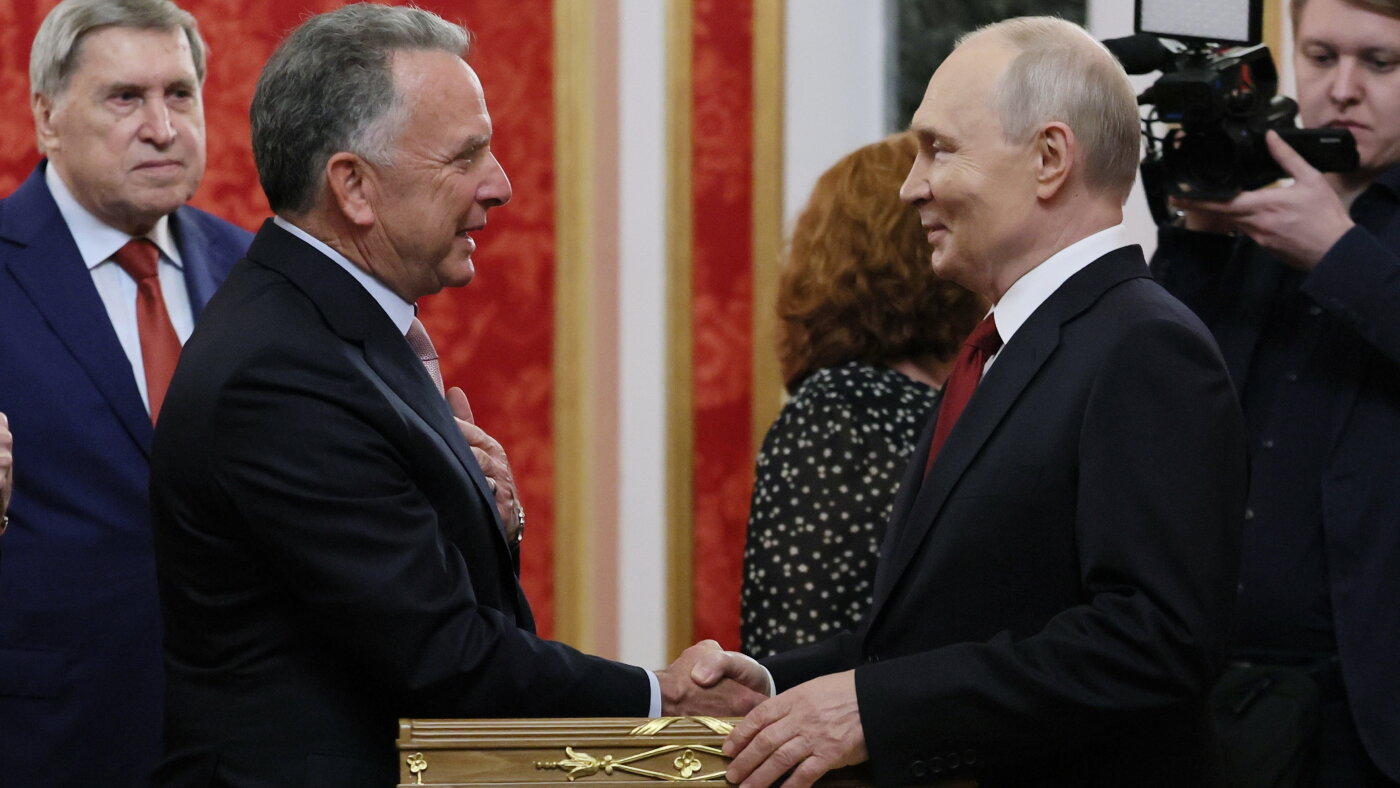
What Happened
On Sunday, September 6, 2026, United States envoys Steve Witkoff and Jared Kushner concluded a meeting with Russian President Vladimir Putin in Moscow. This high-level engagement was part of a diplomatic initiative aimed at restarting stalled peace negotiations concerning Russia's ongoing full-scale invasion of Ukraine. Following their discussions in the Russian capital, the envoys are scheduled to arrive in Kyiv, Ukraine, on the same day for their first visit to the Ukrainian capital in this capacity. The sequence of these meetings underscores a direct, albeit cautious, approach to de-escalation and potential conflict resolution, involving direct contact with both primary belligerents.
The Moscow meeting was characterized by Russian foreign-policy adviser Yuri Ushakov as "highly useful." Ushakov further indicated that Witkoff and Kushner "outlined a number of ideas regarding possible avenues" for peace, suggesting that the discussions moved beyond mere pleasantries to substantive proposals. This marks a significant development in the diplomatic landscape, as direct, high-level US engagement with Russia on the Ukraine conflict has been intermittent and often fraught with public tension. The decision by the US to dispatch these specific envoys, known for their past roles in sensitive international negotiations, signals a deliberate shift in strategy.
What the Evidence Establishes
The available evidence establishes that US envoys Steve Witkoff and Jared Kushner held direct talks with Russian President Vladimir Putin in Moscow on September 6, 2026. This meeting was confirmed by a Russian aide, Yuri Ushakov, who publicly stated the talks were "highly useful" and that the US representatives presented "a number of ideas regarding possible avenues" for peace. This indicates a substantive exchange rather than a purely ceremonial encounter. The envoys are subsequently traveling to Kyiv on the same day, marking their initial visit to the Ukrainian capital in this diplomatic role, as reported by NPR News.
The diplomatic mission is explicitly framed as a "renewed push for peace" in the context of Russia's "full-scale invasion of Ukraine." This phrasing, used by NPR, highlights the ongoing nature of the conflict and the perceived need for fresh diplomatic impetus. The involvement of Witkoff and Kushner, both with prior experience in high-stakes international dealings, suggests a direct channel of communication is being opened or re-established between Washington and Moscow, bypassing traditional diplomatic structures to some extent. The rapid succession of visits to both Moscow and Kyiv within a single day underscores the urgency and directness of this particular diplomatic effort.
Where the Accounts Conflict
The provided source material does not present any direct conflicts in the accounts of the events. Both NPR News and The Hill report on the same core facts: US envoys Steve Witkoff and Jared Kushner met with Russian President Vladimir Putin in Moscow and are subsequently traveling to Kyiv. The Hill's report adds specific detail regarding the Russian assessment of the Moscow talks, quoting Yuri Ushakov's description of them as "highly useful" and noting that the envoys "outlined a number of ideas." NPR's report confirms the Kyiv leg of the journey and frames the overall effort as a "renewed push for peace."
There are no discrepancies regarding the identities of the envoys, the locations of the meetings, or the general purpose of their mission. The two reports complement each other, with The Hill providing more granular detail on the Moscow discussions from the Russian perspective, and NPR confirming the subsequent travel to Ukraine and the broader diplomatic objective. Therefore, an analysis of conflicting accounts is not applicable in this instance, as the information from both outlets aligns and contributes to a singular, coherent narrative of the diplomatic movements on September 6, 2026.
Context and Stakes
The diplomatic initiative involving Steve Witkoff and Jared Kushner occurs against the backdrop of Russia's ongoing full-scale invasion of Ukraine, which commenced in February 2022. This conflict has resulted in widespread destruction, significant loss of life, and a profound geopolitical realignment, impacting global energy markets, food security, and international relations. Previous attempts at peace negotiations, such as those held in Belarus and Turkey in the early stages of the war, largely failed to achieve a lasting ceasefire or political settlement, leading to a prolonged military stalemate and entrenched positions from both sides.
The stakes of this renewed diplomatic push are exceptionally high. For Ukraine, any peace talks carry the potential for territorial concessions, a highly contentious issue, but also the prospect of ending the devastating war. For Russia, engagement could offer a pathway to easing international sanctions and stabilizing its economy, while also seeking to legitimize its territorial gains. For the United States, facilitating peace could stabilize European security, reduce global economic volatility, and potentially reassert its diplomatic influence. The involvement of envoys like Witkoff and Kushner, who operate outside traditional State Department channels, suggests an attempt to inject new dynamics into a stagnant diplomatic process, potentially leveraging personal relationships or unconventional approaches to break through existing impasses.
What to Watch Next
The immediate focus will be on the outcomes and statements following the envoys' talks in Kyiv. Observers will be looking for any joint statements, separate press conferences, or leaks from Ukrainian officials regarding the substance of the discussions. Key indicators will include whether Ukrainian President Volodymyr Zelenskyy or his top aides offer any public assessment of the meetings, particularly if they echo the Russian characterization of the Moscow talks as "useful." The specific "ideas regarding possible avenues" for peace, mentioned by Yuri Ushakov, will be scrutinized for any hints of new proposals or shifts in negotiating positions from either side.
Beyond the immediate talks, attention will turn to whether these discussions lead to a more formalized negotiation process. This could involve the scheduling of follow-up meetings, the appointment of permanent negotiators, or a public commitment from Russia and Ukraine to engage in direct dialogue. The reactions from key European allies, particularly Germany, France, and the United Kingdom, will also be crucial, as their support and alignment are essential for any broader peace initiative to gain international traction. Any shifts in military activity on the ground, either an escalation or a de-escalation, could also signal the sincerity or futility of these diplomatic overtures.
Bottom Line
US envoys Steve Witkoff and Jared Kushner have initiated a high-stakes diplomatic mission, engaging directly with Russian President Vladimir Putin in Moscow before proceeding to Kyiv. The Moscow talks were described by a Russian aide as "highly useful," with the envoys presenting new ideas for peace. This represents a significant, renewed effort by the United States to facilitate a resolution to the ongoing full-scale invasion of Ukraine, leveraging non-traditional diplomatic channels.
The success of this initiative hinges on the reception of these proposals in Kyiv and the willingness of both Ukraine and Russia to move beyond entrenched positions. While the initial Russian response was positive, the true measure of progress will be found in concrete steps towards de-escalation or a framework for sustained negotiations. The coming days will reveal whether this diplomatic push can break the stalemate or if it will join previous efforts that failed to yield a lasting peace.
DECLASSIFIED SOURCE: NPR News (via Real-time Signal Upgrade)