US Launches Direct Strikes on Iran Following Missile Attack on Jordan Base
By RT - NewsThe U.S. military initiated direct strikes against Iran on Wednesday evening, targeting IRGC facilities after an attempted Iranian ballistic missile attack on U.S. forces in Jordan.
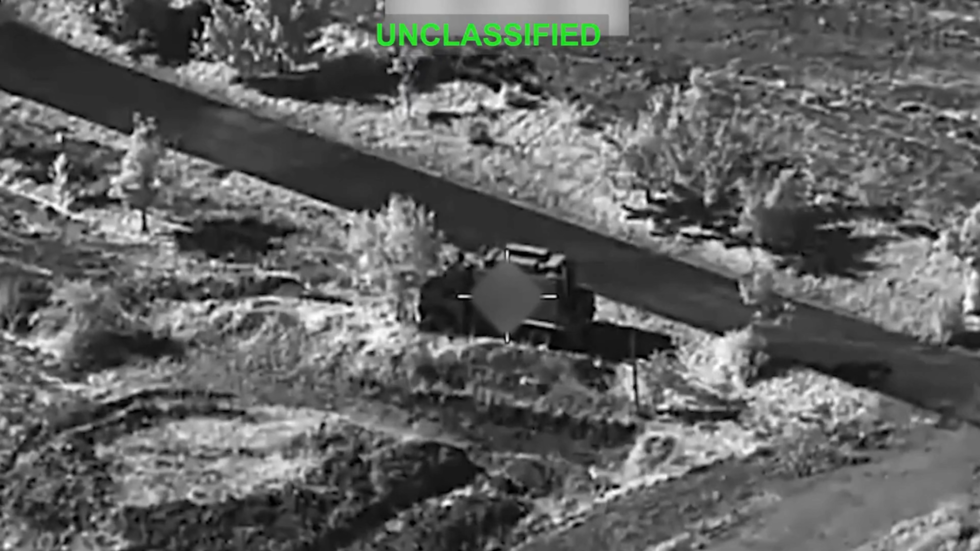
What Happened
On Wednesday evening, July 29, 2026, the United States military launched a series of direct strikes against targets within Iran. This operation, announced by U.S. Central Command (CENTCOM), was described as a "powerful response" to an attempted Iranian ballistic missile attack on U.S. forces stationed in Jordan the previous day. CENTCOM specified that U.S. forces began launching strikes at 8 p.m. ET and had "successfully completed a heavy wave of strikes" by 10 p.m. ET. President Donald Trump had publicly vowed strong retaliation earlier that day, stating on Fox News, "We’re going to beat the f****** s*** out of them." He reiterated this stance at the White House, telling reporters, "We’re going to be hitting them very hard because it’s our turn to hit them."
The Iranian attempted attack on Tuesday involved five ballistic missiles aimed at U.S. forces in Jordan, all of which CENTCOM reported were intercepted before reaching their targets. Hours after this incident, the United States and Saudi Arabia conducted separate strikes against Iran-backed militia targets in Iraq, responding to a distinct series of drone attacks on U.S. forces and Saudi infrastructure. The latest U.S. strikes inside Iran marked a significant escalation, following a brief pause in a previous campaign that had seen 13 consecutive nights of attacks against Iranian military targets, primarily around the Strait of Hormuz, which had concluded the previous Friday.
What the Evidence Establishes
Evidence establishes that the U.S. military executed direct strikes against Iranian territory on July 29, 2026, targeting facilities associated with the Islamic Revolutionary Guard Corps (IRGC). CENTCOM confirmed the operation, stating that dozens of IRGC targets were hit, including military command centers, missile and drone facilities, coastal surveillance and defense sites, and maritime capabilities. The stated objective of these strikes was to diminish threats posed by Iran and its proxies to U.S. forces, commercial shipping, and neighboring Gulf countries. This action directly followed an attempted ballistic missile attack by Iran against U.S. forces in Jordan on July 28, 2026, where five missiles were intercepted.
President Donald Trump's public statements on Wednesday, including his remarks to Fox News and reporters at the White House, clearly indicated an imminent and forceful U.S. military response. His explicit language, such as "We’re going to beat the f****** s*** out of them," preceded the CENTCOM announcement. The strikes represent a resumption of direct military engagement after a temporary cessation of operations, which Axios had reported was based on CENTCOM commander Adm. Brad Cooper's assessment that previous objectives around the Strait of Hormuz had largely been met. The Wall Street Journal had also reported earlier on Wednesday that the Trump administration was considering various military options, from limited strikes to a broader air campaign, prior to the commencement of these operations.
Where the Accounts Conflict
The primary source material presents a largely consistent narrative regarding the U.S. strikes and their immediate antecedents. However, a subtle divergence exists between President Trump's highly charged rhetoric and CENTCOM's more formal, operational language. Trump's statements, such as "We’re going to beat the f****** s*** out of them" and "They’re going to get a beating," convey a visceral intent for punitive action. In contrast, CENTCOM's official announcements describe the operation as a "powerful response" and emphasize strategic objectives like diminishing threats to U.S. forces and commercial shipping.
While both accounts confirm the fact of the strikes and their retaliatory nature, Trump's framing leans heavily into a narrative of direct retribution and dominance, whereas CENTCOM's public statements maintain a more measured, military-strategic tone. There is no direct conflict on the facts of the strikes or the attempted Iranian missile attack, but rather a difference in the public communication style and emphasis from political leadership versus military command. Iranian reports, cited by multiple media outlets, confirmed explosions in several southern Iranian locations, including Ahvaz, Sirik, and Nurabad in Fars Province, which corroborates the impact of the U.S. strikes, though U.S. officials had not publicly identified specific targets as of Wednesday evening.
Context and Stakes
The direct U.S. strikes inside Iran mark a significant escalation in the long-standing military confrontation between Washington and Tehran. This latest action follows a period of heightened tensions and a series of tit-for-tat engagements across the Middle East. Prior to these direct strikes, the U.S. had conducted a 13-night bombing campaign against Iranian military targets, primarily around the Strait of Hormuz, which was paused on Friday, July 26, 2026, to allow for potential diplomatic efforts. The decision to resume and escalate with direct strikes on Iranian soil indicates a shift away from this brief diplomatic window and a renewed commitment to military deterrence.
The stakes are substantial, encompassing regional stability, global energy markets, and the potential for a broader conflict. With more than 50,000 U.S. service members deployed throughout the Middle East, any direct engagement carries inherent risks of miscalculation and unintended consequences. Iran's response to these direct strikes will be critical in determining the immediate trajectory of the conflict. The targeting of IRGC facilities, including missile and drone sites, aims to degrade Iran's capabilities to project power through its proxies and directly threaten U.S. interests and allies, particularly Gulf countries and commercial shipping lanes. The previous attempted missile attack on U.S. forces in Jordan directly challenged U.S. military presence and served as a clear trigger for this escalated response.
What to Watch Next
The immediate aftermath of these direct U.S. strikes will be critical. Observers should monitor official Iranian statements and any observable military movements or actions by the Islamic Revolutionary Guard Corps (IRGC) or its proxies in the coming days. The nature and timing of any Iranian retaliation will indicate Tehran's strategic calculus following this direct assault on its territory. Additionally, the reactions of regional allies, particularly Saudi Arabia and other Gulf nations, will provide insight into the perceived stability of the region and potential diplomatic overtures or increased security postures.
Further U.S. military actions or policy declarations from the Trump administration will also be key. The scope of future U.S. operations, whether limited to retaliatory strikes or expanding into a broader campaign to degrade Iran's missile capabilities, remains to be seen. The Wall Street Journal previously reported that such options were under consideration. Any shifts in U.S. naval presence in the Strait of Hormuz or increased air patrols over key shipping lanes would signal continued vigilance. Finally, international diplomatic efforts, or the lack thereof, to de-escalate the situation will be important to track, as major powers may seek to prevent a wider regional conflict.
Bottom Line
The United States has directly struck Iranian territory, targeting IRGC facilities, in retaliation for an attempted ballistic missile attack on U.S. forces in Jordan. This action represents a significant escalation in the ongoing U.S.-Iran confrontation, moving beyond proxy engagements to direct military action within Iran's borders. President Trump's public vows of forceful retaliation preceded the CENTCOM-confirmed operations, which aimed to degrade Iran's military capabilities and deter future threats to U.S. personnel and regional stability. The strikes followed a brief pause in U.S. military operations against Iranian targets, indicating a renewed commitment to a more aggressive posture.
The immediate implications include heightened tensions across the Middle East and an increased risk of further military exchanges. The nature of Iran's response, whether direct or through proxies, will be a critical determinant of the conflict's trajectory. Regional allies are likely to remain on high alert, and global energy markets may experience continued volatility. The U.S. has signaled its readiness for sustained engagement, with over 50,000 service members deployed in the region. The coming days will reveal the extent of Iran's reaction and whether diplomatic channels can be re-established to de-escalate the situation.
DECLASSIFIED SOURCE: RT - News (via Real-time Signal Upgrade)