Trump Administration Signs Nuclear Cooperation Pact With Saudi Arabia, Dropping Israel Normalization Condition
By BBC - WorldOn July 22, 2026, President Trump finalized a nuclear cooperation agreement with Saudi Arabia that omits the longstanding US requirement for Israel normalization, permitting potential Saudi uranium enrichment and drawing sharp criticism from non‑proliferation advocates and Israeli officials.
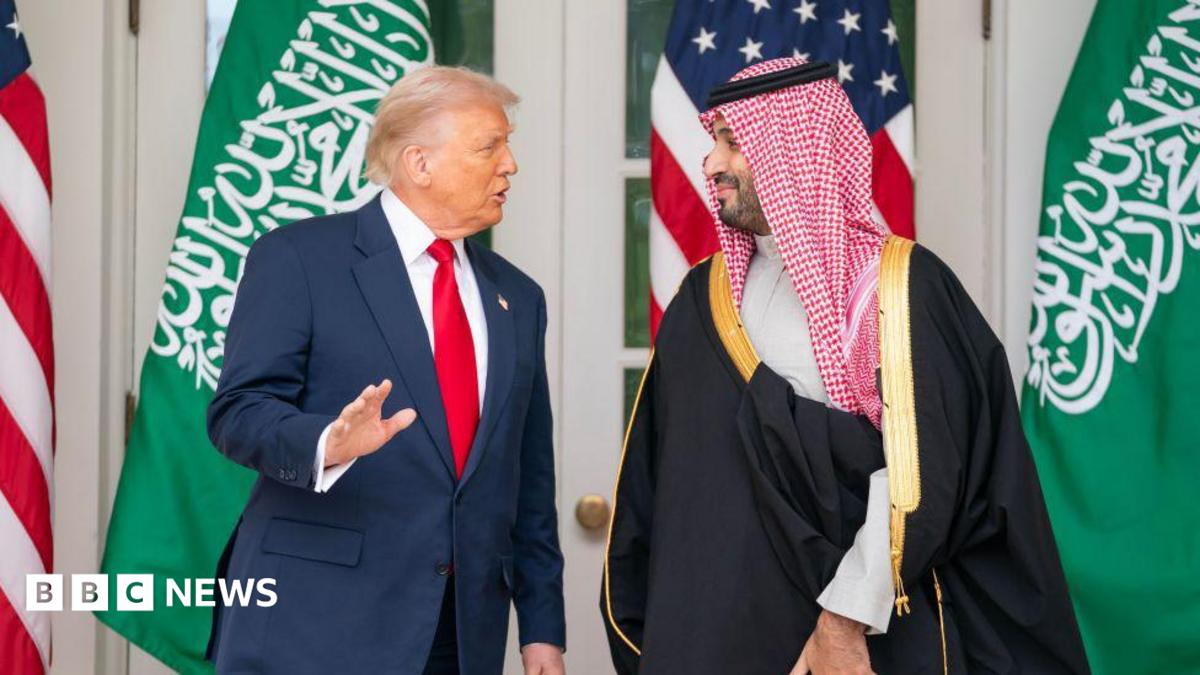
What Happened
On Wednesday, July 22, 2026, news emerged that the Trump administration had signed a nuclear cooperation agreement with Saudi Arabia. President Donald Trump, serving his second term, did not preside over the signing ceremony but attended a dignified transfer ceremony for four US service members killed in Iran before holding a rally in Georgia. The agreement reverses a years‑long US stance that tied civilian nuclear technology transfers to Saudi normalization of relations with Israel. According to the BBC report, past administrations insisted on Israel normalization as a precondition for providing American nuclear tech for civilian energy programmes.
The Hill noted that the deal faced immediate backlash from non‑proliferation advocates and supporters of Israel after the announcement. The agreement could eventually allow Saudi Arabia to enrich uranium domestically, a capability that critics warn could enable a future nuclear weapons programme. No dollar figures or bill numbers were disclosed in the sources, but the timing coincides with heightened US‑Iran tensions in the Strait of Hormuz.
What the Evidence Establishes
The sources establish that the pact does not include the strict IAEA inspection measures present in the 2009 US‑UAE nuclear cooperation agreement. Instead, it reportedly permits Saudi Arabia to enrich uranium on its own soil, a departure from prior US‑Saudi nuclear engagements. Experts quoted in the BBC article, such as Yusuf Can of Amena Strategies, stated that the deal signals Washington’s acceptance that Middle Eastern states will pursue nuclear infrastructure with or without US involvement, framing the arrangement as a way to keep regional allies aligned with the United States rather than China.
Further evidence includes statements from Imran Bayoumi, a former US Defence Department policy adviser now at the Atlantic Council, who warned that the agreement "certainly helps lay the groundwork for nuclear weapons in the future." Christopher Russo of Charles River Associates highlighted the strategic rationale, noting that nuclear power offers a self‑contained energy source less vulnerable to oil‑market disruptions, citing current Strait of Hormuz shipping risks. The agreement is also described as a short‑term political win for Saudi Crown Prince Mohammed bin Salman, who has pursued a US nuclear deal for years as part of a broader effort to strengthen ties with the West.
Where the Accounts Conflict
A primary point of conflict lies between the administration’s characterization of the deal and the warnings from critics. US Energy Secretary Chris Wright asserted in a social media statement that the pact would "boost the American economy and strengthen national security" and would "uphold the highest standards of nuclear safety and nonproliferation." In contrast, non‑proliferation advocates and Israeli officials argue that the absence of enrichment restrictions and inspection protocols raises the risk of a regional arms race.
Another discrepancy concerns the timing and presentation of the agreement. While the White House did not release detailed terms immediately after the announcement, President Trump’s absence from the signing ceremony contrasts with his participation in a military‑related transfer event and a subsequent campaign rally, suggesting differing priorities in how the administration chose to highlight the deal.
Finally, the sources diverge on the likely impact on Saudi‑Israel relations. The BBC notes that Saudi Arabia secured the nuclear agreement without having to recognize Israel or abandon its demand that any future normalization be linked to a Palestinian state, a concession the Trump administration reportedly justified by assessing a diplomatic breakthrough as unlikely in the near term. Critics, however, view this as a weakening of the longstanding US linkage between nuclear assistance and Israeli‑Palestinian progress.
Context and Stakes
The agreement fits within President Trump’s second‑term emphasis on transactional foreign policy and economic competition with strategic rivals. The BBC reported that since returning to office, Trump has sought to revive an "America First" approach, ratcheting up economic competition with adversaries like China and Russia in regions such as the Arctic. The nuclear pact with Saudi Arabia is portrayed as part of this broader strategy to retain regional allies amid great‑power rivalry.
Strategically, the deal occurs amid an ongoing US‑Iran confrontation, including military actions and sanctions. The BBC article mentions that Washington has sought to ease tensions with Saudi Arabia and other Gulf allies who have been targeted by Tehran since the start of the conflict, noting that Saudi Arabia briefly denied US access to its airspace earlier in the war. By providing nuclear cooperation without demanding Israel normalization, the administration appears to prioritize securing Saudi alignment over the traditional linkage to the Israeli‑Palestinian peace process.
From Saudi Arabia’s perspective, the agreement advances Crown Prince Mohammed bin Salman’s long‑standing goal of acquiring US nuclear technology to diversify the kingdom’s energy mix and reduce reliance on oil exports. Experts cited in the BBC note that building civilian nuclear infrastructure will likely take a decade or longer, meaning any near‑term benefits are primarily political rather than economic. However, the potential to enrich uranium domestically introduces a strategic capability that could alter the regional balance of power.
What to Watch Next
Legislative reaction: Monitor whether members of Congress introduce resolutions or hearings within the next five to ten days to review the agreement’s terms, particularly its enrichment provisions and lack of IAEA inspections. Historical precedent shows that major nuclear cooperation pacts often trigger congressional scrutiny within a week, though the frequency varies.
International oversight: Watch for any formal engagement by the International Atomic Energy Agency regarding Saudi nuclear activities under the new accord. The absence of explicit inspection mechanisms in the deal may prompt the IAEA to request voluntary access or issue statements about safeguards, a development that could unfold over the next six to eight weeks.
Saudi implementation timeline: Track announcements related to contracts with US nuclear firms such as Westinghouse for feasibility studies, site preparation, or early engineering work. Given expert estimates that constructing nuclear power plants in Saudi Arabia will require a decade or more, preliminary steps are likely to appear within the next three to six months if the kingdom moves swiftly to capitalize on the political opening.
Bottom Line
The Trump administration’s nuclear cooperation deal with Saudi Arabia marks a clear departure from precedent by removing the Israel‑normalization condition that previous presidents had tied to civilian nuclear assistance. While the agreement delivers a short‑term political advantage for Saudi Crown Prince Mohammed bin Salman and offers potential business opportunities for US nuclear manufacturers, it simultaneously raises proliferation concerns due to the reported allowance for domestic uranium enrichment and the absence of stringent inspection regimes.
Strategically, the pact reflects a transactional approach aimed at countering Chinese influence and stabilizing relations with a key Gulf ally amid US‑Iran hostilities. However, critics argue that weakening the longstanding US linkage between nuclear aid and Israeli‑Palestinian progress could embolden regional arms dynamics and erode a cornerstone of American Middle East policy. The deal’s ultimate impact will depend on whether Saudi Arabia pursues a purely civilian nuclear energy path or leverages the acquired capabilities toward a future weapons option, a determination that will become clearer as concrete implementation steps emerge over the coming months.
DECLASSIFIED SOURCE: BBC - World (via Real-time Signal Upgrade)