Trump Creates AI Force, Names Czar as Lawsuit Alleges Top Labs Colluded to Slow Development
By Operative Telegram FeedTrump announced an AI Force and czar Saturday while a federal lawsuit accuses Anthropic, OpenAI, SpaceXAI, and Google of an illegal Sept. 12 pact to decelerate AI progress.
What Happened
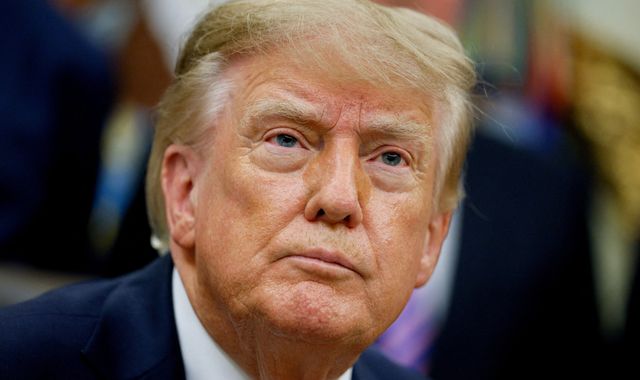
President Donald Trump announced on Truth Social Saturday that he is forming an "AI Force" modeled on the Space Force and will appoint an "AI Czar" in the near future, declaring AI safety concerns a "hoax" and vowing not to "hinder or stifle the growth of this incredible industry." The announcement came one day after a class-action lawsuit was filed Friday in the U.S. District Court for the Northern District of California alleging that Anthropic, OpenAI, SpaceXAI, and Google entered an illegal agreement on September 12 to coordinate a slowdown in AI development. The suit, brought by lead attorney Nick Rowley on behalf of four named plaintiffs who subscribe to ChatGPT, Claude, Grok, and Gemini, claims the coordination reduced the value consumers receive for paid AI subscriptions. Trump's post also asked followers to help rename AI, suggesting "Superior Intelligence," "Extreme Intelligence," or "Supreme Intelligence" as alternatives to the "very ineloquent" current term.
The lawsuit centers on an essay published September 12 by Anthropic CEO Dario Amodei urging industry-wide cooperation on decelerating advancements in favor of enhanced safety measures. That same day, OpenAI's Sam Altman, SpaceXAI's Elon Musk, and Google DeepMind's Demis Hassabis each publicly responded in agreement. Amodei acknowledged potential antitrust challenges in his essay, writing that U.S. government mediation would be "helpful" to "enable these cross-lab discussions." Representatives for all four companies did not immediately respond to comment requests Saturday. The filing follows a week after an Anthropic safety researcher stated there is a greater than 10% chance AI "could kill all humans" within the next decade, a claim Trump dismissed on Monday during a call with Nvidia CEO Jensen Huang.
What the Evidence Establishes
Multiple independent outlets — including The Hill, Al Jazeera, CTV News, and Sky News via the Operative Telegram Feed — confirm Trump's Saturday Truth Social announcement creating an AI Force and promising an AI Czar appointment. The lawsuit filing in the Northern District of California is a matter of public record, naming Anthropic, OpenAI, SpaceXAI, and Google as defendants and alleging a September 12 agreement to slow development. The complaint quotes Amodei's September 12 essay and the same-day public responses from Altman, Musk, and Hassabis as evidence of coordination. Lead attorney Nick Rowley is identified as representing four named claimants who pay for subscriptions to the four companies' flagship AI services. The suit seeks to represent a nationwide class of paid subscribers.
Trump's prior AI czar, venture capitalist David Sacks, served until March 2026 when he reached his time limit as a special government employee and now chairs the President's Council of Advisors on Science and Technology. Sacks has previously called AI safety fears "overblown" in a CBS News interview. The White House has not released details on the AI Force's structure, whether it will be a military branch like the Space Force (created in 2019 as the first new U.S. military service since 1947), or the czar's specific duties. CNN has requested clarification from the White House. Trump's summit with Chinese President Xi Jinping is scheduled for next week in Washington, D.C., where AI competition is expected to be a central topic.
Where the Accounts Conflict
The core conflict centers on whether coordination among AI labs on safety constitutes illegal antitrust behavior or responsible self-governance. The lawsuit frames the September 12 exchange as a "deal to slow the pace of their respective AI development" with an "anticompetitive effect on consumers," while Amodei's essay explicitly acknowledged antitrust risks and sought government mediation — suggesting the labs may have viewed their discussion as a policy proposal rather than a binding agreement. Trump's characterization of AI safety concerns as a "hoax" and a "SICK conspiracy" directly contradicts the Anthropic researcher's >10% extinction risk estimate and former President Obama's Friday statement at Colgate University that "it is good that some of the leading companies have said we need to slow this down, and we should encourage that." Obama added that government regulation must ultimately replace voluntary industry restraint.
Trump claims the U.S. is "leading China, and the rest of the World" in AI and intends to "keep it that way," while Al Jazeera reports the issue will be "front and centre" at the Xi summit. The administration's anti-regulatory stance conflicts with bipartisan congressional pressure for AI safeguards and community pushback against data centers over energy costs and resource use. Trump called data centers "prestigious" and claimed they bring "Higher Salaries, Lower Taxes, and Safer Streets," echoing his prior remark that communities rejecting them would "end up being backwards and poor." The companies named in the suit have not publicly responded to the allegations as of Saturday, leaving the factual basis of the coordination claim untested in court.
Context and Stakes
The AI Force announcement escalates federal involvement in a sector that has driven major stock market gains and a data-center construction boom Trump calls "the golden goose." Nvidia, Microsoft, Alphabet, and Tesla (via SpaceXAI) have seen valuation surges tied to AI infrastructure spending. The Northern District of California lawsuit introduces a novel legal theory: that public safety discussions among competitors can constitute an illegal output-restriction agreement under the Sherman Act. If certified as a class action, the suit could expose the labs to treble damages for every paid subscriber nationwide. The case will test whether Amodei's explicit request for government mediation negates the requisite intent for a per se antitrust violation.
Politically, the move positions Trump against both Democratic calls for regulation and a segment of his own base concerned about job displacement and data-center impacts ahead of November's midterms. Obama's intervention signals AI will be a 2028 Democratic primary litmus test. The Xi summit adds geopolitical weight: China's state-directed AI strategy contrasts with the U.S. lab-led model, and any U.S. regulatory framework will be benchmarked against Beijing's approach. The AI Force's design — military branch, civilian agency, or advisory body — will determine whether it can issue binding rules or merely coordinate. Sacks's continued influence as external adviser and PCAST chair suggests continuity in the administration's light-touch philosophy despite the new bureaucratic layer.
What to Watch Next
The immediate markers are the White House's formal AI Force charter and czar nomination, expected within days. The Northern District of California docket will show whether the defendants move to dismiss on First Amendment grounds (petitioning government for mediation) or argue the September 12 exchange lacks the specificity of a Sherman Act Section 1 agreement. The judge's ruling on class certification will determine the suit's financial exposure. At the Xi summit, watch for joint statements on AI safety norms or competing declarations of sovereign development rights. Nvidia's Jensen Huang, who spoke with Trump Monday, may signal whether the administration's "no guardrails" stance aligns with chip-supply priorities.
Congressional action is the medium-term variable: the Senate Commerce Committee and House Energy and Commerce Committee have pending AI bills that could preempt or legitimize the AI Force. Community opposition to data centers in Virginia, Texas, and Arizona may force Republican lawmakers to break with Trump on local resource issues. The Anthropic researcher's >10% extinction claim, if formalized in a peer-reviewed publication, could shift the Overton window toward mandatory safety audits. Finally, the czar's identity will reveal the administration's operational intent: a safety skeptic like Sacks suggests continuation; a former defense or intelligence official suggests securitization.
Bottom Line
Trump has bet his AI policy on speed and sovereignty, creating a new federal apparatus to protect U.S. lead over China while dismissing existential-risk arguments as a "hoax." Simultaneously, a federal lawsuit tests whether the industry's most prominent safety dialogue crossed into illegal output restriction. The two tracks — executive centralization and private litigation — could converge if the AI Czar is empowered to mediate the very lab discussions Amodei requested government help to enable. The evidence establishes a September 12 public exchange among four CEOs, a Friday class-action filing, and a Saturday presidential announcement; it does not establish a binding agreement among the labs, the AI Force's legal authorities, or the czar's identity. The Xi summit, the court's motion-to-dismiss schedule, and the midterm election calendar will each force clarifying moves within weeks. Markets have priced AI growth as unrestricted; the lawsuit introduces a tail risk of court-ordered development metrics, while the AI Force introduces a tail risk of military-style classification controls. Both remain speculative until the czar is named and the court rules on standing.
DECLASSIFIED SOURCE: Operative Telegram Feed (via Real-time Signal Upgrade)