Supreme Court Rejects Trump's Mail-In Voting Restrictions Ahead of Midterms
By NPR NewsThe Supreme Court rejected President Trump's bid to restrict mail-in voting on Monday, upholding an injunction and allowing states to continue current ballot practices 50 days before the November elections.
What Happened
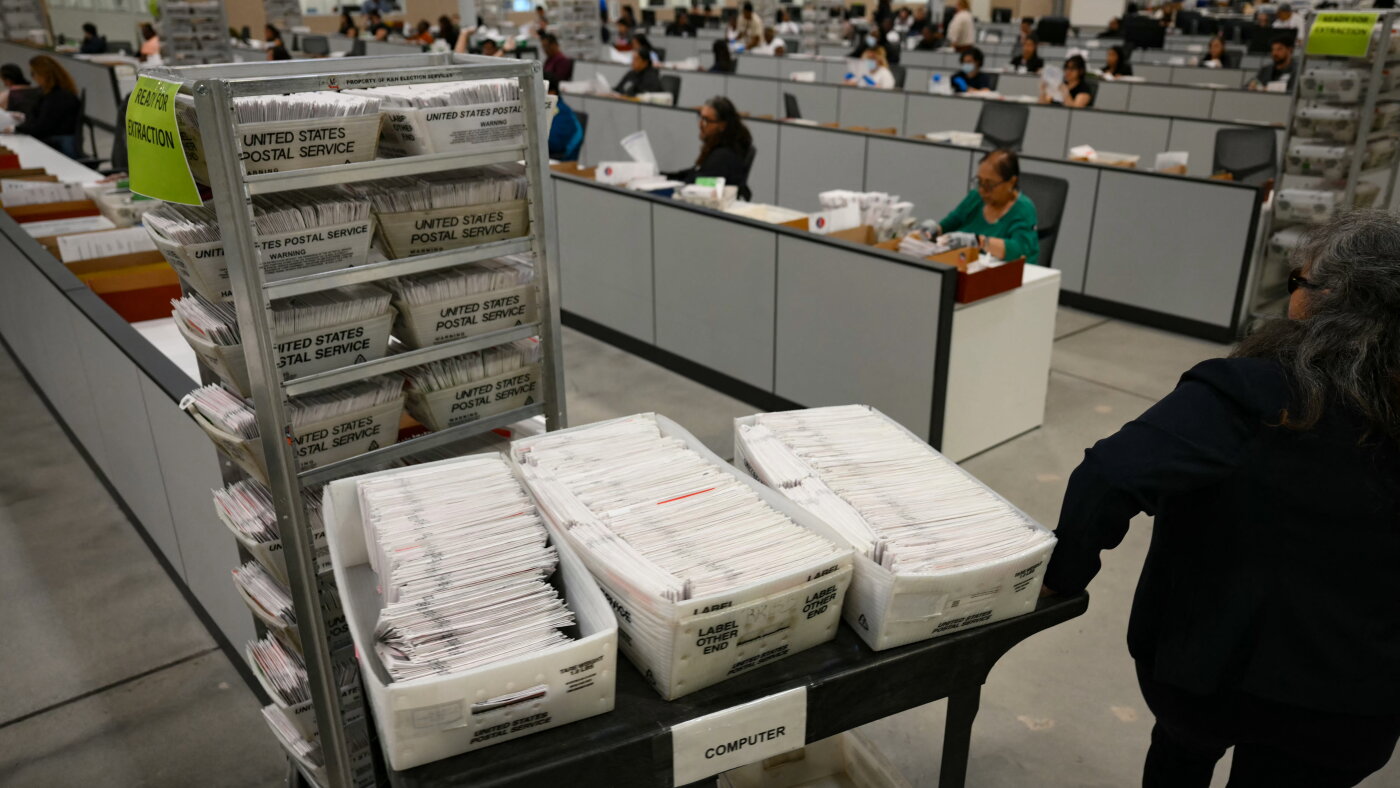
On Monday, September 14, 2026, the United States Supreme Court issued a decision rejecting President Donald Trump's attempt to impose new restrictions on mail-in voting, effectively halting his administration's plans just 50 days before the November midterm elections. The Court's ruling upheld a lower court injunction that had previously blocked an executive order signed by President Trump in March 2026. This order had directed the US Postal Service to implement new standards for mail ballots, including specific envelope designs with barcodes and requiring states to provide voter lists to federal agencies. The decision, which included a vote from Trump-appointed Justice Brett Kavanaugh against the administration, means states can continue their established mail-in voting practices without federal interference for the upcoming elections. Justices Samuel Alito and Clarence Thomas dissented from the majority.
The ruling marks the culmination of a series of legal challenges initiated by Democrats and activists against the March 2026 executive order. US District Judge Indira Talwani had imposed an injunction against the rule in June, citing likely constitutional violations and the impracticality of implementing such changes so close to the midterms. While the Supreme Court temporarily overturned Talwani's injunction in late August on procedural grounds, arguing that Democrats had sued prematurely, this latest and final decision refused to lift her original injunction, signaling the administration's unlikelihood of success in restricting mail-in votes before the midterms.
What the Evidence Establishes
The Supreme Court's final decision on September 14, 2026, effectively preserves the status quo for mail-in voting across the United States. Evidence establishes that President Trump's March 2026 executive order sought to centralize control over mail voting by mandating uniform envelope styles and requiring states to share voter lists with the US Postal Service, Homeland Security, and US Citizenship and Immigration Services. The order also empowered the postal agency to deny ballots not complying with new standards or not associated with registered voters. This move was challenged by Democrats and activists, leading to Judge Indira Talwani's June injunction, which found the order likely unconstitutional and impossible to apply given the proximity to the midterms.
The Court's brief, written order did not delve into extensive detail but indicated that the administration was 'likely to fail' in its efforts to restrict mail-in votes. This outcome aligns with historical data regarding mail-in voting security; the Brookings Institution reports that cases of forgery or repeat voting amount to approximately four in 10 million mailed votes, indicating extreme rarity. Mail ballots have been in place for decades, are utilized by a third of all US voters, and have been found to increase voter turnout. Eight states—California, Colorado, Hawaii, Nevada, Oregon, Utah, Vermont, and Washington—along with the District of Columbia, conduct all elections entirely by mail, demonstrating the widespread and established nature of the practice.
Where the Accounts Conflict
The primary conflict in accounts centers on the security and integrity of mail-in voting itself. President Trump has repeatedly cast doubt on the security of mail-in voting, citing what sources describe as 'debunked claims of widespread election fraud associated with it.' He famously blamed his 2020 presidential election loss on mail-in voting fraud and, during the 2020 Republican National Convention, called mail-in voting changes 'the greatest scam in the history of politics.' This narrative suggests that mail-in voting is inherently susceptible to fraud and requires significant federal oversight to ensure election integrity.
Conversely, the evidence presented by critics and institutions like the Brookings Institution directly contradicts these claims. Data indicates that instances of fraud in mail-in voting are exceedingly rare, occurring in approximately four out of 10 million mailed votes. Furthermore, mail ballots have been a standard practice for decades, increasing voter turnout and accounting for a substantial portion of all votes cast in the US. The Supreme Court's decision to uphold the injunction against Trump's restrictions, with Justice Kavanaugh joining the majority, implicitly supports the view that the administration's concerns did not warrant the proposed federal intervention, especially given the short timeframe before the midterms. The conflict, therefore, lies between the administration's narrative of widespread fraud necessitating intervention and the factual evidence supporting the security and efficacy of existing mail-in voting systems.
Context and Stakes
The Supreme Court's decision arrives at a critical juncture, with the November midterm elections just 50 days away. The context includes President Trump's consistent efforts to challenge and alter election procedures, particularly those related to mail-in voting, which he has frequently criticized despite voting by mail himself, including in the 2024 election. His administration's push for the 'SAVE America Act,' a bill calling for sweeping voting law changes, passed the House of Representatives in February but has stalled in the US Senate due to opposition over concerns of voter disenfranchisement. This legal battle is part of a broader, ongoing political struggle over election administration and access to the ballot box.
The stakes of this ruling are significant for both voters and the electoral process. Restricting mail-in ballots, as proposed by the executive order, could disenfranchise millions of voters who rely on this method, particularly in states like Alabama, North Carolina, and Wisconsin, which have already begun sending out midterm ballots. The uniformity requirements and federal oversight could have created logistical chaos and confusion, potentially disrupting the delivery and counting of votes. By rejecting the restrictions, the Supreme Court has ensured stability in election procedures, allowing states to proceed with established methods and mitigating the risk of last-minute disruptions that could suppress voter turnout or undermine public confidence in the election outcome.
What to Watch Next
Following the Supreme Court's definitive rejection of President Trump's mail-in voting restrictions, attention will shift to the administration's immediate response and potential alternative strategies. Observers should watch for official statements from the White House or President Trump himself, which may reiterate concerns about election integrity or criticize the Court's decision. It is plausible that the administration could explore other avenues to influence election procedures, though direct federal intervention in state-level mail-in voting appears foreclosed for the upcoming midterms. Any new executive actions or legislative pushes related to voting will face intense scrutiny and likely immediate legal challenges.
Additionally, the focus will return to the US Senate regarding the stalled 'SAVE America Act.' While the Supreme Court's ruling addresses the executive order, the legislative effort to enact sweeping voting law changes remains a live issue. Monitoring the progress or renewed opposition to this bill will indicate the long-term trajectory of federal involvement in election administration. State election officials will also be under observation to ensure smooth implementation of existing mail-in voting procedures without the added complexity of the now-rejected federal mandates. The actions of Justice Brett Kavanaugh, who voted with the majority but indicated potential future support for such policies, will also be a point of interest in any subsequent legal challenges.
Bottom Line
The Supreme Court's decision on September 14, 2026, to reject President Trump's executive order on mail-in voting restrictions represents a significant legal and operational victory for proponents of existing state-level election administration. The ruling ensures that states can continue their established practices for mail-in ballots, preventing a last-minute overhaul of election procedures just 50 days before the November midterm elections. This outcome directly counters the administration's narrative of widespread mail-in voting fraud, which has been largely unsupported by empirical evidence, such as the Brookings Institution's finding of minimal fraud rates.
The immediate impact is the preservation of voter access and procedural stability for the upcoming elections, mitigating potential disenfranchisement and logistical chaos. While President Trump may continue to advocate for stricter voting laws through legislative means, such as the stalled 'SAVE America Act,' the judicial branch has, for now, affirmed the autonomy of states in managing their mail-in voting systems. The decision underscores the judiciary's role in balancing executive authority with constitutional principles and established electoral practices, particularly when changes are proposed close to a national election cycle.
DECLASSIFIED SOURCE: NPR News (via Real-time Signal Upgrade)