Trump Administration Moves Toward Nuclear Cooperation with Saudi Arabia Amid Israeli Opposition
By Breitbart - US NewsReports say Trump admin approved or seeks congressional approval for Saudi nuclear deal, triggering Israeli opposition and proliferation fears amid regional worry.
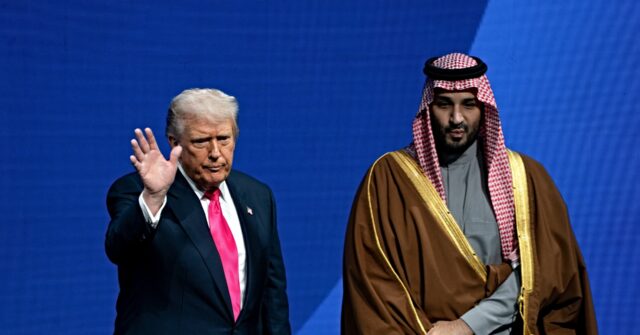
What Happened
On Wednesday, July 22, 2026, multiple news outlets reported that the Trump administration was advancing a nuclear cooperation agreement with Saudi Arabia. The Wall Street Journal cited anonymous officials claiming that President Trump had already formally approved a nuclear agreement with the kingdom. Simultaneously, Reuters reported that the administration was planning to seek congressional approval for the deal, not that it had been finalized. The Hill published a statement from the Trump administration announcing what it described as a peaceful nuclear cooperation agreement with Saudi Arabia, calling it an economic triumph. The White House had not commented on the reports by press time, and the Saudi government also remained silent. The announcements came on the same day President Trump attended the dignified transfer of four fallen service members at Dover Air Force Base in Delaware, an event unrelated to the nuclear negotiations but noted in concurrent coverage.
What the Evidence Establishes
The Wall Street Journal story directly quoted that “Trump had already formally approved a nuclear agreement with the country,” according to its sources. Reuters countered with the assertion that “the Trump administration was planning to seek congressional approval for the deal,” indicating a procedural step rather than a completed accord. The Hill’s article quoted the administration’s characterization of the arrangement as “a peaceful nuclear cooperation agreement” and noted the presence of Energy Secretary Chris Wright and Saudi Minister of Energy His Royal Highness Prince Abdulaziz bin Salman at the announcement. Additional evidence from the sources includes Saudi Arabia’s Vision 2030 plan, which reportedly aims to build approximately 17.6 gigawatts of nuclear capacity by 2032, equivalent to about 17 reactors. The Saudi minister previously stated in 2024 that the kingdom is moving toward benefiting from nuclear energy for peaceful purposes and continues to implement its national nuclear energy project, including construction of its first nuclear power plant. The sources also reference past discussions during Trump’s first term about a similar agreement that did not materialize due to Israeli opposition.
Where the Accounts Conflict
The primary contradiction lies between the Wall Street Journal’s claim of formal approval and Reuters’s statement that the administration is only planning to seek congressional approval. This disagreement leaves unclear whether an executive agreement has already been signed or whether legislative action remains pending. Another point of divergence concerns enrichment safeguards: the sources note that none of the reports indicated the United States would demand Saudi Arabia refrain from enriching its own uranium, a omission that critics argue could allow Riyadh to develop fissile material suitable for weapons. The Times of Israel, citing American media coverage, highlighted that none of the reports mentioned a requirement for Saudi Arabia to normalize relations with Israel, a longstanding Trump objective. Israeli former Defense Minister Avigdor Liberman warned on social media that “the Saudi civilian nuclear program will end up with nuclear weapons and lead to a mad arms race across the entire Middle East.” Meanwhile, Saudi officials have historically linked their nuclear ambitions to Iran’s capabilities, stating in 2016 that they would pursue nuclear weapons if Iran possessed them.
Context and Stakes
Saudi Arabia’s pursuit of civilian nuclear power is tied to its Vision 2030 economic diversification strategy, which seeks to reduce dependence on fossil fuels. The kingdom has openly flirted with nuclear ambitions for over a decade; in 2015, prior to the failed JCPOA with Iran, Saudi officials warned they would pursue nuclear weapons if Iran acquired them. The United Arab Emirates already operates the Arab world’s only active nuclear plant, while Iran’s nuclear program has long provoked regional alarm. The October 7, 2023 Hamas attacks led Saudi Arabia to revert to firm support for a Palestinian state, complicating Trump’s earlier Abraham Accords normalization efforts. Chinese-mediated diplomatic normalization between Riyadh and Tehran in 2023 has not prevented Iranian attacks on Saudi targets in the ongoing conflict. The sources note that Saudi energy officials in 2024 described civilian nuclear energy as pivotal to national development and emphasized peaceful applications. If the agreement proceeds, it could shift the regional balance of power, potentially prompting neighboring states to reconsider their own nuclear options and raising proliferation concerns among non‑proliferation experts.
What to Watch Next
Observers should monitor whether the Trump administration formally submits the agreement to Congress for approval text under the Atomic Energy Act, which typically triggers a 60‑day review period. A hearing in the Senate Foreign Relations Committee could occur within days, especially given the administration’s desire to showcase the deal as an economic achievement. Lawmakers may seek amendments to impose explicit restrictions on uranium enrichment or to require Saudi Arabia to accept additional IAEA safeguards as a condition of approval. The Israeli government is likely to lobby Congress vigorously, citing the warnings of figures like Avigdor Liberman. Simultaneously, satellite intelligence and open‑source reporting will be watched for any signs of Saudi uranium enrichment activities or procurement of dual‑use technology. If Congress rejects or modifies the deal, the administration may need to renegotiate terms or pursue a separate executive agreement, potentially delaying any Saudi nuclear construction timeline.
Bottom Line
The evidence indicates that the Trump administration is advancing a nuclear cooperation arrangement with Saudi Arabia, but there is significant disagreement over whether an executive agreement has already been approved or merely proposed for congressional consideration. The sources agree on the broad outlines: a long‑term framework for peaceful nuclear power plant construction, linked to Saudi Vision 2030 goals of 17.6 gigawatts by 2032. However, the lack of reported enrichment restrictions and the absence of a normalization‑with‑Israel clause raise substantial proliferation and regional stability concerns. Israeli officials have warned of a potential arms race, while Saudi officials have historically conditioned their nuclear ambitions on Iran’s capabilities. The near‑term future will hinge on congressional action, IAEA negotiations, and whether the kingdom can secure contracts with U.S. firms for reactor construction amid these competing pressures.
DECLASSIFIED SOURCE: Breitbart - US News (via Real-time Signal Upgrade)