Rep. Ogles Files Impeachment Articles Against Judge Burroughs Over Somali TPS Ruling
By Operative Telegram FeedRep. Andy Ogles filed impeachment articles against Judge Allison Burroughs on August 3, 2026, for blocking a Trump administration order to end TPS for Somalis.
What Happened
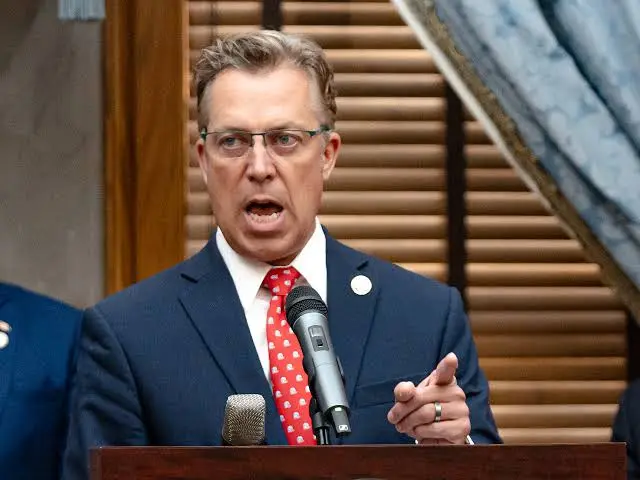
On Monday, August 3, 2026, Representative Andy Ogles (R-Tenn.) formally introduced articles of impeachment against U.S. District Court Judge Allison Burroughs. This action follows Judge Burroughs' decision on Friday, July 31, 2026, to issue a stay that temporarily blocked the Trump administration's order to terminate Temporary Protected Status (TPS) for individuals from Somalia. The Department of Homeland Security (DHS) confirmed the stay, which came amid an ongoing lawsuit filed by African Communities Together. Rep. Ogles' resolution, first obtained by Fox News Digital, accuses Judge Burroughs of having "defied the authority of both Federal law and the Supreme Court" by entertaining what he termed "spurious allegations of racial and national-origin discrimination." This move marks another instance of Trump allies in Congress targeting federal judges over immigration rulings, intensifying the conflict between the judicial and legislative branches regarding executive immigration policy.
The impeachment articles specifically cite Judge Burroughs' alleged disregard for a Supreme Court ruling issued in June 2026, which significantly curtailed the ability of lower courts to block TPS decisions. Despite this precedent, Burroughs' stay was based on an amended complaint from the plaintiffs, designed to navigate the parameters set by the high court. Rep. Ogles publicly stated, "America is not Africa’s dumping ground. We will end Temporary Protected Status, remove those who have no lawful right to remain, and put the sovereignty of the American people FIRST." He further emphasized that "This judicial activist's obstruction of the people's will must be stopped. Judge Burroughs must be impeached."
What the Evidence Establishes
The evidence establishes that Rep. Andy Ogles, a Republican from Tennessee, officially filed articles of impeachment against Judge Allison Burroughs on August 3, 2026. This action directly stems from Judge Burroughs' ruling on Friday, July 31, 2026, which temporarily halted the Trump administration's plan to end Temporary Protected Status for Somali nationals. Judge Burroughs, an appointee of former President Barack Obama in 2014, serves on the U.S. District Court for the District of Massachusetts. The Department of Homeland Security (DHS) confirmed her stay order, noting it was issued amidst a lawsuit initiated by African Communities Together, which alleges the Trump administration's TPS termination was based on racially discriminatory grounds.
DHS Chief Counsel James Percival publicly criticized the judicial actions, stating on X that a specific group of federal district judges, rather than the judiciary as a whole, are "repeatedly blocking deportations and Temporary Protected Status rollbacks despite SCOTUS rulings," labeling these actions as "naked political activism." Percival further asserted, "There is no serious debate about what is going on in these cases—defiance, obstruction, and delay." The Supreme Court had, in June 2026, issued a ruling in Mullin v. Doe that limited lower courts' power to block TPS decisions. However, Judge Burroughs' stay was predicated on an amended complaint from the plaintiffs, which aimed to address the legal framework established by the Supreme Court's decision. This indicates a legal strategy by the plaintiffs to adapt their arguments to the evolving judicial landscape, rather than a direct defiance of the Supreme Court's specific ruling.
Where the Accounts Conflict
The primary conflict in accounts centers on the interpretation of Judge Allison Burroughs' actions. Rep. Andy Ogles and DHS Chief Counsel James Percival characterize her ruling as a deliberate act of "defiance, obstruction, and delay" and "naked political activism," explicitly accusing her of "ignoring the Supreme Court's decision" and attempting to circumvent its authority. Ogles' impeachment resolution states she "defied the authority of both Federal law and the Supreme Court." The operative Telegram feeds echo this sentiment, labeling her an "activist Judge" who is "blatantly IGNORING the Supreme Court ruling." This framing suggests a willful disregard for established legal precedent and a politically motivated judicial intervention.
Conversely, the Fox News report, while presenting Ogles' accusations, also provides a crucial detail: "the latest stay order is based on an amended complaint by the plaintiffs aiming to account for that ruling." This detail suggests that Judge Burroughs' decision was not a direct defiance of the Supreme Court's June 2026 ruling in Mullin v. Doe, but rather a legal maneuver by the plaintiffs to present new arguments or evidence that fall outside the scope of the previous Supreme Court decision. The amended complaint, arguing "racial and national-origin discrimination," could represent a distinct legal challenge that the Supreme Court's prior ruling did not explicitly foreclose. Therefore, the conflict lies between the political accusation of outright defiance and the legal explanation of adapting to judicial precedent through an amended complaint, which implies a more nuanced legal process rather than a simple disregard for the high court's authority.
Context and Stakes
Temporary Protected Status (TPS) is a humanitarian program established by the Immigration Act of 1990, offering safe harbor in the U.S. to foreign nationals from countries experiencing armed conflict, natural disasters, or other extraordinary conditions. The Trump administration has consistently sought to terminate TPS designations for several countries, including Somalia, Haiti, and Syria, arguing that the original conditions warranting protection no longer exist. These efforts have frequently been met with legal challenges from immigrant advocacy groups, leading to protracted court battles. The Supreme Court's June 2026 ruling in Mullin v. Doe was a significant development, intended to limit the ability of lower courts to block these executive decisions, thereby strengthening the administration's hand in immigration policy.
The current impeachment threat against Judge Burroughs carries substantial stakes for the balance of power between the judicial and legislative branches, as well as for the future of immigration policy. Rep. Ogles' resolution is part of a broader campaign by Trump allies in Congress to rein in what they describe as "activist judges" who they believe are overstepping their authority. This campaign has seen previous attempts, such as a "significant effort to pursue impeachment against U.S. federal judge James Boasberg last year," which ultimately "fell flat." The renewed focus on judicial impeachment signals a heightened legislative willingness to challenge judicial rulings that conflict with executive policy, particularly on immigration. If such impeachment efforts gain traction, it could set a precedent that chills judicial independence, potentially influencing how federal judges interpret and apply laws in politically charged cases. Conversely, if these efforts fail, it could reinforce the judiciary's role as a check on executive power, even in areas where the Supreme Court has weighed in.
What to Watch Next
The immediate focus will be on the progression of Rep. Ogles' impeachment resolution within the House of Representatives. While the resolution has been filed, its advancement requires significant support from House leadership and the broader Republican caucus. Observers will monitor whether the resolution gains co-sponsors and if House Speaker Kevin McCarthy or Majority Leader Steve Scalise indicate any intention to bring it to a committee hearing or a floor vote. Historically, impeachment resolutions against federal judges, while not uncommon, rarely advance to a full vote, as senior House Republicans have previously expressed reservations about their effectiveness as a tool to influence judicial behavior. The political calculus will involve weighing the desire to challenge judicial rulings against the potential for a divisive and time-consuming legislative process.
Concurrently, the legal battle over the Temporary Protected Status for Somalis will continue to unfold. Judge Burroughs' stay is temporary, and the underlying lawsuit by African Communities Together, based on an amended complaint alleging racial and national-origin discrimination, will proceed. The Trump administration, through the Department of Homeland Security, is expected to vigorously challenge this amended complaint and seek to overturn the stay. This could lead to further appeals, potentially bringing the case back before a higher court, including the U.S. Court of Appeals for the First Circuit, and ultimately, a new review by the Supreme Court. The outcome of this legal process will determine the fate of TPS for Somalis and could further clarify the boundaries of judicial review over executive immigration decisions, especially in light of the Supreme Court's June 2026 ruling in Mullin v. Doe.
Bottom Line
Rep. Andy Ogles has formally initiated impeachment proceedings against U.S. District Court Judge Allison Burroughs, accusing her of defying federal law and a Supreme Court ruling by temporarily blocking the termination of Temporary Protected Status for Somalis. This action is a direct response to Judge Burroughs' July 31, 2026, stay order, which was issued based on an amended complaint from plaintiffs alleging racial discrimination in the Trump administration's TPS policy. The move by Ogles underscores an ongoing effort by some congressional Republicans to challenge judicial decisions that impede the executive branch's immigration agenda, following a Supreme Court ruling in June 2026 that aimed to limit lower court interventions in TPS cases.
The impeachment resolution faces an uncertain path in the House, where similar past efforts against federal judges have not advanced significantly. The broader implications involve a deepening institutional conflict over immigration policy and the separation of powers, with the legislative branch attempting to exert pressure on the judiciary. Meanwhile, the underlying legal challenge to the Somali TPS termination will continue through the federal court system, with the Trump administration expected to contest Judge Burroughs' stay. The resolution of both the impeachment effort and the legal case will significantly impact future immigration policy and the perceived independence of the federal judiciary.
DECLASSIFIED SOURCE: Operative Telegram Feed (via Real-time Signal Upgrade)