Nvidia CEO Resigns Amid Allegations of Affairs, Including With Suspected Chinese Spy
By TMZJensen Huang resigned as Nvidia CEO following alleged affairs with a suspected Chinese spy, Alice Huang, and VP Kimberly Powell, causing a 10% stock plunge.
What Happened
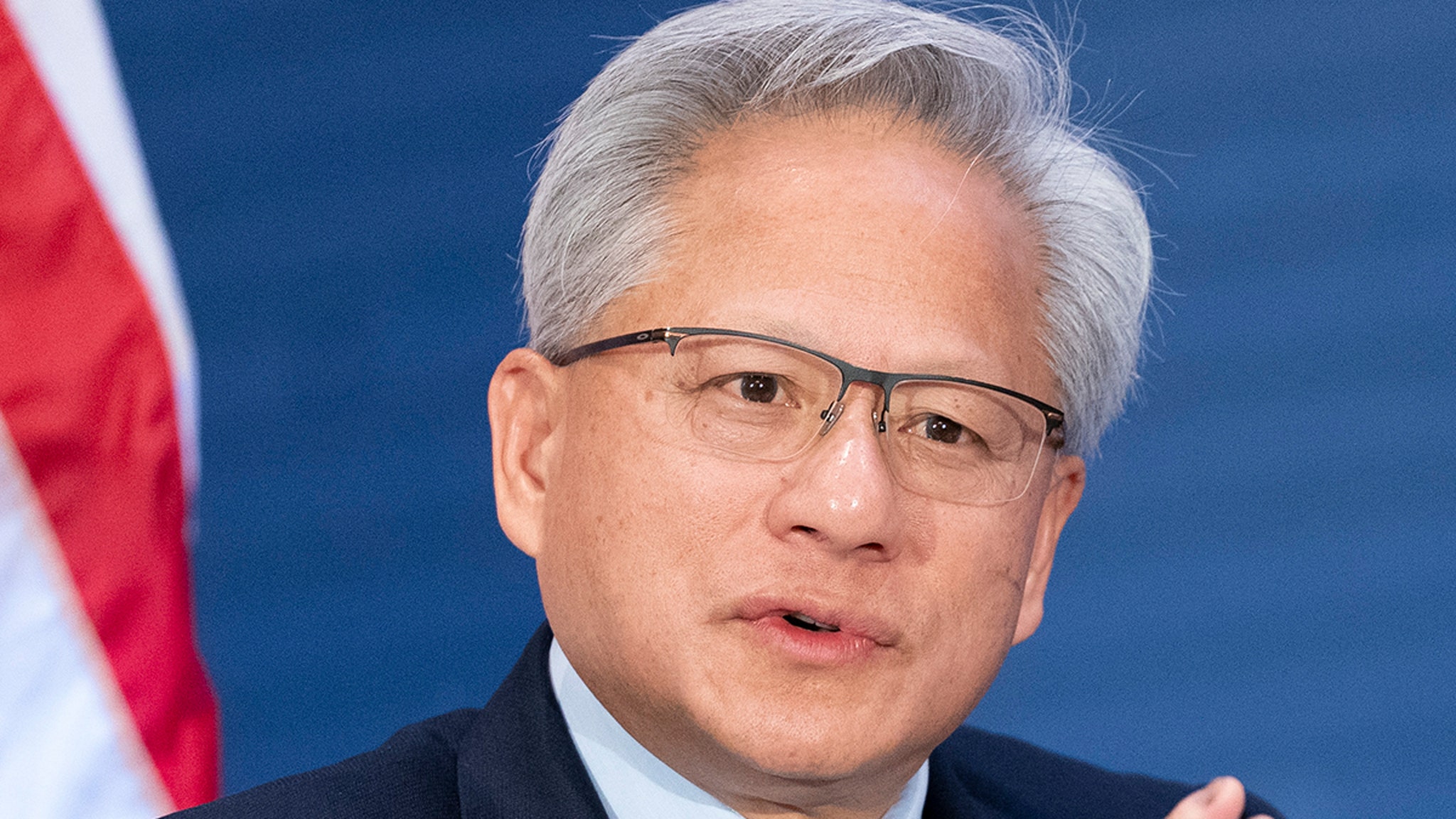
Jensen Huang, the now-former CEO of Nvidia, resigned from his position and the company's board on Thursday, November 12, 2026. This departure followed a board meeting convened to address his status with the company, as reported by Reuters. Huang's resignation came in the wake of multiple allegations of extramarital affairs. On Sunday, November 8, Huang reportedly confessed to the company about a romantic relationship with Alice Huang, a former executive at Singapore-based tech firm Megaspeed, who is also identified as an alleged Chinese asset. Concurrently, allegations surfaced regarding a second affair involving Kimberly Powell, Nvidia’s vice president of health care. The New York Times reported on Wednesday, November 11, that two former Nvidia employees claimed to have witnessed Kimberly Powell and Jensen Huang 'canoodling on camera' during a company conference in March. This alleged conduct reportedly violated Nvidia's code of conduct, which advises employees to 'avoid situations where our actions create conflict' such as 'personal relationships.' Following Huang's immediate resignation, Nvidia's Chief Financial Officer, Colette Kress, has assumed the role of interim CEO.
The fallout from these allegations was swift and severe for Nvidia's market valuation. The company's stock, $NVDA, plunged over 10% immediately after Huang's official resignation announcement. This decline erased an estimated $750 billion in market capitalization since the scandal began, according to reports. The Department of Justice has reportedly taken over a criminal investigation into Megaspeed, initiated after an email from Nvidia’s lawyer, Tim Teter, to the Commerce Department on Monday, November 9. President Donald Trump was reportedly informed of Alice Huang’s ties to China in 2025 but took no action at the time, with U.S. officials believing Jensen Huang was unaware of her connections.
What the Evidence Establishes
Evidence establishes that Jensen Huang resigned as CEO of Nvidia on Thursday, November 12, 2026, following a board meeting. This resignation was directly preceded by his Sunday, November 8, confession to the company regarding a romantic relationship with Alice Huang, identified as a former Megaspeed executive and alleged Chinese asset. The Daily Caller, citing Reuters, confirmed Huang's immediate departure and the appointment of Colette Kress as interim CEO. Furthermore, allegations of a second affair with Kimberly Powell, Nvidia's Vice President of Health Care, were reported by The New York Times on Wednesday, November 11, based on accounts from two former Nvidia employees who claimed to have seen them 'canoodling on camera' at a March conference. This alleged relationship is cited as a violation of Nvidia's code of conduct, which explicitly warns against 'personal relationships' that create conflicts of interest.
The financial impact of these events is clearly established: Nvidia's stock ($NVDA) experienced a significant drop of over 10% immediately after Huang's resignation, resulting in a loss of $750 billion in market capitalization since the scandal's onset. The Department of Justice has initiated a criminal investigation into Megaspeed, a development triggered by an email from Nvidia's lawyer, Tim Teter, to the Commerce Department. This indicates a formal legal inquiry into the activities of Alice Huang's former firm and its potential connection to the alleged transfer of export-restricted Nvidia chips to China. Harvey Jones, a chair on Nvidia’s Board of directors, confirmed the board's serious approach to its stewardship duties in a memo to employees, as reported by Reuters.
Where the Accounts Conflict
While both TMZ and Daily Caller corroborate the central facts of Jensen Huang's resignation and the allegations of two affairs, their reporting exhibits differences in emphasis and the specific details they highlight. The Daily Caller's primary focus is on the alleged affair with Alice Huang, framing it prominently with the 'suspected Chinese spy' angle and directly linking it to Huang's resignation. This outlet also provides details about Alice Huang's alleged use of the relationship to access export-restricted Nvidia chips and ship them to China, citing Reuters and Financial Times for these claims. It also includes Huang's Sunday confession email, stating, 'I was unfaithful to my wife. My actions hurt her and our children. There is no excuse for what I did. I am deeply sorry.'
TMZ, while acknowledging the Alice Huang allegations, places a more significant emphasis on the alleged affair with Kimberly Powell, Nvidia's VP of Health Care. TMZ details Powell's employment history at Nvidia, her marital status, and quotes a neighbor who described her as 'an excellent neighbor,' adding a personal dimension to the story. Both outlets cite The New York Times for the Kimberly Powell allegations, specifically mentioning the 'canoodling on camera' incident at a March conference. However, neither source directly contradicts the other on core factual claims; rather, they offer complementary narratives with differing levels of detail and focus on the two alleged affairs and their respective implications. The Daily Caller also includes a direct quote from Huang to the NYT on Wednesday, where he stated, 'I don’t think you should be talking to me directly,' when questioned about the alleged affair with Powell, a detail not present in the TMZ report.
Context and Stakes
The resignation of Jensen Huang, a prominent figure in the technology sector, carries significant implications for Nvidia, the semiconductor industry, and national security. Nvidia is a critical player in the global technology landscape, particularly in the development of advanced graphics processing units (GPUs) and AI chips, which are vital for various applications, including defense and supercomputing. The alleged affair with Alice Huang, identified as a suspected Chinese spy, introduces a severe national security dimension. If confirmed, the alleged use of the relationship to facilitate the shipment of export-restricted Nvidia chips to China would represent a significant breach of U.S. export controls and potentially compromise technological advantages.
For Nvidia, the immediate stakes involve corporate governance and market confidence. The company's code of conduct explicitly prohibits personal relationships that create conflicts, and the alleged actions of its former CEO directly challenge this policy. The substantial $750 billion market cap loss and 10% stock plunge underscore investor concerns regarding leadership stability and potential legal repercussions. The ongoing Department of Justice investigation into Megaspeed and the alleged chip transfers further elevates the legal and reputational risks for Nvidia. The appointment of Colette Kress as interim CEO provides temporary leadership, but the search for a permanent successor will be closely watched, as the company navigates this crisis amidst intense geopolitical competition in the technology sector. The incident also highlights the broader challenges faced by U.S. tech companies operating in a complex global environment, particularly concerning intellectual property protection and national security.
What to Watch Next
Several key developments warrant close observation in the coming weeks. The most immediate focus will be on Nvidia's board of directors and their process for selecting a permanent CEO. While Colette Kress has stepped in as interim CEO, the company's long-term leadership strategy will be crucial for restoring investor confidence and guiding Nvidia through this period of instability. Any announcements regarding the timeline for a permanent appointment or the criteria for candidates will be significant. Additionally, the employment status of Kimberly Powell, Nvidia's Vice President of Health Care, remains unclear. Whether she will retain her position or face internal disciplinary action, given the alleged violation of the company's code of conduct, will be a critical indicator of Nvidia's commitment to its internal policies.
Beyond internal corporate matters, the Department of Justice's criminal investigation into Megaspeed and the alleged transfer of export-restricted Nvidia chips to China will be a major focal point. Updates or indictments related to this investigation could have far-reaching implications for U.S.-China technology relations and export control enforcement. Any public statements or findings from the DOJ will provide further clarity on the extent of the alleged espionage and its impact on Nvidia's technology. Furthermore, the market's reaction to these ongoing developments, particularly Nvidia's stock performance ($NVDA), will serve as a barometer of investor sentiment regarding the company's ability to navigate this crisis and maintain its competitive edge in the semiconductor industry. The actions of President Trump's administration, particularly regarding any retrospective review of the 2025 intelligence on Alice Huang, could also emerge as a political dimension to watch.
Bottom Line
Jensen Huang's resignation as Nvidia's CEO marks a significant leadership transition for one of the world's most influential technology companies, directly triggered by allegations of multiple extramarital affairs, including one with a suspected Chinese intelligence asset. This situation has plunged Nvidia into a dual crisis involving corporate governance and national security. The immediate financial impact has been substantial, with Nvidia's stock experiencing a sharp decline and a significant loss in market capitalization. The appointment of Colette Kress as interim CEO provides a temporary measure, but the company faces the critical task of appointing a permanent leader who can stabilize operations and rebuild trust.
The ongoing Department of Justice investigation into the alleged transfer of export-restricted chips to China, potentially facilitated by Alice Huang, underscores the severe geopolitical ramifications of this scandal. This investigation could lead to legal actions and further scrutiny of Nvidia's international business practices and security protocols. The incident highlights the vulnerabilities of high-tech companies to espionage and the critical importance of robust internal controls and ethical conduct, especially for executives in sensitive industries. Nvidia's ability to navigate these complex challenges, maintain its technological leadership, and reassure investors and national security stakeholders will define its trajectory in the coming months.
DECLASSIFIED SOURCE: TMZ