Judge Blocks DOJ Bid to Halt Processing of California Ballots
By NPR NewsUS District Judge David Carter rejects Trump administration's bid to separate 20,000 mail ballots in California
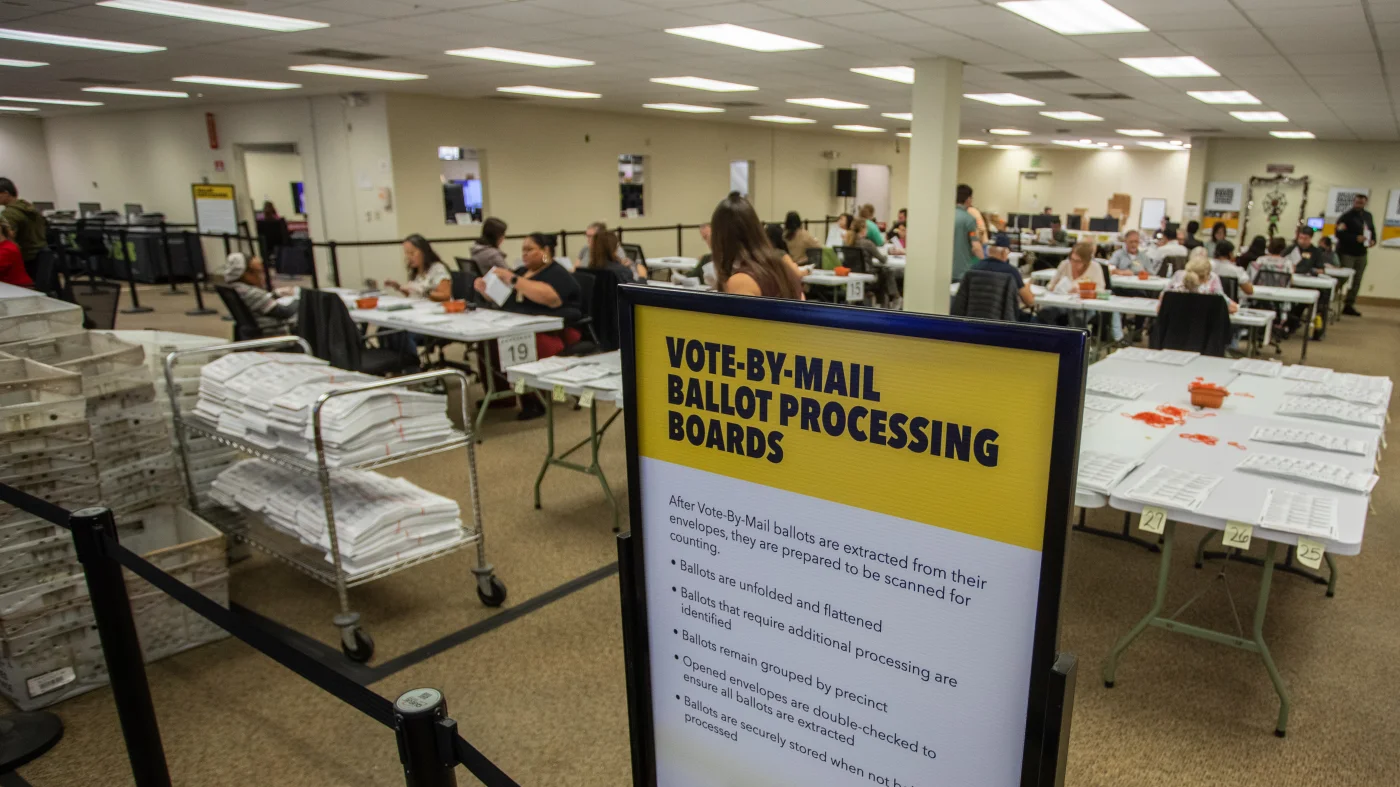
What Happened
On October 28, 2026, US District Judge David Carter ruled against the Trump administration's bid to separate 20,000 mail ballots in California that it claimed were likely from noncitizens.
The Department of Justice (DOJ) had requested that these ballots be set aside while the citizenship of the voters was verified.
However, Judge Carter refused this request, stating that it would 'wreak havoc' on the electoral process and that the DOJ should instead focus on prosecuting any illegal voters after the fact.
What the Evidence Establishes
The evidence establishes that the Trump administration has been actively seeking to challenge the validity of certain mail-in ballots in California.
According to reports, the DOJ had identified 20,000 mail ballots that it believed were likely from noncitizens and had requested that these ballots be set aside.
However, Judge Carter's ruling suggests that the DOJ's concerns about voter fraud are not sufficient to justify interfering with the electoral process in this way.
The ruling also highlights the ongoing tensions between the Trump administration and the state of California over issues related to election integrity and voter rights.
Where the Accounts Conflict
There are conflicting accounts of the motivations behind the Trump administration's bid to stop California from counting certain mail-in ballots.
Some reports suggest that the administration is genuinely concerned about the risk of voter fraud and is seeking to protect the integrity of the electoral process.
However, others argue that the administration's actions are politically motivated and are intended to disenfranchise certain groups of voters.
For example, some critics have pointed out that the 20,000 mail ballots in question were flagged as potentially being from noncitizens, but that this does not necessarily mean that they are invalid or that the voters are not eligible to vote.
Context and Stakes
The stakes in this case are high, with the outcome potentially affecting the results of elections in California and beyond.
The Trump administration's efforts to challenge the validity of certain mail-in ballots are part of a broader pattern of attempts to restrict voting rights and limit access to the ballot.
These efforts have been met with resistance from civil rights groups, voting rights advocates, and state officials who argue that they are intended to disenfranchise certain groups of voters and undermine the democratic process.
The case also highlights the ongoing tensions between the federal government and the state of California over issues related to election integrity and voter rights.
What to Watch Next
The next steps in this case are likely to involve an appeal by the Trump administration to the Ninth Circuit or the US Supreme Court.
US Attorney Bill Essayli has already indicated that the DOJ is prepared to take an emergency appeal to the higher courts if necessary.
It is also possible that the case could have implications for the broader debate over election integrity and voter rights, with potential consequences for the 2026 elections and beyond.
As the case continues to unfold, it will be important to watch for developments in the courts and for any further actions taken by the Trump administration or other stakeholders.
Bottom Line
In conclusion, the Trump administration's bid to stop California from counting certain mail-in ballots has been rejected by a trial judge.
The ruling highlights the ongoing tensions between the federal government and the state of California over issues related to election integrity and voter rights.
As the case continues to unfold, it will be important to watch for developments in the courts and for any further actions taken by the Trump administration or other stakeholders.
The outcome of this case could have significant implications for the 2026 elections and beyond, and could potentially affect the voting rights of thousands of Californians.
DECLASSIFIED SOURCE: NPR News (via Real-time Signal Upgrade)