Israeli President Tasks Eisenkot With Coalition Building as Netanyahu Era Hangs in Balance
By RT - NewsIsaac Herzog grants Gadi Eisenkot 28 days to form government after 67 Knesset members back opposition leader; Netanyahu retains 46 endorsements but faces corruption probe and election challenges.
What Happened
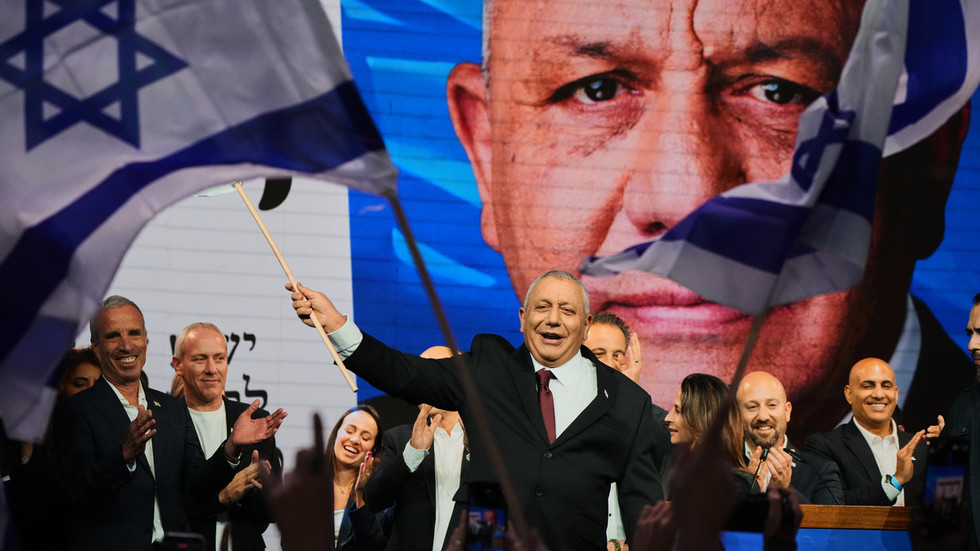
Israeli President Isaac Herzog announced on Saturday, November 7, 2026, that he has selected Gadi Eisenkot, chairman of the Yashar party and former military chief of staff, to receive the mandate to form Israel's next government. The formal presentation of the mandate is scheduled for Sunday, November 8, at 5 p.m. Israeli time. Eisenkot will then have 28 days to assemble a governing coalition, with a possible 14-day extension. The decision follows two days of consultations with Israel's newly elected 25th Knesset, during which factions representing 67 of the 120 members recommended Eisenkot, while 46 lawmakers backed incumbent Prime Minister Benjamin Netanyahu. Seven members of the ultra-Orthodox United Torah Judaism party declined to endorse either candidate. Netanyahu remains caretaker prime minister until a new government is sworn in. The October 27 election produced no outright majority: Netanyahu's Likud emerged as the largest single party with 27 seats, his wider right-religious bloc secured 53 seats, while the four-party alliance seeking to replace him won 48 seats. The remaining 19 endorsements for Eisenkot came from the Arab-led Joint List and Ra'am parties, whose participation creates complications for potential coalition partners who have ruled out relying on Arab parties for a governing majority.
What the Evidence Establishes
The presidential consultations produced a clear numerical outcome: 67 Knesset members recommended Eisenkot versus 46 for Netanyahu, with 7 abstaining. However, the evidence establishes that these recommendations do not translate directly into a 67-seat coalition. Eisenkot's natural bloc — the four parties committed to replacing Netanyahu — controls only 48 seats. The Joint List and Ra'am, which together hold 19 seats, recommended Eisenkot but have not committed to joining a coalition or supporting it from outside. Avigdor Lieberman, leader of the secular nationalist Yisrael Beitenu party (part of the anti-Netanyahu bloc), publicly signaled willingness to compromise on ultra-Orthodox military conscription — a reversal of his long-standing position — arguing that preventing another election requires difficult compromises. Lieberman identified three conditions: ending the Netanyahu era, avoiding another election, and refusing a government dependent on Arab party abstentions. United Torah Judaism leader Yaakov Asher welcomed Lieberman's flexibility but said his party had not received a concrete proposal and any agreement would require approval from religious leadership. Shas party, holding six seats, recommended Netanyahu. Israel's Central Elections Committee stated on November 5 that the election's integrity had not been compromised, rebutting Netanyahu's challenges to the results. Eisenkot has outlined four founding principles for his proposed National Emergency Government: recognition of Israel as a Jewish and democratic state; acceptance of the Declaration of Independence's values; universal military, national, or civilian service; and recognition of Hamas as a terrorist organization with a commitment to dismantle its capabilities.
Where the Accounts Conflict
The central conflict lies between the presidential mandate's mathematical clarity — 67 recommendations for Eisenkot — and the political reality that those 67 lawmakers have not agreed on a governing formula. Herzog himself acknowledged this tension in his November 5 statement: "The results of the consultations may appear clear," but cautioned that competing political demands and vetoes leave government formation uncertain. Lieberman's willingness to compromise on conscription conflicts with his explicit rejection of a minority government dependent on Arab party abstentions, creating a logical contradiction: without United Torah Judaism's seven seats, Eisenkot's bloc totals 55; with United Torah Judaism but without Arab party support, the bloc reaches 62 — a bare majority that depends on every member showing up for every vote. Netanyahu's camp disputes the election outcome itself, alleging voting irregularities, while the Central Elections Committee and Reuters reporting confirm no compromise to election integrity. Within the anti-Netanyahu bloc, disagreements persist over whether to pursue a minority government backed by Arab party abstentions — an option Eisenkot's allies have discussed but Lieberman has rejected. The ultra-Orthodox parties' demand for legal protections for yeshiva students conflicts directly with Eisenkot's campaign promise to expand universal service obligations. These conflicting accounts are not merely procedural; they reflect irreconcilable ideological commitments that have paralyzed Israeli politics for five election cycles since 2019.
Context and Stakes
This mandate decision occurs against the backdrop of Israel's first election since the October 7, 2023 Hamas-led attack that killed approximately 1,200 people and triggered the ongoing Gaza war. The election was widely viewed as a referendum on Netanyahu's 16-year cumulative tenure and his government's failure to prevent the October 7 breach. Netanyahu faces an ongoing corruption trial on charges of fraud, breach of trust, and accepting bribes in three separate cases — proceedings that would continue regardless of his political status but which his allies have sought to delay or derail through legislative maneuvers. The conscription dispute centers on the 2017 Supreme Court ruling that struck down the blanket exemption for ultra-Orthodox yeshiva students as unconstitutional, a deadline the Knesset has repeatedly extended. Failure to resolve it has toppled previous governments. A fifth election in under four years would deepen institutional paralysis at a moment when Israel faces simultaneous security challenges in Gaza, Lebanon, the West Bank, and Iran. The participation of Arab parties in the recommendation bloc represents a historic shift: Ra'am leader Mansour Abbas joined the previous Bennett-Lapid coalition in 2021, but the Joint List has never recommended a prime minister candidate. Their 19-seat bloc now holds pivotal leverage. Economically, prolonged political deadlock has delayed the 2025 budget, frozen infrastructure projects, and contributed to credit rating agencies maintaining negative outlooks on Israeli sovereign debt.
What to Watch Next
The immediate marker is November 8 at 5 p.m. Israeli time, when Eisenkot formally receives the mandate and his 28-day clock starts. Within the first week, watch for whether Eisenkot's negotiators present a written framework agreement to United Torah Judaism addressing conscription — the key to unlocking their seven seats. Lieberman's public statements suggest Yisrael Beitenu will not join a government reliant on Arab party abstentions; verify whether this holds if the alternative is a fifth election. Netanyahu's legal team has signaled continued challenges to election results in specific precincts; any court-ordered recount in close districts could shift seat allocations. The Supreme Court may be petitioned on the president's mandate decision if Netanyahu argues the 67 recommendations include parties that refuse to sit in government together. Regionally, monitor whether Hamas or Hezbollah attempt to exploit perceived Israeli political weakness during the coalition negotiation window. Domestically, watch for protest movements — both pro-Netanyahu demonstrations organized by Likud and anti-government protests by the Kaplan Force and related groups — that could pressure wavering Knesset members. The November 15 deadline for submitting the 2025 state budget to the Knesset creates a hard fiscal constraint: a caretaker government cannot pass a budget, meaning prolonged deadlock triggers automatic 1/12th monthly spending caps that slash discretionary programs.
Bottom Line
President Herzog's decision to task Gadi Eisenkot with government formation represents the strongest institutional signal yet that Netanyahu's era may be ending, but the structural obstacles that produced five elections in four years remain intact. Eisenkot holds a parliamentary plurality of recommendations (67) but lacks a coalition majority (61) without either Arab party participation or ultra-Orthodox inclusion — two options his prospective partners have ideologically opposed. Lieberman's conscription compromise offer is the most significant tactical shift in months, yet it creates a new contradiction: his refusal to accept Arab party support means he needs United Torah Judaism, but United Torah Judaism's price is conscription legislation that Lieberman's base opposes. Netanyahu retains 46 committed seats, the premiership's institutional advantages, and a demonstrated ability to fracture opposition blocs. The Central Elections Committee's validation of the election removes his most potent procedural challenge. Historical base rate: of the four previous post-2019 mandates given to Netanyahu alternatives (Gantz 2020, Lapid 2021, Bennett 2021, Lapid 2022), only Bennett-Lapid succeeded in forming a government, which collapsed after 12 months. The evidence suggests a functioning government is possible but improbable within 28 days; a 14-day extension is likely; a fifth election remains a live scenario. The critical variable is whether ideological rigidity on conscription and Arab party cooperation yields to the shared fear of electoral punishment for forcing another vote.
DECLASSIFIED SOURCE: RT - News (via Real-time Signal Upgrade)