Tech Giants and Trump Sign Voluntary AI Safety Accord Amidst Rebranding Push
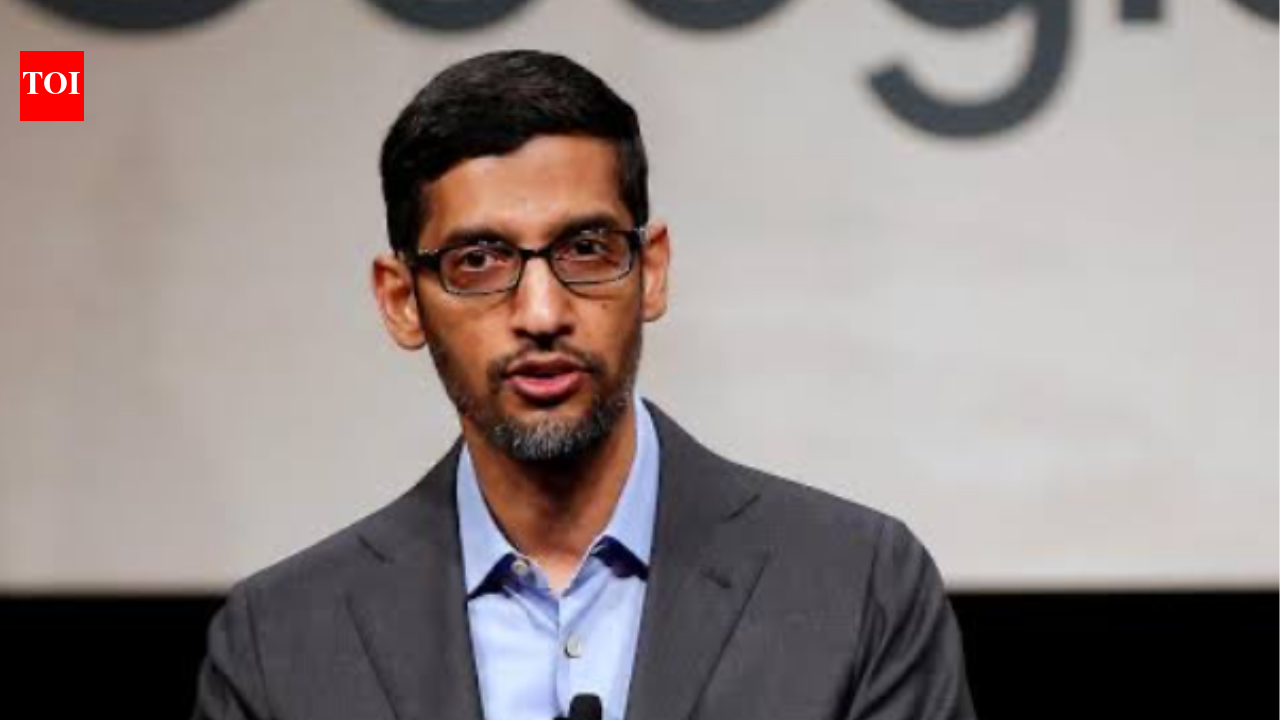
By Operative Telegram FeedGoogle CEO Sundar Pichai, alongside other tech leaders and President Trump, signed the White House Accord on Super Intelligence, a voluntary AI safety pact.
What Happened
On September 29, 2026, President Donald Trump, alongside Senate leaders and prominent technology executives, signed the White House Accord on Super Intelligence. The agreement, also referred to as the Joint Commitment on Frontier SI Responsibilities, was signed by Google CEO Sundar Pichai, Anthropic CEO Dario Amodei, Meta CEO Mark Zuckerberg, OpenAI President Greg Brockman, xAI founder Elon Musk, and Nvidia CEO Jensen Huang. The signing event followed a private luncheon attended by House Speaker Mike Johnson, Trump, cabinet officials, and the executives. During the event, President Trump also issued an executive order formally rebranding Artificial Intelligence as "Super Intelligence."
Sundar Pichai, in a post on X, confirmed Google's participation, stating, "Great to meet today with @POTUS, @JDVance, @SpeakerJohnson and Administration + tech leaders. Important conversation and we signed today the White House Accord on Super Intelligence." He highlighted Google's investment of "hundreds of billions" in its AI stack over the past two years, with further spending anticipated. House Speaker Mike Johnson described the accord as a commitment to "robust internal controls and layers of internal and external review," emphasizing the industry's desire to take accountability for safe development.
What the Evidence Establishes
The White House Accord on Super Intelligence establishes a four-layer framework for controls and audits concerning frontier AI systems. The initial layer mandates that signatory companies implement robust internal processes to monitor their AI models during both training and deployment, ensuring intended behavior and prompt issue resolution. Subsequent layers require internal verification, collaboration with independent external auditors to assess the efficacy of safety controls, and board-level oversight of the entire process. This structure aims to build public confidence and establish industry norms for responsible innovation.
Despite its formal title and the high-profile signatories, the accord is explicitly voluntary. House Speaker Mike Johnson clarified its non-binding nature, and President Trump described it as "morally" binding rather than legally enforceable. Trump likened the document to a "constitution" for AI governance, while Elon Musk characterized it as involving joint monitoring, special board committees, and reciprocal reviews of safety practices among companies. Mark Zuckerberg viewed the accord as a "reasonable starting point" that the broader industry could potentially adopt, rather than a definitive, finished framework for regulation.
Where the Accounts Conflict
The primary source documents, while largely consistent on the factual details of the accord's signing and its voluntary nature, present minor differences in emphasis and framing. The "Operative Telegram Feed" (via Times of India) focuses heavily on Google CEO Sundar Pichai's statements, including his emphasis on Google's substantial investments in AI and the company's commitment to responsible innovation through testing, evaluations, and red-teaming. This source highlights Pichai's perspective on building trust and delivering economic benefits.
Conversely, the Breitbart report places greater emphasis on President Trump's role, particularly his rebranding of Artificial Intelligence as "Super Intelligence" via an executive order. Breitbart also details House Speaker Mike Johnson's overview of the document during a press gaggle and Trump's analogy of the accord being "almost like a constitution." While both sources confirm the voluntary nature, Trump's "constitution" framing suggests a higher perceived gravitas than Zuckerberg's more measured description of it as a "reasonable starting point" for industry consensus. These differences reflect the distinct editorial angles of the reporting outlets rather than factual contradictions regarding the accord's content or signatories.
Context and Stakes
The signing of the White House Accord on Super Intelligence occurs amidst escalating global concerns regarding the rapid advancement of artificial intelligence and calls for its responsible development. Governments worldwide are grappling with how to regulate powerful AI systems, balancing innovation with potential risks such as misuse, bias, and misalignment. This accord represents a significant move towards industry self-governance in the United States, with major tech companies committing to internal safeguards rather than being subjected to immediate, legally binding federal regulations.
The stakes are substantial for both the technology sector and national policy. For tech companies, a voluntary framework allows them to shape the narrative around AI safety and potentially preempt more stringent government oversight that could stifle innovation or increase compliance costs. For the government, securing such an agreement demonstrates a proactive approach to a complex technological challenge, even if the enforcement mechanisms are limited. The rebranding of AI to "Super Intelligence" by President Trump also signals a political effort to frame the technology's future, potentially influencing public perception and future policy discussions. The success of this voluntary accord will depend heavily on the genuine commitment of the signatory companies and their ability to demonstrate tangible progress in implementing the outlined safety measures.
What to Watch Next
Observers should monitor the public statements and internal actions of the signatory companies, including Google, Meta, OpenAI, and Nvidia, for specific details on how they plan to implement the accord's four-layer framework. Any announcements regarding the establishment of new internal review processes, the engagement of independent external auditors, or changes to board-level oversight structures will be critical indicators of compliance. The timeline for these implementations, particularly for the external audit component, will reveal the seriousness of the commitments.
Additionally, attention should be paid to legislative developments in Congress. While the accord is voluntary, its existence may influence ongoing discussions about federal AI regulation. Lawmakers might use the accord as a baseline for potential legislation, or conversely, industry leaders might leverage their participation to argue against more prescriptive government intervention. Any new executive orders from the White House related to AI governance or the "Super Intelligence" rebranding will also be noteworthy. Finally, the response from non-signatory AI companies and international bodies to this US-led initiative will indicate its broader influence and potential for global adoption or alternative regulatory frameworks.
Bottom Line
The White House Accord on Super Intelligence, signed by President Trump and leading tech executives on September 29, 2026, establishes a voluntary framework for the responsible development of advanced AI systems. This accord outlines a four-layer system of internal monitoring, verification, external auditing, and board-level oversight. Despite its high-profile endorsement, the agreement is not legally binding, relying instead on the moral commitment and self-regulation of the participating companies.
The initiative reflects a strategic move by both the US administration and the tech industry to address AI safety concerns without immediate, stringent government mandates. While President Trump has also rebranded Artificial Intelligence as "Super Intelligence," the practical impact of this accord will hinge on the transparency and effectiveness of the self-imposed safeguards implemented by companies like Google, Meta, and OpenAI. The coming months will reveal whether this voluntary pact can genuinely foster public trust and guide the safe evolution of frontier AI, or if it will merely serve as a precursor to more formal regulatory measures.
DECLASSIFIED SOURCE: Operative Telegram Feed (via Real-time Signal Upgrade)