Democrats Secure Georgia Governor and Senate Seats in Midterm Elections
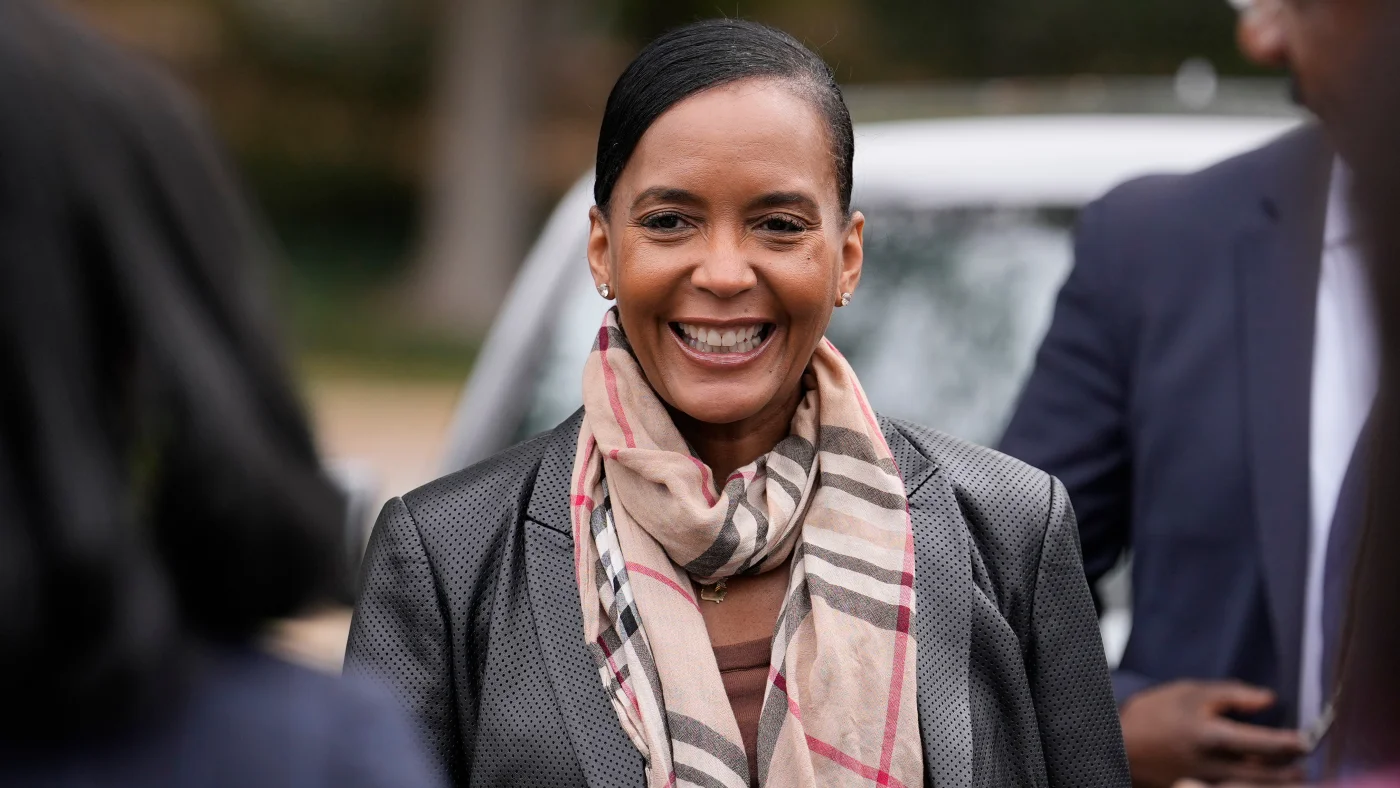
By NPR NewsKeisha Lance Bottoms wins Georgia's gubernatorial race, becoming the first Black female governor. Jon Ossoff secures re-election to the U.S. Senate.
What Happened
On November 3, 2026, Democrats secured significant victories in Georgia's midterm elections, with Keisha Lance Bottoms winning the gubernatorial race and Jon Ossoff retaining his U.S. Senate seat. The Associated Press called the gubernatorial race for Bottoms with 55.4 percent of the vote after 75 percent of ballots were counted, a lead maintained from early polling data. NBC News corroborated this call. Bottoms, an attorney and former Atlanta mayor, defeated Republican Rick Jackson for the open seat previously held by Republican Brian Kemp. Concurrently, incumbent Senator Jon Ossoff defeated Republican challenger Mike Collins, with the Associated Press calling his race after he achieved 62.2 percent of votes with 38 percent of ballots counted. Ossoff's comfortable lead allowed Democratic campaign arms to reallocate funds to more competitive races. Federal Election Commission filings indicate Ossoff spent over $100 million, significantly more than Collins's $10 million. Mail-in ballot counting, permitted on Election Day morning in Georgia, showed an immediate large lead for Ossoff after polls closed at 7 pm EST.
What the Evidence Establishes
The election results establish a clear Democratic sweep in Georgia's top statewide offices. Keisha Lance Bottoms' victory is historically significant, as she will become the first Black female governor in U.S. history upon her swearing-in on January 11. Her campaign platform included full Medicaid expansion, establishing a trust fund for housing and rent, free community college, and expanding the repeal of Georgia's abortion restrictions. Senator Jon Ossoff's re-election for a second term confirms his position as a Democratic pragmatist, despite his support for bypassing the Senate filibuster and federal legalization of cannabis. He has rejected far-left positions such as the Green New Deal and 'Medicare for All' but continues to advocate for codifying Roe v. Wade. The state's U.S. House seats, which were 9-5 Republican in 2024, are now split six Democrats to eight Republicans, with five of the nine called seats belonging to Democrats, indicating a shift in congressional representation as well.
Where the Accounts Conflict
While both the Daily Caller and an Operative Telegram Feed confirm the core factual outcome of Keisha Lance Bottoms winning the Georgia Governor's race, their framing and additional commentary diverge significantly. The Daily Caller provides a detailed, evidence-based account, citing specific vote percentages (55.4% for Bottoms, 62.2% for Ossoff) and attributing calls to major news organizations like the Associated Press and NBC News. It outlines candidate platforms and campaign spending, maintaining a neutral, reportorial tone. In contrast, the Operative Telegram Feed, specifically a post by Eric Daugherty, confirms Bottoms' win but immediately injects partisan commentary, stating, 'Georgia just made a huge mistake. They will learn, and we will say "I told you so!"' This illustrates a conflict not in the facts of the election results, but in the interpretation and emotional response to those results, highlighting a clear partisan divide in how the outcome is presented and perceived by different sources.
Context and Stakes
The victories of Keisha Lance Bottoms and Jon Ossoff carry substantial implications for Georgia's policy direction and national political dynamics. Bottoms' platform, centered on Medicaid expansion, housing initiatives, and educational reforms, signals a potential shift towards more expansive social programs within the state. Her commitment to expanding abortion access directly challenges existing restrictions and could lead to significant legislative battles. Rick Jackson's campaign, focused on tax cuts and public safety, represented a more conservative approach, and his defeat indicates a rejection of that agenda by a majority of Georgia voters in this cycle. Senator Ossoff's continued tenure in the Senate reinforces the Democratic presence in a historically red state, allowing him to continue advocating for federal cannabis legalization and filibuster reform, issues that have broader national resonance and could impact federal legislative priorities. The shift in House seats, even if still Republican-leaning, suggests a more competitive electoral environment in Georgia.
What to Watch Next
Following the election calls, immediate attention will turn to the official certification of the results, a standard procedure that confirms the final vote counts. Governor-elect Keisha Lance Bottoms will begin her transition process, assembling her administration and preparing her legislative agenda for the Georgia General Assembly, with her inauguration scheduled for January 11. Observers will closely monitor her initial policy proposals, particularly regarding Medicaid expansion and housing trust fund legislation, to gauge the immediate impact of her campaign promises. In the U.S. Senate, Jon Ossoff's second term will likely see him continue to push for federal cannabis legalization and efforts to bypass the filibuster, potentially aligning with other Democratic senators on these issues. The composition of the Georgia House delegation will also be finalized, and the balance of power there will influence the state's representation in Washington and the types of federal legislation that gain traction.
Bottom Line
The 2026 midterm elections in Georgia resulted in significant Democratic victories, with Keisha Lance Bottoms elected as the state's first Black female governor and Jon Ossoff securing his second term in the U.S. Senate. Bottoms' win, called by the Associated Press with 55.4 percent of the vote, marks a historic moment and signals a potential shift in state policy towards Medicaid expansion, housing, and abortion access. Ossoff's re-election, with 62.2 percent of the vote, solidifies his role as a pragmatic Democrat in Congress, advocating for issues like federal cannabis legalization and filibuster reform. The outcomes reflect a competitive political landscape in Georgia, with implications for both state-level governance and national legislative priorities. The transition for Governor-elect Bottoms and the legislative efforts of Senator Ossoff will be key areas of focus in the coming months.
DECLASSIFIED SOURCE: NPR News (via Real-time Signal Upgrade)