Holiday Spending Surges Past $1 Trillion Mark Amid Inflation and Deal-Seeking Behavior
By NPR NewsBlack Friday 2026 sees holiday spending forecasts exceeding $1 trillion, largely inflation-driven. Consumers prioritize value and deals amidst economic headwinds.
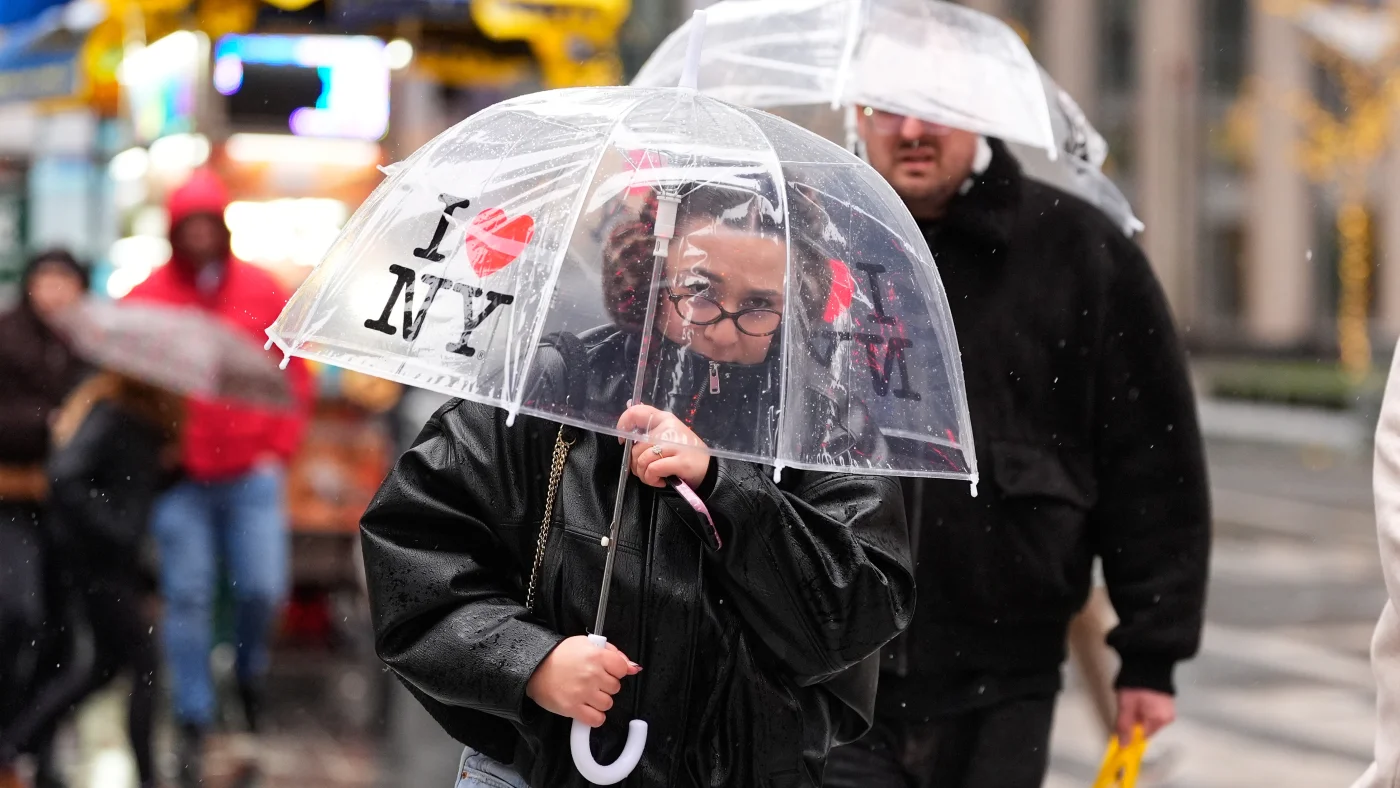
What Happened
U.S. consumers are projected to spend over $1 trillion during the November-December holiday season of 2026, marking a 4% to 6% increase year-over-year, according to various economic forecasts including the National Retail Federation. This surge in spending is largely attributed to inflation, which stands at 3.8%, approximately one percentage point higher than in the preceding two years. Despite this top-line growth, underlying consumer sentiment remains cautious, with the Conference Board's Consumer Confidence Index hitting its lowest point since 2014 in September. Shoppers are actively seeking value, with 87% planning to participate in the Black Friday through Cyber Monday shopping period, the highest participation rate in a decade, as reported by Deloitte's October survey of 1,200 consumers. Online spending in the first 22 days of November reached $82.5 billion, a 9.1% year-over-year increase, according to Adobe data, indicating an early start to holiday deal-hunting.
Retailers are responding to this environment by offering deeper discounts, with rates up 8% in the U.S. in November compared to last year. Major retailers like Walmart, Target, Best Buy, and Lowe's have expressed optimism about the holiday season, emphasizing value propositions and deals. Walmart CFO John David Rainey noted a "resilient consumer" and a "pretty good start" to the holiday quarter, citing healthy payrolls and stable equity markets. However, some retailers, including Mattel, Burlington Stores, and Gap Inc., have reported challenges such as higher input costs for toys (up 13.2% since January) and sales slowdowns due to unseasonably warm weather in early Q4, leading to lowered guidance.
What the Evidence Establishes
The available evidence establishes a dual narrative for the 2026 holiday shopping season: robust top-line spending driven by inflation and strategic consumer behavior. The National Retail Federation forecasts November-December holiday retail sales to rise 4.2% year-over-year, exceeding $1 trillion. Mastercard Economics Institute and EY Parthenon project sales increases over 5%. However, a significant portion of this growth, approximately 3.8%, is attributable to inflation, meaning real spending growth is lower. The Conference Board estimates average planned spending on gifts and non-gifts at $1,049, up 5.9% from $990 last year, which is a 3.2% increase when adjusted for inflation.
Consumer behavior is characterized by a strong emphasis on value. A November survey by the National Retail Federation found 82% of consumers are taking steps to manage holiday costs. Deloitte's Black Friday survey indicates 87% participation in the five-day shopping period, up from 82% in 2025, with consumers expecting to spend an average of $624. Notably, 40% of Gen Z shoppers plan to utilize 'buy now, pay later' options. Retailers like Walmart, Target, and Best Buy are leaning into this trend by offering aggressive deals. Walmart's John David Rainey highlighted a "resilient consumer" and strong payrolls, while Target CEO Michael Fiddelke expressed encouragement by the quarter's start. Conversely, Mattel cut its annual forecast due to consumers balking at 13.2% higher toy prices, and TJX Companies, Burlington Stores, and Gap Inc. reported weak Q4 guidance, partly due to warmer weather impacting seasonal sales.
Where the Accounts Conflict
The primary conflict in the accounts lies between reported consumer sentiment and projected spending figures. While economic forecasts from the National Retail Federation, Mastercard Economics Institute, and EY Parthenon predict robust holiday sales increases of 4-6% year-over-year, consumer confidence metrics tell a different story. The Conference Board's Consumer Confidence Index fell to its lowest since 2014 in September, with respondents citing concerns about inflation and the job market. This suggests a disconnect between how consumers feel about their economic situation and their actual spending intentions, which are heavily influenced by the need to "protect the holidays," as noted by Deloitte's Brian McCarthy.
Furthermore, while major retailers like Walmart and Target express optimism, citing a "resilient consumer" and strong early-quarter performance, other retailers present a more cautious outlook. Kohl's CEO Michael Bender observed an "increasingly choiceful" consumer, and Mattel cut its annual forecast due to higher toy prices. TJX Companies, Burlington Stores, and Gap Inc. reported weaker-than-expected Q4 guidance, attributing some of the slowdown to unseasonably warm weather. This indicates that the overall positive spending forecasts may mask significant variability in performance across different retail sectors and income demographics, with middle- and lower-income shoppers more likely to trade down or spend less, according to the Kearney survey, contrasting with affluent shoppers who may be impacted by recent stock market corrections and AI bubble concerns, as noted by UBS analysts.
Context and Stakes
The 2026 holiday shopping season unfolds against a backdrop of persistent economic challenges and political shifts. Inflation, particularly the seasonally adjusted 0.4% rise in October's consumer price index and the 3.8% acceleration in the personal consumption expenditures price index, continues to erode purchasing power. This macroeconomic environment, coupled with fluctuating gas prices and labor uncertainty, has dampened consumer sentiment, pushing it to levels not seen in over a decade. The political landscape also plays a role; voters reportedly punished President Donald Trump in recent midterms for an "Iran War" that contributed to higher living costs, resulting in Democratic electoral victories. This political reaction underscores the sensitivity of the electorate to economic pressures.
For retailers, the stakes are high. A successful holiday season can make or break annual financial performance. The emphasis on deals and value, while driving traffic, also compresses margins. Retailers are leveraging AI to quickly alter prices and optimize discounts, as noted by Spaulding Ridge consultant Ryan Orabone, who advises shoppers to be patient for deeper discounts closer to Christmas. The widespread adoption of 'buy now, pay later' options, especially among Gen Z, represents a significant shift in consumer financing, potentially deferring payment burdens but also raising questions about future consumer debt levels. The performance of key sectors, such as toys, which saw prices rise 13.2% due to petrol derivatives, highlights how specific supply chain and commodity costs directly impact consumer affordability and retailer profitability, as evidenced by Mattel's revised forecast.
What to Watch Next
Observers should closely monitor the final online sales figures for the Cyber Monday period (November 24-30), with Salesforce predicting record-breaking global online sales of $357 billion and $84 billion in the U.S. Any deviation from these projections will indicate a stronger or weaker consumer response to early holiday deals. The performance of retailers like Mattel, Burlington Stores, and Gap Inc. in December will be critical, particularly regarding whether colder weather materializes as anticipated by Gap CEO Richard Dickson to drive demand for seasonal products, potentially reversing their earlier Q4 sales slowdowns. The impact of the recent stock market correction, turmoil at chipmaker Nvidia, and concerns about an AI bubble on affluent shoppers' discretionary spending, especially on gadgets and accessories, will also be a key indicator, as noted by UBS analysts.
Further, the utilization rates and subsequent repayment performance of 'buy now, pay later' services, particularly among Gen Z, will provide insight into the sustainability of current spending patterns. Financial institutions' reports on consumer credit and delinquencies in early 2027 will reveal the true cost of this holiday spending deferral. The ongoing inflation data, specifically the Consumer Price Index and Personal Consumption Expenditures price index in December and January, will determine if the macroeconomic environment continues to squeeze wallets or if there are signs of moderation. Finally, any shifts in retailer discounting strategies closer to Christmas, influenced by AI-driven pricing, could signal whether consumers or retailers are winning the waiting game for the deepest deals.
Bottom Line
The 2026 holiday shopping season is characterized by a complex interplay of inflationary pressures, cautious consumer sentiment, and robust, albeit inflation-boosted, spending. While headline figures suggest a strong season with sales exceeding $1 trillion, a significant portion of this growth is attributable to higher prices rather than increased purchasing volume. Consumers are actively seeking value and deals, driving high participation in promotional events like Black Friday and Cyber Monday, and increasingly utilizing 'buy now, pay later' options to manage costs. This behavior indicates a strategic approach to spending rather than unbridled consumption.
Retailers are adapting by offering deeper discounts and emphasizing value, with many expressing optimism despite underlying economic concerns. However, some sectors, particularly those affected by specific input costs or weather patterns, face headwinds and have adjusted their forecasts downwards. The overall picture is one of a resilient consumer determined to "protect the holidays" through careful, deal-focused spending, even as economic uncertainties persist. The true measure of the season's health will emerge in post-holiday financial reports, revealing the balance between sales growth, profit margins, and the long-term implications of deferred payments and shifting consumer debt.
DECLASSIFIED SOURCE: NPR News (via Real-time Signal Upgrade)