Democrat Haley Stevens Endorses Republican Mike Rogers in Michigan Senate Race Amid El-Sayed Lead
By Operative Telegram FeedDemocrat Abdul El-Sayed holds a 78% lead in Michigan's US Senate race, but fellow Democrat Haley Stevens and her fiancé endorsed Republican Mike Rogers.
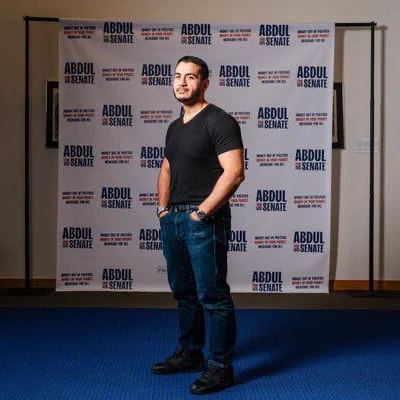
What Happened
Democrat Abdul El-Sayed currently leads the Michigan US Senate election odds with 78%, significantly ahead of Republican Mike Rogers, who holds 23%. This lead was reported on November 2, 2026, by an operative Telegram feed. Concurrently, former Democratic Senate primary candidate Haley Stevens, a sitting U.S. Representative for Michigan, publicly endorsed Republican Mike Rogers over El-Sayed, the Democratic nominee. Stevens' fiancé, Jason Turkish, also pledged his vote for Rogers, further solidifying the cross-party support. Turkish's endorsement followed his public accusations against El-Sayed, alleging the use of 'antisemitic language' during the campaign, a claim he reportedly made to the Detroit News.
The endorsement by Stevens, a prominent figure within the Michigan Democratic Party, represents a notable break from party unity. Her decision to back a Republican opponent against her own party's candidate has created internal friction. Jason Turkish, her fiancé, amplified this division by explicitly stating his intention to vote for Rogers and criticizing El-Sayed's campaign rhetoric. The timing of these endorsements, while El-Sayed maintains a substantial lead in reported odds, introduces an unexpected dynamic into the final stretch of the Senate campaign.
What the Evidence Establishes
Evidence establishes that Abdul El-Sayed is currently favored to win the Michigan US Senate seat, with an operative Telegram feed reporting his election odds at 78% as of November 2, 2026. Republican challenger Mike Rogers is listed with 23% odds. The core development is the public endorsement of Rogers by Democrat Haley Stevens, a former primary candidate for the Senate seat and a sitting U.S. Representative. This endorsement is corroborated by reporting from The Hill, which also details the involvement of Stevens' fiancé, Jason Turkish.
Jason Turkish, identified as Rep. Haley Stevens’s fiancé, has publicly committed to voting for Mike Rogers. His rationale for this decision stems from specific allegations against El-Sayed, whom Turkish accused of employing 'antisemitic language' during his campaign. Turkish reportedly told the Detroit News that such language was unprecedented from a candidate. This direct accusation provides the stated motivation behind the unusual cross-party endorsement, highlighting a significant ideological or ethical rift within the Michigan Democratic Party regarding El-Sayed's campaign conduct.
Where the Accounts Conflict
The provided sources do not present direct factual conflicts regarding the events themselves. Both the operative Telegram feed and The Hill report on Abdul El-Sayed's lead in the Michigan Senate race odds and Haley Stevens' endorsement of Mike Rogers. However, the accounts implicitly highlight a conflict in political allegiance and narrative framing within the Democratic Party. The Telegram feed focuses on El-Sayed's strong lead, presenting a picture of a dominant Democratic candidate, while The Hill's reporting centers on the internal dissent caused by Stevens' and Turkish's actions.
The primary conflict lies in the interpretation and implications of Stevens' endorsement. From a traditional party perspective, a Democrat endorsing a Republican opponent is a significant breach of party loyalty, especially when the party's nominee holds a substantial lead. Jason Turkish's accusation of 'antisemitic language' against El-Sayed introduces a moral and ethical dimension to this conflict, suggesting that for Stevens and Turkish, these allegations supersede party unity. The sources do not offer El-Sayed's direct response to these specific allegations, leaving that aspect of the conflict unaddressed within the provided information.
Context and Stakes
The Michigan US Senate race is a critical contest with national implications, as control of the Senate often hinges on a few key states. Abdul El-Sayed's reported 78% lead suggests a strong position for Democrats to retain or gain a seat. However, the public endorsement of Republican Mike Rogers by Democrat Haley Stevens and her fiancé Jason Turkish introduces significant internal party friction. Stevens, as a sitting U.S. Representative and former primary candidate, carries political weight, and her defection could be interpreted as a signal of deeper divisions within the Michigan Democratic Party.
The allegations of 'antisemitic language' leveled against El-Sayed by Turkish are particularly sensitive and carry substantial stakes. Such accusations can damage a candidate's reputation, alienate voter blocs, and force a campaign to divert resources to defense rather than outreach. For the Democratic Party, this internal conflict risks undermining unity and potentially depressing voter turnout among those disillusioned by the public infighting. The outcome of this race will not only determine a Senate seat but also reflect the current state of cohesion and ideological alignment within Michigan's Democratic political landscape.
What to Watch Next
Observers should monitor the immediate reactions from other prominent Michigan Democrats regarding Haley Stevens' and Jason Turkish's endorsement of Mike Rogers. The Democratic Party leadership will likely face pressure to issue a statement addressing this internal dissent, potentially condemning the cross-party endorsement while attempting to maintain a semblance of unity. Attention will also be on Abdul El-Sayed's campaign to see how they respond to the allegations of 'antisemitic language' made by Turkish; a direct and comprehensive rebuttal or clarification will be crucial to mitigate potential damage.
Furthermore, the impact of this endorsement on El-Sayed's reported lead in the election odds will be a key indicator. While his 78% lead is substantial, sustained negative attention from within his own party could erode voter confidence or enthusiasm. The media's continued coverage of the 'antisemitic language' allegations and any further details from the Detroit News or other outlets will shape the narrative. Finally, any potential disciplinary actions or political repercussions for Stevens within the Democratic Party, either before or after the election, will reveal the party's tolerance for such public breaks from solidarity.
Bottom Line
Democrat Abdul El-Sayed maintains a significant lead in the Michigan US Senate race, with reported odds of 78%. However, this strong position is complicated by the public endorsement of Republican opponent Mike Rogers by fellow Democrat Haley Stevens and her fiancé, Jason Turkish. Turkish explicitly cited El-Sayed's alleged use of 'antisemitic language' as the reason for their cross-party support, introducing a contentious internal conflict into the Democratic campaign.
This unusual defection highlights potential ideological rifts within the Michigan Democratic Party and could force El-Sayed's campaign to address serious allegations. The incident carries implications for party unity, voter perception, and the overall dynamics of a crucial Senate contest. The coming days will reveal how the Democratic Party and El-Sayed's campaign manage this internal challenge, and whether it significantly impacts the race's trajectory.
DECLASSIFIED SOURCE: Operative Telegram Feed (via Real-time Signal Upgrade)