Darline Graham Secures GOP Nomination for South Carolina Senate Seat with Trump's Backing
By RT - NewsDarline Graham won the South Carolina GOP primary runoff for her late brother's Senate seat, boosted by a Trump endorsement and significant financial aid.
What Happened
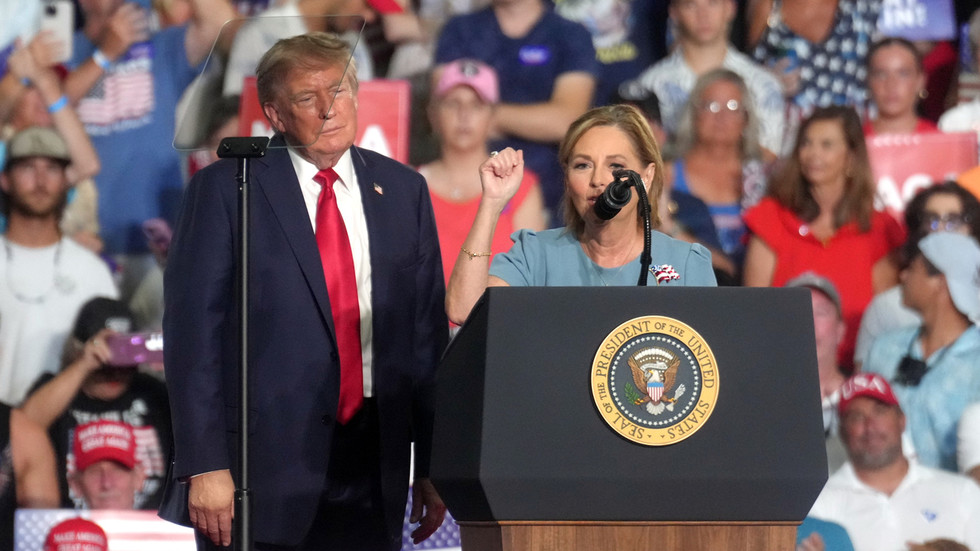
On August 26, 2026, Darline Graham, sister of the late Senator Lindsey Graham, secured the Republican nomination for the U.S. Senate seat in South Carolina. She defeated Representative Ralph Norman in a runoff election, a victory largely attributed to a late endorsement and financial backing from former President Donald Trump. Graham's win comes just over a month after her brother, Lindsey Graham, passed away at 71 years old in July. Her initial appointment by South Carolina Governor Henry McMaster was intended to fill the remainder of her brother's term, but Trump encouraged her to seek a full term, actively campaigning for her in Myrtle Beach on August 21, 2026.
The race saw significant financial intervention, with Trump's MAGA Inc. campaign war chest, which reportedly holds $400 million, deploying over $800,000 into a phone campaign for Graham over the final weekend. This financial boost followed a debate gaffe where Graham admitted limited knowledge of Taiwan's strategic importance. Despite her political inexperience, Graham framed her campaign as a vote for the Trump agenda, contrasting herself with Norman, whom she criticized for occasionally bucking House Republican leadership and Trump. She also highlighted her legislative achievements, including the passage of the Russia and Iran Sanctions Act and her deciding vote to confirm President Trump's Attorney General, Todd Blanche, within weeks of her appointment.
What the Evidence Establishes
The evidence establishes that former President Donald Trump's direct intervention was a decisive factor in Darline Graham's primary runoff victory. Trump's personal endorsement, articulated during a rally in Myrtle Beach on August 21, 2026, where he stated, "Darline is somebody I've known for a long time... I asked her to do this," provided significant momentum. This was further reinforced by a substantial financial infusion from MAGA Inc., which channeled over $800,000 into a phone campaign for Graham in the days leading up to the runoff, according to campaign finance records. This financial support was particularly impactful given Graham's relative lack of political experience prior to her temporary appointment to the Senate.
Graham's campaign strategy explicitly aligned with the Trump agenda, positioning her as a loyalist. She publicly stated, "a vote for her was a vote for the Trump agenda," and criticized her opponent, Ralph Norman, for perceived disloyalty to House Republican leadership and Trump. Her legislative claims, such as passing the Russia and Iran Sanctions Act and confirming Attorney General Todd Blanche within weeks of her appointment, were central to her argument that she had achieved more in a short period than Norman had in his two decades in Congress. Decision Desk HQ and Polymarket both projected Graham as the winner, indicating a clear electoral outcome driven by these factors.
Where the Accounts Conflict
While Fox News and The Hill report Darline Graham's victory as a straightforward electoral outcome, an operative Telegram feed presents a conflicting interpretation regarding the motivations of her supporters. Fox News frames Graham's win as a "historic runoff victory" and attributes it to a "powerful name and an endorsement from President Donald Trump," suggesting a conventional political success. The Hill similarly reports her win as the "GOP nod in South Carolina Senate primary runoff for late brother’s seat," focusing on the electoral mechanics and the replacement of her brother.
In contrast, an operative Telegram feed, specifically a post by Owen Shroyer on August 26, 2026, suggests a more critical view of the electorate's rationale. Shroyer's post claims, "MAGA went from being against Lindsey Graham to being so sucked into a cult mind they now support his sister just because." This account implies that support for Darline Graham was not based on her individual merits or policy positions, but rather on an uncritical adherence to Trump's endorsement, irrespective of her brother's past political differences with the MAGA movement. This narrative introduces a qualitative conflict regarding the underlying drivers of voter behavior, questioning whether the victory was a genuine endorsement of Graham or a manifestation of a broader political phenomenon.
Context and Stakes
The South Carolina Senate primary runoff holds significant context within the broader Republican Party and the influence of former President Donald Trump. Lindsey Graham, Darline's late brother, was a prominent figure in the Senate for over two decades, known for his hawkish foreign policy stance. Darline Graham, however, has explicitly styled herself as a different kind of politician, focusing "more on domestic issues than foreign." This shift in policy emphasis, particularly her admission of being "not that informed on national security" regarding Taiwan, marks a potential ideological divergence from her brother's legacy and aligns more closely with a perceived 'America First' domestic focus often championed by Trump.
The stakes for the Republican Party are considerable. This victory reinforces Trump's kingmaker status within the GOP, demonstrating his continued ability to sway primary elections through endorsements and financial leverage, even for candidates with limited prior political experience. For South Carolina, the election of Darline Graham to a full Senate term could signal a shift in the state's representation, moving from a long-standing foreign policy hawk to a senator prioritizing domestic concerns. Her success also highlights the power of name recognition and familial ties in political races, especially when combined with a potent external endorsement, shaping the future direction of the party's legislative priorities and electoral strategies.
What to Watch Next
Following her primary runoff victory, Darline Graham will now face her Democratic opponent in the November general election for the South Carolina Senate seat. Observers will closely monitor her campaign's ability to transition from a primary focused on Trump's endorsement to a general election where broader voter appeal and policy specifics may become more critical. Her stated focus on domestic issues, contrasting with her late brother's foreign policy expertise, will likely be scrutinized by both her opponent and the media. The extent to which she can articulate a comprehensive domestic agenda beyond simply aligning with the "Trump agenda" will be a key factor in her general election performance.
Furthermore, the level of continued engagement and financial support from Donald Trump and MAGA Inc. in the general election will be a significant indicator of the perceived competitiveness of the race and Trump's ongoing commitment to her candidacy. Any further gaffes regarding national security or foreign policy, similar to her admission about Taiwan, could be exploited by her Democratic challenger. The outcome of this general election will serve as another barometer for Trump's influence on down-ballot races and the evolving ideological landscape of the Republican Party, particularly concerning the balance between traditional conservative foreign policy and a more domestically oriented approach.
Bottom Line
Darline Graham's victory in the South Carolina Republican Senate primary runoff underscores the enduring power of former President Donald Trump's endorsement and financial backing within the GOP. Despite her limited political background and a notable gaffe on national security, her alignment with the "Trump agenda" and the substantial financial support from MAGA Inc. proved decisive against Representative Ralph Norman. This outcome not only secures her place on the November ballot to replace her late brother, Lindsey Graham, but also reaffirms Trump's significant influence over Republican primary voters.
The election signals a potential shift in South Carolina's Senate representation towards a more domestically focused agenda, diverging from the long-standing foreign policy emphasis of her predecessor. Her general election campaign will test the durability of Trump's endorsement in a broader electorate and her capacity to articulate a distinct policy platform. This race serves as a critical case study in the current political landscape, demonstrating how a powerful endorsement can overcome traditional political experience and policy depth in a primary contest.
DECLASSIFIED SOURCE: RT - News (via Real-time Signal Upgrade)