DHS Mandates Removal of DeepSeek AI from Federal Civilian Systems
By Operative Telegram FeedThe DHS ordered federal civilian agencies to purge DeepSeek AI and related third-party tools from IT systems, citing data leaks and Chinese state access.
What Happened
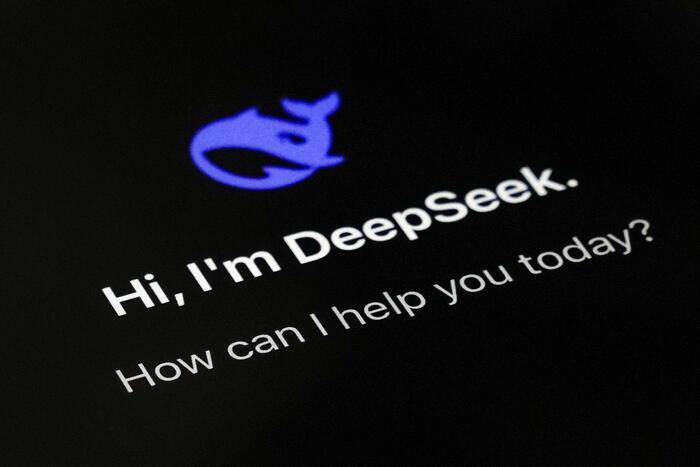
The U.S. Department of Homeland Security (DHS) made public a mandate on Monday, October 19, 2026, requiring all federal civilian agencies to remove DeepSeek AI products and services from their IT systems. The order, originally issued on July 24, 2026, prohibits the procurement of DeepSeek technology and extends the ban to any third-party products developed using DeepSeek's models. This directive affects major entities including the State, Treasury, and Justice departments, though it specifically excludes the Department of Defense. The move follows a series of targeted restrictions beginning in early 2025, marking a formal escalation in the technological rift between Washington and Beijing.
What the Evidence Establishes
Federal records in the Federal Register state that DeepSeek models present multiple threat vectors. The DHS specifically identifies the location of servers within China as a primary risk, asserting that Chinese authorities could access private company infrastructure to retrieve sensitive U.S. government data and intelligence on American citizens. Furthermore, the DHS cites open-source research that discovered multiple critical vulnerabilities within the DeepSeek iOS application, suggesting the models may contain malware. Historically, this action follows a pattern of restrictions: the Defense Information Systems Agency blocked DeepSeek in January 2025, the Commerce Department banned it on government devices in March 2025, and Congress restricted its use in intelligence systems in December 2025.
Where the Accounts Conflict
The U.S. government alleges that DeepSeek engaged in large-scale distillation, a process used to extract capabilities from frontier American AI models to accelerate its own development. Beijing has dismissed these claims. Additionally, Chinese Foreign Ministry spokesperson Mao Ning characterized the ban as an overstretching of national security concepts and the politicization of science and trade. While the U.S. frames the ban as a necessary cybersecurity measure to prevent data exfiltration, the Chinese government presents it as an infringement on the legitimate rights and interests of Chinese companies. DeepSeek has not provided a formal response to the specific allegations regarding server access or iOS vulnerabilities.
Context and Stakes
This ban occurs as the U.S. and China compete for AI dominance, with Washington already restricting China's access to advanced AI chips and lithography machines. Simultaneously, Beijing recently proposed plans to restrict the export of its own advanced AI models. The stakes extend beyond software to physical infrastructure, as the Federal Communications Commission previously barred imports of foreign-made humanoid robots, likely targeting Chinese firms. The ban puts pressure on the upcoming mid-November meeting in Shenzhen, China, between President Donald Trump and President Xi Jinping during the APEC summit. While the two nations have discussed a notification system for national security-related AI incidents, the DeepSeek ban underscores a fundamental lack of trust in cross-border AI infrastructure.
What to Watch Next
Executive agencies have a 60-day window from the original July 24 issuance to submit written justifications to the DHS if they require exceptions or delays in compliance. Monitoring the number of these requests will indicate how deeply embedded DeepSeek is within civilian operations. Observers should also track the APEC summit in Shenzhen to see if AI governance or the removal of these specific bans becomes a bargaining chip. Furthermore, the implementation of Beijing's proposed export restrictions on advanced AI models will determine if China views the DeepSeek ban as a catalyst for a broader reciprocal blockade of AI capabilities.
Bottom Line
The DHS ban effectively closes the loophole for DeepSeek's use in the U.S. civilian government, treating the AI startup not as a commercial entity but as a potential intelligence conduit for the Chinese state. By targeting not only the primary software but also third-party derivatives, the U.S. is attempting to sanitize its federal IT environment of Chinese-influenced weights and architectures. This move signals that the U.S. considers the risk of data distillation and server-side espionage to outweigh the utility of DeepSeek's often free, open-source models, further decoupling the two largest AI ecosystems on earth.
DECLASSIFIED SOURCE: Operative Telegram Feed (via Real-time Signal Upgrade)